

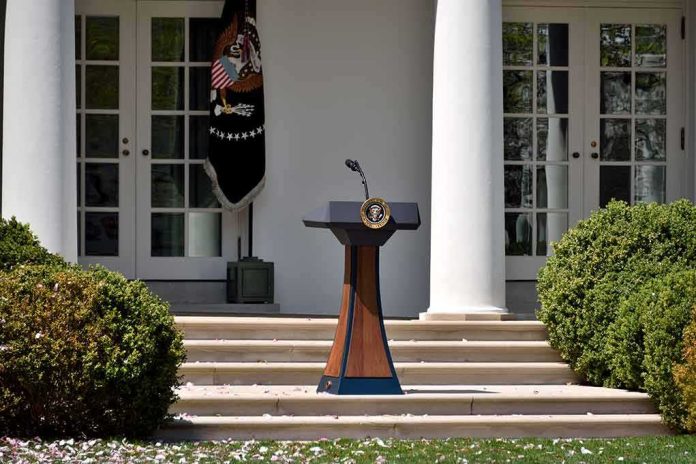
The White House bought TV time for a pro-Trump spot with your tax dollars, and the end card said so.
Story Snapshot
- A senator demanded records on cost, funding, and who approved the ad.
- The ad aired with “Paid for by the U.S. government” on screen.
- The White House calls it a patriotic public service message, not politics.
- Critics say it promotes Trump himself right before elections.
A taxpayer-funded ad that puts Trump at center stage
Senator Maggie Hassan sent a formal letter to White House Chief of Staff Susie Wiles. She asked who paid for a new television ad, how much it cost, and which agencies and contractors worked on it. She said the spot could violate bans on using appropriated funds for partisan promotion. She pressed for answers within days, not weeks, to stop more airings if rules were broken. The ask is simple: show the paperwork or stop the spin.
Reporters say the ad looks a lot like a campaign message. It showcases President Trump and sells his record, not a specific policy or service. The end card reads “Paid for by the U.S. government,” and a White House official confirmed federal funding. That disclosure strips away any doubt about the source of cash, which is rare for a piece that centers a sitting president’s image near elections. The government, not a campaign, bought the time.
The White House’s defense: PSA, patriotic, no call to vote
The White House says the ad is a public service message. Officials argue it is educational, patriotic, and does not tell viewers to vote or donate. They add that President Trump is not on the ballot, so this is not a campaign ad. They compare it to past presidential public service announcements from both parties. That frame tries to move the debate from politics to civics and tradition. It is a clean, repeatable defense.
That defense meets a blunt public reaction. Some lawmakers and commentators label the ad “state-sponsored political propaganda.” They cite the timing and the focus on the president’s image as red flags. They also point to laws that bar the use of taxpayer funds for “publicity or propaganda purposes,” a long-standing rule in funding bills. They want watchdogs to review the content, the purchase orders, and the approval chain. This is not fringe outrage; it is a process ask.
What we know, what we do not, and why it matters
Two facts are firm. First, taxpayer money paid for the ad buy. Second, the ad promotes Trump’s leadership rather than a single program, which critics say crosses the line into self-promotion. The open questions are practical: which account paid, how much, and who signed off. Hassan’s letter aims to surface contracts, invoices, and agency roles. The absence of those records in the public domain keeps the dispute hot and unresolved.
There is also a dispute about purpose. The White House leans on a safe harbor: no vote ask, no ballot spot, and patriotic tone. That might pass a quick smell test. But purpose is shown by content and context, not labels. If internal emails or scopes of work mention election timing or candidate benefit, the public service case weakens fast. If the records show a standard agency campaign with legal review, the case grows stronger for the administration.
The conservative common-sense test for public spending
Common sense says taxpayer funds should explain services, warn of risks, or guide public action. They should not sell a politician’s brand. If a spot cannot name a clear program or action, and the main character is the president, the burden to prove value rises. American conservative values place stewardship first: clear purpose, measured scope, and clean books. That is not anti-Trump; it is pro-transparency and pro-rule of law. Sunlight protects every taxpayer.
The White House has expanded a series of taxpayer-funded television advertisements featuring and promoting Trump, including a new spot that repurposes footage and political rhetoric from his 2024 presidential campaign.
The latest ad has already received more than $300,000 in…
— Third Column (@ThirdColumn) September 28, 2026
Next steps decide the story’s arc. Producing the contracts and legal memos could quiet the storm. If costs are modest, funding is proper, and counsel flagged no issues, the White House will lean on precedent. If documents are delayed or redacted, suspicion will grow. One sharp fact will carry outsized weight: a precise dollar figure tied to a clear account. Until then, the best course is simple. Pause further airings, show the receipts, and let the facts speak.
Sources:
nytimes.com, yahoo.com, washingtonexaminer.com, finance.yahoo.com