

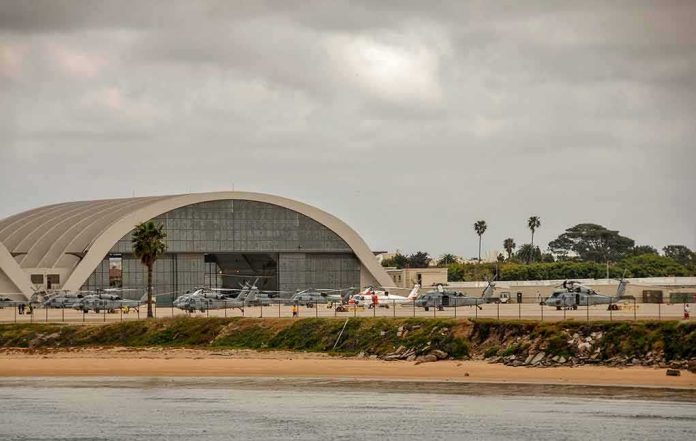
The Air Force plans more than 6,000 yearly flights from four Pacific island airfields to harden U.S. power against missile threats and keep adversaries guessing.
At a Glance
- The Department of the Air Force launched an environmental review to use four Northern Marianas airfields for high-tempo training.
- The plan targets about 6,080 aircraft operations per year across Saipan, Tinian, and Rota.
- Revived World War II infrastructure on Tinian supports today’s dispersed combat model.
- Agile Combat Employment boosts survivability but strains logistics if support does not scale.
What The Air Force Is Proposing, And Where
The Department of the Air Force signaled a major Pacific shift by announcing an environmental impact statement for operations at Saipan International, Tinian International, Tinian North Field, and Rota International. The notice frames steady, year-round training to build muscle memory for dispersed operations. The proposed activity would total roughly 6,080 aircraft operations per year across the four fields, sized to practice takeoffs, landings, cargo moves, and quick turns that can keep forces mobile under threat.
The plan draws on a potent mix of old concrete and new tactics. Tinian’s North Field, once the springboard for the final air raids of World War II, is being refurbished to handle modern aircraft and support teams. The Air Force’s message is clear: make many small footprints instead of one big target. Spread the fleet, move often, and force any attacker to burn time and missiles chasing ghosts across the map.
Why Dispersal Beats Big, Vulnerable Hubs
Large, fixed bases look like bull’s-eyes in an age of long-range missiles and drones. The Air Force’s Agile Combat Employment concept flips that script. Crews practice flying to smaller fields, refueling fast, rearming as needed, and lifting off again before an adversary can target them. This approach aims to keep combat power alive on day one and day ten. Analysts have warned, though, that if maintenance crews, tools, fuel, and munitions do not follow the jets, sortie rates can sag before any attack lands.
The Northern Marianas offer a test bed with U.S. sovereignty, shorter supply lines than far-flung partners, and real distance from major population centers. Saipan and Rota provide paved runways and services. Tinian adds redundancy, with North Field under renewal to accept tactical airlift, tankers, and support aircraft. This network enables hopscotch tactics across islands, forcing any enemy planner to solve a messy, moving puzzle instead of a tidy map dot.
What 6,000-Plus Flights Really Buy
Repetition builds speed, safety, and trust under pressure. Thousands of annual operations let aircrews, maintainers, and defenders rehearse tight timelines, austere refuels, and quick repairs. Tanker hookups, cargo swaps, and runway checks become muscle memory. Commanders learn which sequences save minutes and which bottlenecks choke the flow. These reps also expose weak points in communications and navigation. Better to find gaps during training than when missiles are inbound.
Conservative common sense says deterrence works best when strength is real, visible, and sustainable. This plan tracks with that logic. It puts steel on runways America controls. It signals that if one runway is cratered, others will still launch sorties. It also forces the Air Force to prove it can move fuel, parts, and people at scale, not just aircraft. Strategy without logistics is a wish. Strategy with logistics becomes a plan the other side must respect.
The Echo Of History, Without The Nostalgia
These islands once hosted bombers that helped end a world war. Today’s mission is different, but the terrain still matters. History shows that forward bases can shorten response times and reassure allies. It also shows that politics, local impacts, and cost can complicate even the best plans. The Air Force’s environmental review is the right first step. It sets a formal process, invites input, and frames practical limits while keeping the core aim tight: be ready, be mobile, be hard to kill.
Sources:
airforcetimes.com, militarytimes.com, nationalinterest.org