

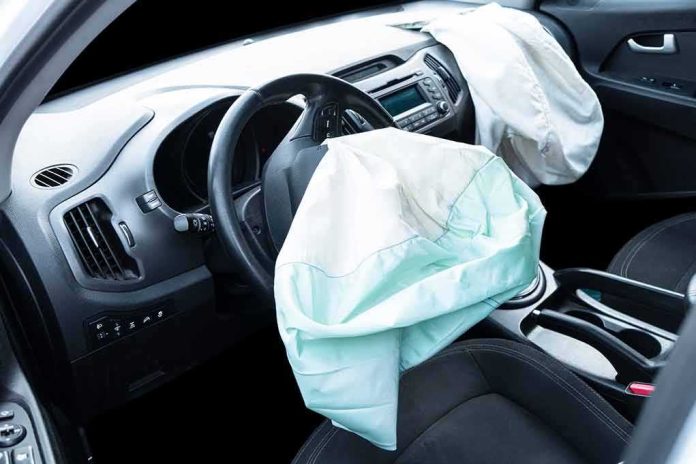
Honda is recalling 810,592 vehicles because certain Takata air bag inflators can rupture in heat and humidity, sending metal fragments into the cabin.
Story Snapshot
- Recall covers select 2012–2013 Honda Civic and CR-V, 2013 Accord, and 2013 Acura ILX and RDX.
- Risk ties to propellant breakdown after long exposure to heat and moisture swings.
- Honda will replace affected driver or passenger inflators for free at dealers.
- Targeting focuses on vehicles sold or registered in hot, humid regions.
What Honda and Regulators Confirmed
The National Highway Traffic Safety Administration filing lists 810,592 affected Honda and Acura vehicles in the United States. The covered models include 2012–2013 Civic and CR-V, the 2013 Accord, and the 2013 Acura ILX and RDX. The recall cites a specific failure path. The propellant inside certain Takata inflators can degrade after long exposure to high humidity and big temperature swings. A weakened inflator can rupture on deployment and launch metal fragments.
American Honda said the recalled inflators include a moisture-absorbing material called desiccant. That sets them apart from earlier Takata inflators that lacked that feature. Even so, Honda will replace the affected driver or passenger inflators for free. Owners will get notices, and dealers will handle parts and labor at no cost. The company’s statement mirrors the regulator’s remedy and stresses that this is a preventive action based on the degradation risk pathway.
Where The Risk Is Highest And Why It Matters
The filing and news alerts point to vehicles sold or registered in hot and humid areas. These include states and territories like Florida, Texas, Hawaii, Puerto Rico, and others across the Gulf and Southeast. That focus comes from the chemistry. Heat and moisture speed up propellant changes inside the inflator over many years. When that material breaks down, pressure on deployment can spike and cause a violent rupture rather than a controlled air bag fill.
Owners should not wait for a letter if they suspect their vehicle is covered. Contact Honda or Acura customer service and check the vehicle identification number on the National Highway Traffic Safety Administration site. Schedule the fix as soon as parts are available. The recall repair is free and takes less time than you think. A short dealer visit now beats the risk of a failed inflator in a crash later, especially in warm, damp climates.
How This Recall Fits The Takata Timeline
This action follows a long history of Takata inflator problems tied to heat and humidity. The National Highway Traffic Safety Administration records show many earlier recalls addressed non-desiccated inflators first, where risk was highest. Over time, the agency built a coordinated remedy program to manage parts supply and prioritize regions and models by risk level. That system improved completion rates and helped move the most exposed vehicles through repairs sooner.
The current recall involves desiccant-equipped inflators, which were designed to fight moisture. Honda’s filing explains why the risk still exists after many years in harsh climates. The company chose to act and replace these parts before a pattern of confirmed ruptures in this exact group emerged. That aligns with a conservative safety stance: if the chemistry and exposure point to a credible hazard, swap the part and remove the risk for drivers and passengers.
What To Do Next If You Own One Of These Vehicles
Find your vehicle identification number at the base of the windshield or on your registration. Check it on the National Highway Traffic Safety Administration site and Honda’s recall portal. If your car is listed, call your dealer and ask for the air bag inflator replacement under this recall. Plan the visit soon, especially if you live or have lived in a hot, humid region. The work is free, and dealers are set up to perform this specific repair.
5/ RECALL: Honda is recalling 810,592 U.S. vehicles — 2012-13 Civic/CR-V, 2013 Accord, Acura ILX/RDX — over Takata airbag inflators that could rupture, per NHTSA. Free replacement; notices expected Dec. 18.
MY TAKE: Check your VIN now.https://t.co/UwcEEhv00h
— JRE (@jreentertain) November 24, 2026
A brief note on scope: the official filing lists the affected models and the total number of vehicles, and media accounts summarize the targeted states. Owners outside those regions should still check their vehicle identification number. Cars move, weather varies, and risk follows exposure over time. The sure path is simple and costs nothing: confirm your status, book the free fix, and drive with a safe air bag when you need it most.
Sources:
facebook.com, static.nhtsa.gov, wbrz.com, hondanews.com, data.transportation.gov, recallsweep.com