
One sharp sentence, two hands on a reporter’s shoulders, and a Senate win got a new shadow.
Story Snapshot
- Abdul El-Sayed argued a Sky News reporter lacked Michigan voter standing, then shut him down.
- The exchange outside a Detroit polling site turned tense and briefly physical, on camera.
- James Matthews said global audiences deserved answers on a race with worldwide stakes.
- Viral clips framed the moment around contact, not the argument over relevance.
What Happened, Where, And Why It Blew Up
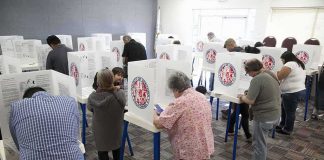
Abdul El-Sayed, fresh off a Michigan Senate win, met Sky News correspondent James Matthews outside a Detroit polling center. Cameras rolled as Matthews tried to question him. El-Sayed asked if he was registered to vote in Michigan. Matthews said no. El-Sayed replied, “Then why would I care to have a conversation with you?” He also said he wanted “zero” votes in the United Kingdom and told Matthews to stop chasing him. The clip shows brief hand-on-shoulders contact during the back-and-forth.
Sky News published the confrontation and a follow-up by Matthews calling the response a misstep. Matthews argued that United States elections matter worldwide and that officials who will serve in Washington should face questions from global media. He said the job comes with a duty to inform people beyond state lines. El-Sayed, by contrast, kept stressing Michigan voters and dismissed the value of United Kingdom viewership in choosing his answers that day.
The Core Dispute: Voter Accountability Versus International Audiences
El-Sayed’s stance rested on a hard line: Michigan voters first. He framed the test as simple—if you do not vote here, your questions do not drive his message. That view matches his campaign’s Michigan-centered pitch on health care, unions, costs, and local stakes. It also explains his sharper tone after a long contest. But that argument does not settle the role of journalism. Reporters seek public answers that inform people, not just registered voters.
Matthews made the competing case that this Senate seat reaches far beyond Detroit. He pointed to national security and foreign policy committees and said the race held consequences overseas. He also pushed back on the “chasing” label. That line drew a clear split: El-Sayed set the boundary around constituents; Matthews set it around the public’s right to know, including nonvoters who bear outcomes abroad. Both frames are real. Only one played well on camera.
The Moment That Stuck: The Hands-On-Shoulders Clip
Several outlets highlighted El-Sayed putting both hands on Matthews’s shoulders. The footage made that the emotional center of the story. Viewers saw intensity, clapping, and voices over one another. Some critics called it aggressive; others guessed it showed past familiarity. The short contact is undisputed; the intent and need are not settled in the record. No report cites a formal complaint or injury. But optics often outrun nuance, especially in a nine-second loop.
Sky News Stands By Journalist Following Heated Exchange With Abdul El-Sayed: 'We're Proud of Our Correspondent, Who Was Doing His Job' https://t.co/fYMMItH3hX
— Variety (@Variety) November 5, 2026
That viral frame now defines first impressions. Variety reported millions of views that amplified the physical-heat angle over the press-access debate. The imbalance favors Sky News, which controlled the original cut and then published Matthews’s reflection. That is not a conspiracy; it is production reality. The side with the footage and voice-over can shape the tone. Politicians know this. Many still forget it in the afterglow of a win.
What The Facts Support, And What They Don’t
The tape and first-hand accounts back four points. Matthews approached outside a polling site during active coverage. El-Sayed centered his answers on Michigan voters and dismissed the United Kingdom audience. He told Matthews to stop chasing him, which Matthews denied. He placed his hands on the reporter’s shoulders during the exchange. Those facts are solid. Claims about who pursued whom or whether contact was justified remain unsettled by the public record.
The stronger civic case sits somewhere between both men. A senator serves the state yet votes on matters that touch allies and adversaries. Voters expect toughness with the press, but also restraint. From a conservative, common-sense angle, two rules apply. Speak to your base first. Keep your hands to yourself always. The first draws a clean line of accountability. The second avoids handing opponents a clip they can run on loop.
How Smart Campaigns Would Handle This Next Time
Set a visible press lane, even at polling places. Take two neutral questions, then pivot to local media. Use one sentence to note the international interest, then return to Michigan themes. Avoid ad hominem lines about viewership or who counts. If a reporter presses in, step back, signal staff, and point to a set time for more questions. Every second saved from heat is a second banked for policy—and a second not framed by a freeze-frame of your hands.
Sources:
redstate.com, news.sky.com, variety.com, thehill.com