

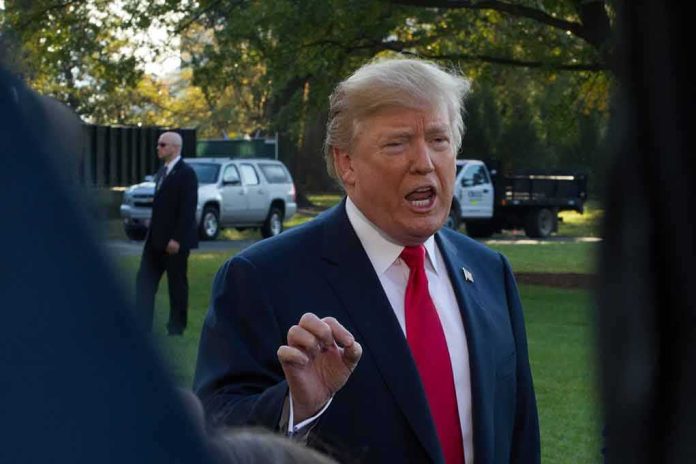
President Trump just admitted his own deportation push went too far, and he said it cost Republicans at the ballot box.
Quick Take
- Trump told CBS’s 60 Minutes his deportation policy “might be too tough” in an interview aired November 8, 2026.
- He said workers with jobs, tax records, and ties to their communities got swept up alongside dangerous criminals.
- Trump directly linked the policy to midterm losses, saying “I think ultimately that hurt me.”
- He still praised the border crackdown for removing “the bad ones,” showing a split view on enforcement.
What Trump Said On Camera
Correspondent Ross Douthat asked Trump point-blank whether his deportation policy went too far. Trump didn’t dodge it. “I think it was too tough,” he said, then softened it slightly to “I think it might be too tough.” For a president who built his brand on never backing down, that answer stood out immediately to anyone watching.
Trump didn’t stop at a vague admission. He gave a specific example of who got hurt by the policy. He described people working at “a landscaping company” or “a hotel,” some of whom were “paying taxes,” whose only offense was entering the country illegally. Trump drew a clear line between removing violent criminals and removing people quietly holding down jobs for years.
The Midterm Connection He Made Himself
Trump didn’t just admit the policy was harsh. He tied it straight to his party’s midterm performance. “I think ultimately that hurt me,” he said, according to Bloomberg’s account of the interview. That’s a notable statement from a president who rarely assigns blame to his own decisions, especially right after an election loss.
CNN’s rundown of the interview highlighted how Trump framed this as a split verdict on his own record. He said he gets “very high marks for getting the bad ones out,” pointing to violent offenders and repeat lawbreakers. But in the same breath, he said the administration also “took people that had good jobs” whose only violation was crossing the border unlawfully. That contrast is the heart of his new message.
Why This Distinction Matters To Voters
Most Americans support removing dangerous criminals. Polling has shown that support for enforcement drops when the people being removed are longtime workers with no criminal record beyond the border crossing itself. Trump’s comments suggest he’s now drawing that same line publicly, separating public-safety removals from sweeps that caught working families and employees.
Research on past enforcement programs backs up the economic piece of this concern. Studies of earlier federal deportation efforts found that aggressive removals reduced local employment and shrank wages in some low-wage labor markets, with ripple effects beyond the immigrants removed. That data lines up with Trump’s own description of landscapers and hotel workers losing their jobs to the policy.
A Reversal Without A Policy Change Yet
Trump’s words were strong, but they weren’t a formal order. Nothing in the interview points to a signed directive scaling back enforcement or narrowing who gets targeted for removal. Mediaite noted that Douthat himself seemed caught off guard by how directly Trump owned the criticism. For now, this is a verbal shift, not a written one.
🚨 TRUMP ADMITS DEPORTATION CRACKDOWN MAY HAVE BEEN TOO TOUGH AFTER GOP MIDTERM LOSSES
President Donald Trump is reconsidering the political impact of his immigration enforcement strategy following Republicans’ loss of both chambers of Congress.
In a CBS “60 Minutes” interview,…
— MDBayNews (@MDBayNews) November 9, 2026
Republicans watching the midterm results already knew immigration was a mixed bag politically. Voters wanted the border secured and criminals removed, but many recoiled at stories of working families torn apart over paperwork violations. Trump’s comments read like an attempt to reset that balance before 2028, keeping the tough-on-crime image while easing off removals that hit ordinary workers and their employers.
What Comes Next For Enforcement Policy
The real test is whether words turn into action. Will immigration agencies issue new guidance protecting long-term workers with clean records? Will enforcement priorities shift toward criminal offenders only? Trump has acknowledged the problem out loud, on national television, in his own words. Now the country watches to see if policy follows the admission.
Sources:
mediaite.com, cbsnews.com, abs-cbn.com, themirror.com, nationalreview.com, journals.uchicago.edu