
The Supreme Court just cleared states to verify voter citizenship with a federal data tool, and the 2026 midterms will feel it.
Story Snapshot
- The Court allowed states to use the federal SAVE system to check voter citizenship for now.
- United States Citizenship and Immigration Services says SAVE can support voter registration and list maintenance.
- A district judge had found the revamped tool unlawful under privacy laws; that order is paused.
- Critics warn the system can mislabel citizens and fuel bad purges if used alone.
What the Supreme Court Actually Did
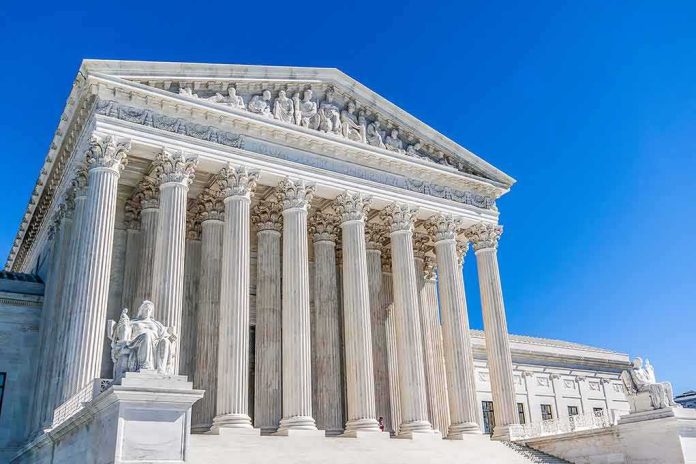
The Supreme Court granted the administration’s request to let states use the Systematic Alien Verification for Entitlements, known as SAVE, to verify voter citizenship while lower-court fights continue. The order reversed a halt that had blocked the tool after a June ruling. The decision gives President Trump a practical win ahead of fall elections, restoring a method several states rely on to flag possible noncitizens on voter rolls.
https://www.youtube.com/watch?v=Lb8OG-gK7n0
A Washington judge earlier ruled that the revamped data-matching setup broke privacy and Social Security laws, saying the changes overreached and lacked proper guardrails. That decision would have shelved SAVE for voter checks nationwide. The Supreme Court paused that outcome. The legal case is not over. But the pause matters, because states can again query federal records while the courts sort the details.
What SAVE Is, And What It Is Not
United States Citizenship and Immigration Services describes SAVE as an information service that lets approved agencies verify a person’s citizenship or immigration status by checking federal source databases. The agency says state election divisions can use SAVE for voter registration and voter list maintenance, because only citizens may vote in federal races. It is a tool to verify eligibility, not to replace state judgment or due process.
Supporters frame SAVE as common sense: use existing federal files to confirm who is a citizen and keep rolls clean. That view aligns with basic election integrity and the rule that the law should be enforced with the best data available. It also answers a real problem. States have at times added noncitizens to voter lists by mistake due to driver’s license and software errors over many years. Data checks can catch some of those cases before ballots go out.
The Critics’ Warning: Useful, But Not Final Word
Opponents do not deny that only citizens can vote. They argue SAVE was built for benefits, not ballots, and can miss updates or return partial results. The Brennan Center says officials should not treat SAVE as a final answer and warns that overreliance could lead to false flags and wrongful purges if states skip added checks. For foreign-born citizens, mismatched or outdated records can trigger errors that create hassle or worse at the polls.
The “tool” referenced in that X thread is the modified SAVE system (Systematic Alien Verification for Entitlements), a DHS database that states can now use to check voter rolls for possible non-citizens. https://t.co/Ib3Z2ARvRl
SAVE originally verified immigration status for…
— MNPoliticalVIkesFan (@VikesRock23) September 25, 2026
From a conservative standpoint, the right balance is strict verification with strict fairness. States should use SAVE, because law and logic demand tools to block illegal voting. But states should also build backstops. Require a notice to the voter, a chance to fix records, and a human review before any removal. That approach protects the franchise of citizens while shutting the door on noncitizen voting. Both goals are non-negotiable in a serious system.
How States Can Use SAVE Without Tripping Over It
Election offices should treat a SAVE “nonmatch” as a lead, not a verdict. Match on multiple fields, not just a name. Recheck with updated data. Send a clear letter with simple steps to confirm status. Set deadlines that do not collide with ballot mailings. Document each action. These steps turn a blunt database hit into a fair process that respects citizens and enforces the law. They also blunt claims of mass purges and build public trust.
Expect political noise. Some groups will call any verification a “purge.” Others will claim it proves mass fraud. The truth sits in the middle: mistakes happen, and they cut both ways. The Supreme Court’s order keeps a key tool in play, and United States Citizenship and Immigration Services says it belongs in the toolkit for voter list work. The job now falls to states to use it hard and use it right — with precision, notice, and proof.
Why This Fight Will Not End Soon
The courts will keep weighing privacy claims, data-sharing rules, and how the federal government may assist states. Congress may also act. For now, the Supreme Court’s move signals that election integrity tools will not be sidelined on the eve of voting without a clear, final reason. That posture tracks with American common sense: defend the ballot, respect the citizen, and run tight systems. If states follow that script, the public will follow them.
Sources:
abc7.com, cbsnews.com, npr.org, wamc.org, uscis.gov, apnews.com