
Sean Hannity called Katie Zacharia’s uneasy debut “perfectly normal,” while most of Washington hit rewind to check the tape.
Story Snapshot
- The on-camera White House briefing ran about 14 minutes with a short Q&A.
- Zacharia read prepared remarks, then took three questions from reporters.
- She ended early, saying President Trump would likely take questions before leaving for Alaska.
- The White House framed the debut as “powerful,” backing new-media access.
What actually happened in the room
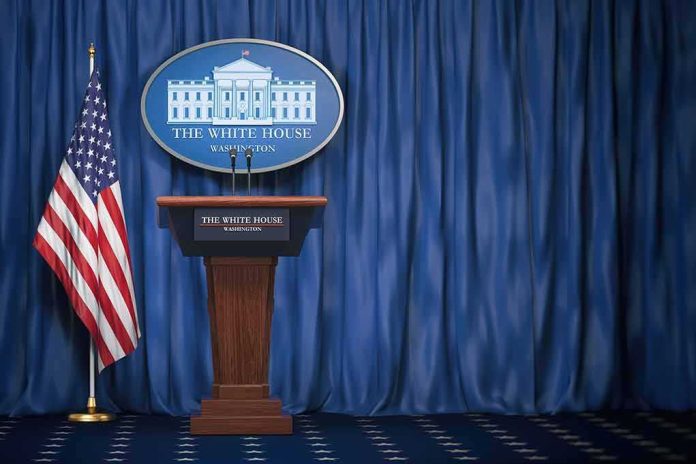
The White House held an official, on-camera briefing on October 13, 2026. Press Secretary Katie Zacharia opened with prepared remarks about the administration’s record and thanked President Trump for his trust. Reporters from three outlets asked questions before she wrapped. The session lasted roughly 14 minutes, with about five and a half minutes for Q&A, according to multiple outlets that timed the exchange. That mix matches the video record and sets the baseline for what critics and defenders are arguing about.
Zacharia did not stonewall. She took questions and even disclosed a personnel matter involving Ambassador Kimberly Guilfoyle, saying the administration asked her to resign, according to contemporaneous reporting and the video record. She deferred one high-stakes item. When asked if the United States had stopped sharing intelligence with Ukraine, she said she would follow up later. That single hold-back now carries more heat than the rest of the briefing combined in much of the coverage.
Why the debut drew fire
Major outlets called the performance shaky and short. The Associated Press marked the 14-minute clock and the three-question cutoff. CNN quoted several White House officials and advisers who labeled it “brutal,” “awkward,” and “stilted,” and one adviser said she should have rehearsed for two weeks first. The New York Times described a delivery heavy on script and camera checks. These critiques focus on mechanics—tempo, notes, and nerves—more than on factual content or policy error.
Some reaction crossed from critique into theater. Former Biden press secretary Jen Psaki likened the scene to a comedy sketch, which makes for a spicy clip but not a serious standard for the job. American conservative values prize results and accountability. On that score, timing and tone matter less than whether the office answers questions, states clear positions, and corrects errors fast. The rough delivery did not change the core record that she showed up, spoke for the administration, and took questions—if only a few.
Hannity’s defense and the White House’s bet
Sean Hannity argued the debut was “perfectly normal,” pointing to first-day jitters and the reality that many press secretaries grow into the role over weeks, not minutes. The official White House release echoed that theme, calling the appearance “powerful” and highlighting a pledge to embrace new media. That signal matters. Welcoming nontraditional outlets can broaden access, but it also sparks claims of cherry-picking friendlier questions if the Q&A stays tight.
White House Press Secretary Katie Zacharia and Special Assistant to the president Natalie Harp join President Donald Trump in Marine One he arrived in Wasilla, Alaska yesterday. @POTUS @KatieZacharia pic.twitter.com/rh80MVcvWf
— Barron Trump (@Barrontrump5o) October 14, 2026
The key friction point is expectations. The classic briefing pattern runs a short statement followed by a longer Q&A. Zacharia flipped that balance. She used most of the time for message and kept questions brief. That is a risky choice in a press room that sees the Q&A as the main event. She said she cut it short because President Trump would likely take questions on the South Lawn before departing for Alaska. That operational reason is clear enough, but it does not erase the optics of an early exit.
How to judge the performance fairly
Hold two ideas at once. First, the job is hard. First days are bumpy. A 14-minute debut with three questions and one defer does not prove incompetence. Second, the job exists to answer for the White House. The unanswered Ukraine question is serious and should be closed fast with a clear follow-up. That is the conservative standard: straight facts, on time, with ownership when details are pending. If the office meets that bar in the days ahead, this flap will fade.
A better yardstick than hot takes is comparison. Track the next month of briefings on five basics: duration, opening length, number of questions, outlet mix, and unanswered items. If those numbers rise toward longer and more open sessions, the story shifts from “rocky start” to “course correction.” If not, critics will keep a simple picture alive: a short stage, few hands, early walk-off. The White House controls that choice every single day.
Sources:
mediaite.com, cnn.com, nytimes.com, apnews.com, rmb.reuters.com, bbc.com