

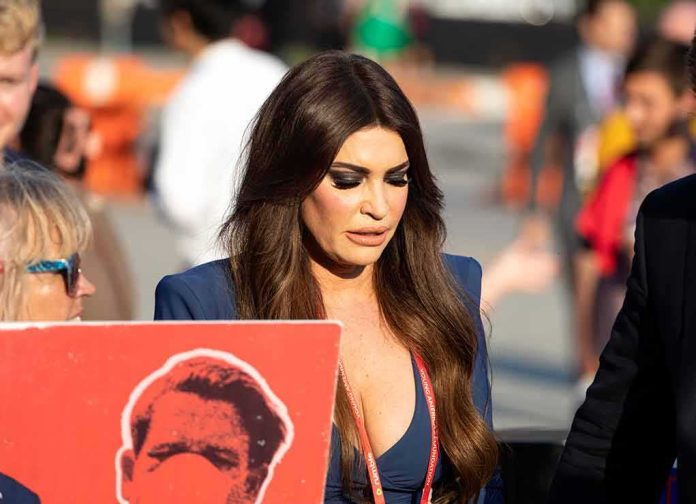
President Trump said he is “looking at” firing Ambassador Kimberly Guilfoyle after reports that a donor says she asked him to quietly wire $100,000 to her American Express account days before her Senate hearing.
Story Snapshot
- Trump signaled possible removal of Guilfoyle as ambassador to Greece.
- Donor Eric Deters shared messages that appear to show a $100,000 wire request.
- The reported message said a wire to American Express would “not show up anywhere”.
- The State Department inspector general opened a probe into the allegations.
What Trump Said And Why It Matters
President Trump told reporters the White House is “not happy” and is “looking at” firing Guilfoyle. He spoke after news reports said Republican donor Eric Deters released messages that show a request for a $100,000 payment to American Express shortly before Guilfoyle’s Senate Foreign Relations Committee hearing. The timing and the amount turned a private dispute into a public test. Personnel decisions at this level send a signal. Standards matter more than spin when an ambassador’s judgment is in question.
https://www.youtube.com/watch?v=hqAuIkpaiIg
The State Department’s internal watchdog launched an inquiry into the claims. The reported scope includes the alleged payment request and whether access to senior officials was offered or implied. The inquiry places the matter inside a formal lane, not just in headlines. An inspector general review also protects due process while keeping the focus on rules, records, and any contact trails tied to official acts.
The Messages And The Line They Approach
Reports say Deters supplied screenshots and a document with texts and Signal messages. One message attributed to Guilfoyle reads, “It won’t show up anywhere if you wire money to American Express”. Deters says he did not send the money, so there is no bank trail of a completed transfer. The absence of a payment does not end the concern; the ask itself, paired with a suggestion to avoid a trail, raises the stakes for any nominee seeking public trust.
Hundreds of messages, emails, and letters were reportedly reviewed by journalists, adding volume beyond a single text. That breadth helps frame the context around a one-off quote. At the same time, the core hinge remains simple: a large personal ask, near a key government hearing, with language about keeping it off the radar. That combination is why this story moved from chatter to consequences.
Ethics Guardrails And The Quid Pro Quo Question
Federal ethics rules bar officials from taking action that affects their own financial interests. The State Department’s ethics manual and government-wide standards are clear about avoiding both real conflicts and their appearance. These rules are designed to protect decisions from private debts and favors that could sway judgment or look like they do. That is the conservative baseline: public power must stay separate from private gain.
Coverage has raised the “quid pro quo” label, but the reported messages do not, by themselves, prove an explicit exchange of official acts for cash. That legal bar is high for a reason. Still, common sense says even asking a donor for a six-figure personal payment invites pressure, doubt, and the kind of influence that taxpayers should never have to guess about. Guardrails exist so decisions rest on merit, not money or personal leverage.
The Timing, The Players, And The Stakes For Governance
The reported request came on July 3, six days before Guilfoyle’s Senate confirmation hearing. That timing places a private financial request next to a public trust milestone. Deters is not a neutral bystander; he is a suspended Kentucky attorney and an activist donor, and he says he refused to pay. Those facts will get weighed in the probe. But the presidency cannot outsource ethics to donor discretion. The standard must be set by the office, not by who says yes or no.
NEW: President Trump said Monday that he’s considering firing Kimberly Guilfoyle as the U.S. ambassador to Greece, amid allegations of misconduct related to her role. https://t.co/FzKqltTUx3
— Stephen Anderson (@stephenreports) October 13, 2026
Ambassadorial roles mix policy, protocol, and pressure. America expects clear lines. If the inspector general finds conduct outside the lines, removal is not drama; it is discipline. If the probe closes without findings, then the record should state that and move on. Until then, Trump’s public stance signals a simple rule that aligns with conservative governance: protect the office, enforce standards, and keep personal finances out of public business.
Sources:
cbsnews.com, thehill.com, independent.co.uk, cincinnati.com, tovima.com, abcnews.com