

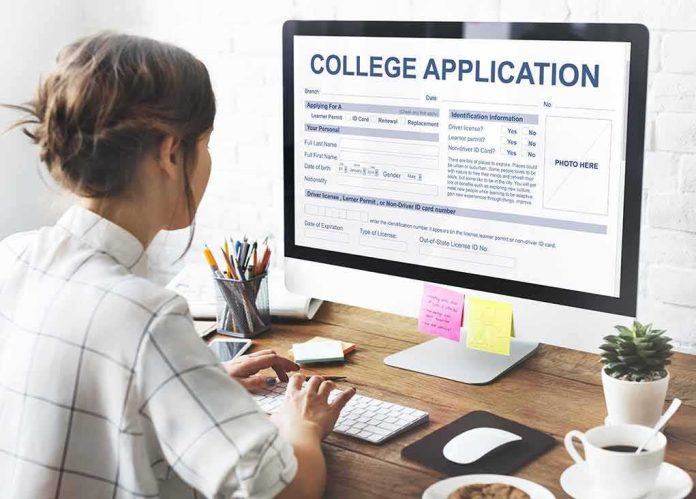
Florida’s university system will stop admitting undocumented students to its 12 public universities starting in 2027—an admissions line the state has never drawn this sharply before.
Story Snapshot
- The Board of Governors approved a rule barring undocumented students from initial enrollment at state universities starting in 2027–28.
- Current university students are not affected; the rule applies only to new admissions.
- Florida colleges already require proof of lawful presence for admission; universities are now aligned closer to that standard.
- Advocates call it a “total ban” and signal legal and political challenges ahead.
What Florida’s Rule Actually Does
The State University System Board of Governors voted to prohibit initial enrollment of people not lawfully present in the United States at Florida’s 12 public universities, with the change taking effect in the 2027–28 academic year. The board’s action mirrors language discussed earlier this year, which ties eligibility to lawful presence and to systems that cannot admit all qualified applicants. Reporters covering the vote note the policy targets new admissions only and leaves current enrollees in place.
The university move follows a June decision by the Florida State Board of Education that required students at the state’s public colleges to prove citizenship or lawful presence before admission. The two decisions now run on parallel tracks: colleges enforce status checks at the door, and universities will close initial enrollment to those without lawful presence. The net effect is a common standard across Florida’s public higher education pipeline, but with different mechanisms at colleges and universities.
How The Policy Will Roll Out
Admissions offices will adjust applications and guidance this cycle so families understand the 2027 start date. Universities will train staff to verify status and handle edge cases, like applicants with pending immigration relief. Media accounts say the rule limits only new enrollments, which helps campuses avoid mid-degree disruptions and related lawsuits. Expect a rise in transfer interest to private institutions and to out-of-state publics that still enroll undocumented students.
State leaders argue the system must focus scarce seats on students authorized to live and work here, especially at selective campuses that cannot admit all qualified applicants. That claim tracks with capacity rules the system already uses for nonresident enrollment planning, though that earlier rule targeted out-of-state headcount, not immigration status. Supporters present the change as a straightforward application of the law inside a system built with taxpayer dollars and capped program space.
What Critics Say—And The Real Stakes
Advocates brand the move a total ban and prepare challenges. They argue the policy blocks driven high school graduates who grew up in Florida from earning degrees that boost the state’s economy. A state representative warned colleges could lose roughly $15 million per year and see talent leave the state. A student advocate said, “We just want an opportunity,” capturing a moral appeal that will likely feature in any court or legislative push.
College enrollment in Florida just got way more restrictive. The state is now barring students who can't prove legal residency from attending public universities like UF, FSU, and UCF.
The ban covers undocumented immigrants and even some visa holders.
— Beth Caila (@BethCaila) September 5, 2026
On the facts, the university rule draws a bright line on initial enrollment, while leaving current students in place and not touching private colleges. That is narrower than critics’ “total ban” label, but the practical impact for new seniors without status is direct and immediate. From a conservative, common-sense lens, a state has a duty to align admissions with the law and with seat limits. The debate is whether Florida should carve out exceptions for students raised and educated in-state, despite federal status.
Where Florida Sits In The National Split
Florida’s posture places it among the more restrictive states on undocumented students in public higher education. Many states allow in-state tuition or aid for these students, while a smaller group bars some or all access. Florida’s 2026 actions position it on the exclusion side of that divide, and they extend a national debate that has simmered since the Supreme Court’s 1982 Plyler v. Doe decision, which protects K–12 access but does not clearly cover college. Expect policy churn to continue at the state level.
What To Watch Next
Courts may test the rule’s structure and the verification process. Universities will refine how they handle applicants with Deferred Action for Childhood Arrivals or temporary protections. Lawmakers could revisit financial aid and residency rules to align with the admissions change. Families will seek private and out-of-state options, and Florida’s workforce boards will feel the downstream effects as those students choose work, relocation, or alternative training. The admissions deadline that matters arrives next fall; the planning scramble starts now.
Sources:
flbog.edu, panthernow.com, bignewsnetwork.com, voz.us, insidehighered.com, highereddive.com, wesh.com, alligator.org, wlrn.org, wctv.tv