
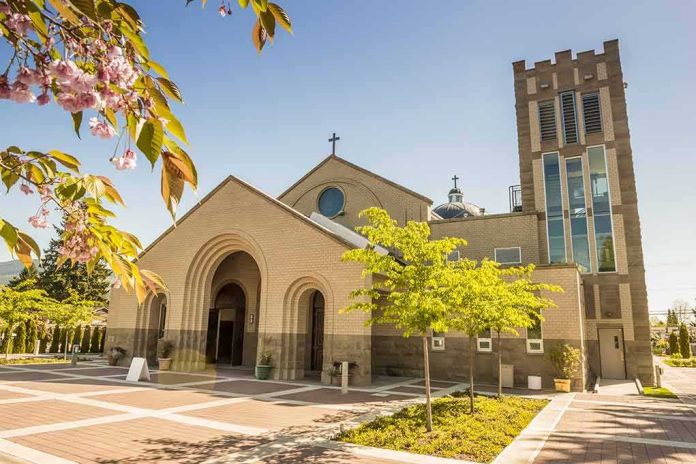
A 156-year-old church that stood empty for nearly a decade is now rubble, set to become a 24-hour gas-and-food hub next year.
At a Glance
- The Sacred Heart Church in Roseville sat vacant since 2017, then came down in September 2026.
- The Archdiocese sold the site; a judge dismissed a lawsuit that sought to block demolition.
- Sheetz plans a fuel center, convenience market, and quick-serve restaurant on the combined parcels.
- Preservation advocates mourn a local landmark and argue for community-focused reuse.
How a Landmark Became a Construction Site
Crews began demolition after hazardous materials were removed and permits cleared, closing a chapter that started when the parish shut its doors in 2017. City approvals and a court dismissal ended formal challenges to the sale and teardown, allowing work to proceed on a set timeline. Neighbors watched brick by brick as the sanctuary fell. Some took photos. Others prayed. Many asked the same question: why could this not be saved?
Sheetz bought the church property and the next-door Apple Annie’s parcel, signaling a broader plan than one building swap. The company will install fuel pumps, a market, and a small restaurant on the merged site. Reports describe target dates that run through construction this fall and a 2027 opening, which fits the pace of similar builds in busy corridors. The company says it salvaged items like doors, roof tiles, and the bell to honor local memory.
Why the Sale Happened
The Archdiocese moved to sell after the parish became unsustainable. Local reporting tied the closure to no active parishioners and debt pressure, a common story for older churches with high upkeep and no tithes to match the bills. Once a building sits vacant for years, costs compound and risks grow. A private buyer with a clear use and financing often beats fragile reuse ideas that lack funding or a path through building code hurdles.
A judge dismissed a lawsuit that aimed to stop the sale and demolition, which cleared the last legal obstacle for the redevelopment. Planning officials earlier approved the project, checking the boxes on land use and site design. That sequence—closure, listing, buyer interest, planning review, lawsuit, dismissal—matches a pattern seen in cities across the country as religious real estate gets repurposed or removed.
What Critics Lost, What The City Gains
Opponents say a sacred place should not end as parking stripes and pump islands. They argue the building told Roseville’s story and could have become housing, a shelter, or a center for seniors. One advocate framed it as a moral test for a community that can find money for fuel but not for fellowship. Their case speaks to identity, not just bricks. They believe the city traded memory for margin, and that stings deeply.
A century-old church in Michigan is being demolished and will be replaced by a 24-hour gas station and convenience store.
The former Sacred Heart Catholic Church in Roseville closed in 2017, although the parish’s history dates back to 1861. The property was later sold for… pic.twitter.com/J1Veml0qSd
— Architecture Hub (@archpng) September 23, 2026
Supporters of the project point to a site that sat empty for nine years and a buyer that will put the land back to work. They note the city vetted traffic and zoning and that the court found no defect in the process. They also cite everyday benefits: lighting, jobs, food options, and tax revenue, plus the safety that comes when a dark corner turns active again. That view aligns with a practical, property-rights approach many Americans share.
The Broader Lesson: Use Fights Sentiment When Churches Go Dark
Hundreds of parishes face the same math: fewer worshippers, higher repair bills, and insurance and code costs that make reuse hard. Unless a group brings money, a plan, and a willing owner, sentiment loses to spreadsheets. Strong preservation tools or a funded nonprofit can change that path, but neither appeared in time here. Communities that want saves need early action, credible dollars, and partners who can meet code without bleeding cash.
What Could Have Changed the Outcome
Three steps might have moved the needle. First, a purchase offer with financing from a preservation-aligned buyer. Second, a city-backed reuse study with grants, tax credits, and a defined operator. Third, a heritage designation that triggers stricter review and time to assemble a rescue. None surfaced with the strength needed. In the end, the lawful buyer with a plan and capital got the keys, and the excavators got the call.
Sources:
lifesitenews.com, fox2detroit.com, detroitnews.com, macombdaily.com, clickondetroit.com, yahoo.com, wxyz.com, wcsx.com, freep.com