
A Delta passenger slipped through a secure door at John Wayne Airport, stole a tug, and crashed it on the tarmac before officers stopped him.
Story Snapshot
- Passenger breached a terminal door and entered the airfield at John Wayne Airport.
- He stole an Alaska Airlines tug, drove across the tarmac, and hit another vehicle near Gate 7.
- Airport police detained him after he tried to take a second vehicle, a lavatory truck.
- Controllers and ground crews halted normal activity as the breach unfolded across active gates.
A reckless breach raced from the gate to the ramp
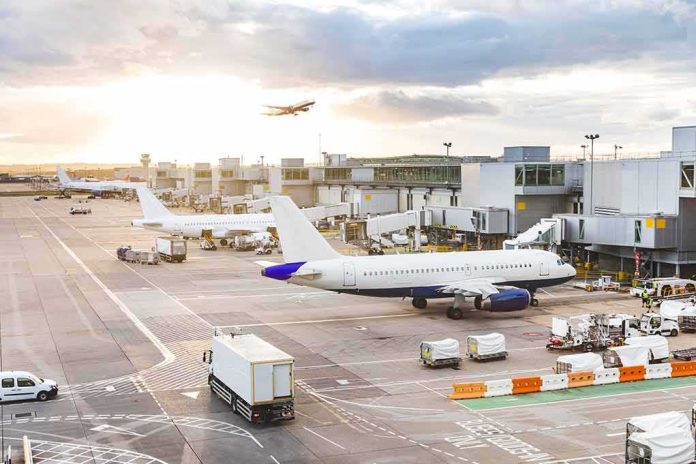
John Wayne Airport officials said a Delta passenger exited the terminal through Gate 12 around 5:30 p.m., crossed into the airfield, and commandeered an airport tug assigned to Alaska Airlines. He drove along taxiways toward Gate 7 and collided with an airfield vehicle. Officers said he then tried to take a lavatory service truck before police cut him off and took him into custody. The Orange County Sheriff’s Department later listed charges that included vehicle theft and trespassing.
Radio traffic captured air traffic control noting a “security breach” and a tug in unauthorized motion on the ramp, which triggered immediate slowdowns on ground movements. The episode lasted several minutes and forced airport personnel to reset operations around multiple gates. No injuries were reported in initial accounts, but the collision damaged ground equipment and disrupted airline schedules. The suspect was transported for evaluation after his arrest, a step common when behavior suggests impairment or distress on secured property.
How a single door can unravel layered security
Airports build security in layers: badges, cameras, fences, and strict access rules. The weak seam is the doorway between public space and the ramp. Once someone crosses that line, even a small vehicle becomes a moving hazard around fuel, engines, and people. Past reporting shows these intrusions happen more often than most travelers think. A review of major airport breaches found an average interval of days, not months, between cases across the country. That pattern argues for stronger door alarms and human oversight during busy periods.
Officials called this incident a security breach because it pierced those layers from the inside out. The man did not scale a fence; he moved from the concourse to the tarmac. That leap matters. Ground crews expect vetted workers, not random passengers, beside live aircraft. The fact that he found a tug ready to start raises obvious questions about keys, kill switches, and parking controls near gates. Common sense says equipment should be locked and staged away from unsecured access points, especially at shift changes and during peak boarding times.
Conservative common sense on accountability and fixes
Airport leaders will likely review door logs, camera coverage, and equipment procedures. They should act fast. Basic steps cut risk without new bureaucracy: hard-lock every tug, add brake boots when parked, and link door alarms to a live response desk, not just a log file. Airfield managers should also test whether a person can walk from a gate to a vehicle in under a minute. If the answer is yes, move the vehicles or add barriers. Taxpayers fund this infrastructure; they deserve simple, proven controls that work every time.
A man broke onto the tarmac at John Wayne Airport in Santa Ana, California, on Tuesday, October 6, and stole a vehicle for a joy ride before authorities stepped in. He was arrested on charges of vehicle theft, trespassing, and vandalism
Watch: pic.twitter.com/YfVblHF3BC
— Maktoob (@MaktoobMedia) October 8, 2026
The suspect faces the justice system, which is appropriate given the danger and disruption. The larger duty sits with airport and airline operators. The Federal Aviation Administration sets the standards, but local discipline makes them real. When a passenger can grab a tug and roam a ramp, the system did not fail in theory; it failed in practice. Close the door gap, lock the wheels, and make it boringly hard to do this again. That is how you keep flights on time and people safe.
Sources:
news.com.au, aerotime.aero, nypost.com, ktla.com, thelul.org, upi.com