

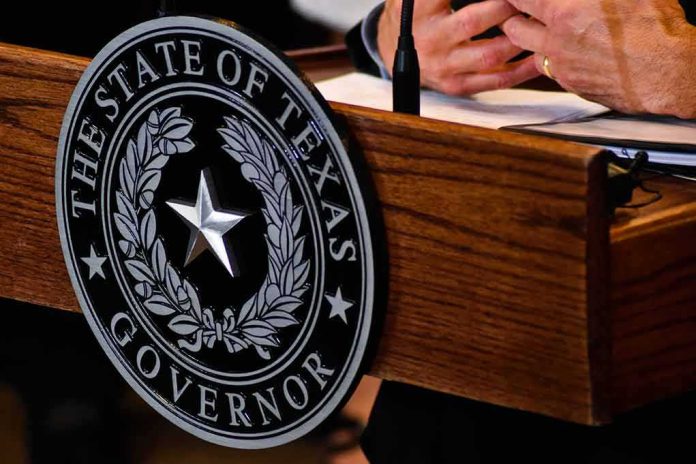
Texas Democrats opened the legislative gates with 20-plus gun bills that would rewrite how, when, and to whom firearms can be sold or seized.
Story Snapshot
- Private sales would require a background check done through a licensed dealer.
- Courts could issue fast, temporary extreme-risk orders to remove guns within 24 hours.
- Several bills target people under 21 and raise penalties for unsafe storage.
- Gun-rights groups call the package confiscation and vow a full-court press.
What Was Filed, Plainly Stated
House Bill 613 would force private sellers to run a National Instant Criminal Background Check System check through a licensed dealer before transferring a gun. The seller would need to confirm the buyer can legally own a firearm. That adds a paper trail and puts private deals under the same screen as store sales. House Bill 218 would create an extreme-risk process. Family, household members, or police could ask a judge to issue an order, and a court could require surrender within 24 hours.
Separate bills aim at age-based limits and storage. Reports list measures to restrict firearm transfers or certain firearm types for people under 21, and to raise penalties if a child accesses an unsecured gun. Supporters frame these as risk-focused rules. Opponents argue they burden lawful owners and sweep in millions of routine purchases without proof of safety gains in Texas. Several outlets counted more than 20 bills filed on day one.
How The Red-Flag Track Would Work
House Bill 218 outlines a two-step path. A petition can lead to a quick temporary order without a prior hearing if the judge sees an immediate threat. That triggers gun surrender within a day. A second, fuller hearing would follow. That timeline mirrors other states’ extreme-risk laws. The United States Supreme Court has said courts may temporarily disarm people who pose a credible threat, which bolsters the concept, though details still matter.
The heavy lift lands on due process. Texans will ask: What proof does a judge need for the first order? How fast is the full hearing? What are penalties for false claims? The record so far lists the broad mechanics but not Texas-specific error rates, timelines, or sanctions. Without those guardrails in black and white, critics will tag the process as ripe for misuse, especially during messy family disputes or neighbor feuds.
Background Checks On Private Sales: The Real Tradeoff
House Bill 613 takes a clear, workable route: use a licensed dealer to run the check, then transfer. That closes the gap where strangers meet in a parking lot and swap cash for a rifle. Research suggests stronger background-check systems can reduce homicide, though the effect sizes vary and depend on enforcement. Texas data tying private-transfer checks to specific safety gains has not been presented yet, which invites pushback and court scrutiny on benefits versus burdens.
Gun-rights leaders label this a hidden registry. They argue routing all private sales through dealers creates permanent records and chills lawful trades. That claim will resonate with many Texas owners who value privacy and speed. The policy choice is binary in practice: either accept a modest friction at transfer to block prohibited buyers, or keep private swaps fast and quiet but easier for bad actors to exploit. Lawmakers must show how they will prosecute straw buyers and enforce violations to make the friction worth it.
Age Limits, “Assault-Style” Definitions, And The Political Fireball
Several bills tighten access for people aged 18 to 20 and restrict certain semiautomatic rifles by features. Age floors can reduce youth suicides in some studies, but the record here does not explain why 21 is the right line for each covered gun in Texas. Feature-based rifle rules often spark definitional fights and produce workarounds. The number of affected owners could be large, which sets up broad backlash unless sponsors release clear counts and credible safety targets.
THE EVIDENCE™ | PART ONE
TEXAS DEMOCRATS FILED GUN RESTRICTIONS. WHAT ABOUT THAT PESKY SECOND AMENDMENT?
The evidence will be presented. The verdict is yours.
On November 3, Democrats won the Texas governor’s race and control of the Texas House. Six days later, on the first… pic.twitter.com/bxRSxBmnul
— Kim Wojcinski (@KimWojcinski) November 11, 2026
Gun-rights groups call the package an assault on the Second Amendment and promise to kill it in the Senate and the courts. They focus on two bills as most urgent to everyday carriers: the extreme-risk orders and private-transfer checks. That bet is savvy politics. If those two measures stall, the rest likely wobbles. Passage is not a lock. Reports note a Republican-controlled Senate and a Texas culture that prizes armed self-defense, which narrows the path for sweeping change.
Sources:
redstate.com, yournews.com, rightedition.com, fox4news.com, townhall.com, texasscorecard.com, ammoland.com, congress.gov