
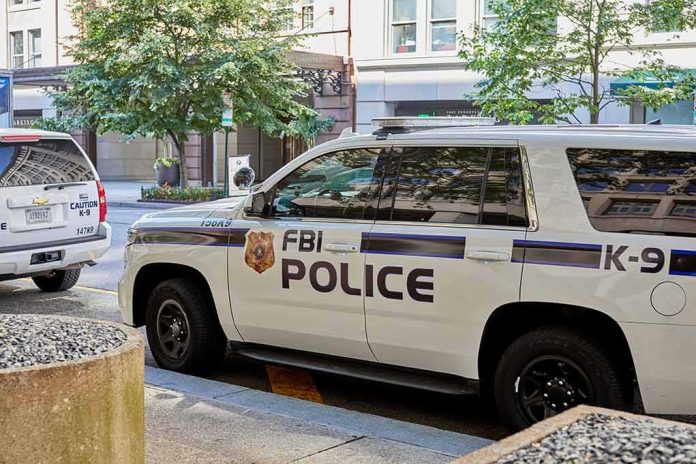
Texas officers say a credible tip about a Thursday Capitol attack turned into a 3 a.m. arrest and a same-day bond — before federal agents stepped in.
Story Snapshot
- Texas Department of Public Safety said it stopped a planned violent attack on the State Capitol after a late-night tip.
- Agents arrested 40-year-old Benny Caldera Jr. in Converse and charged him with a felony terroristic threat against a public servant.
- A Senate notice said the plan targeted Oct. 1 and called Caldera the “main suspect,” with suspected co-conspirators.
- Bond was set at $75,000; the Federal Bureau of Investigation (FBI) then took him into federal custody, officials said.
Overnight tip, 3 a.m. arrest, and a fast-changing custody
Texas Department of Public Safety leaders said a credible tip landed Tuesday evening about a planned violent attack on the Texas State Capitol set for Thursday. State special agents worked with the Federal Bureau of Investigation and local partners through the night. A Department of Public Safety Special Weapons and Tactics team moved at about 3 a.m. and arrested 40-year-old Benny Caldera Jr. at a home in Converse, near San Antonio. Officials said the goal was to stop any move toward Austin before daylight.
Booking records show Caldera was charged with making a terroristic threat against a public servant, a felony under Texas law, and taken to the Bexar County Jail. Reports state a judge set bond at $75,000, which he posted within hours. That signals a formal state process had begun. Later Wednesday, reporters were told federal agents took Caldera into federal custody, reflecting a potential shift to a broader federal probe tied to the alleged target and timeline.
What authorities say about motive, target, and timing
State leaders framed the threat around a clear target and date. A notice from the Texas Senate’s secretary, Patsy Spaw, told senators the planned attack was set for Oct. 1 and described Caldera as the main suspect, with suspected co-conspirators. A reported quote from arrest documents says Caldera told a friend, “I am going to the Capitol and I am going to shoot it up,” which points to both intent and target selection. The FBI director said the arrest came within hours of the tip, highlighting the urgency.
The arrest capped a familiar pattern in high-risk cases. Agencies act fast when a government building is named, especially with a date attached. The Texas Department of Public Safety said its Criminal Investigations Division validated the tip with the Federal Bureau of Investigation and local officers before the SWAT team moved in. That sequence fits common threat-response playbooks: verify enough to detain, secure the suspect, then widen the review of devices, travel, and contacts while the clock still favors law enforcement.
Security posture, bond debate, and public expectations
Capitol security ramped up as leaders briefed lawmakers on the alleged plan and timeline. The quick bond stirred the usual debate over risk, rights, and jail space. Some argue violent-threat suspects should be held until a deeper review is done. Others point to the duty to set terms that fit the charge and available facts. In this case, the bond stood at $75,000, and then federal custody followed, which often means a parallel case or hold is in motion beyond the state count.
After reports of an arrest in an alleged plot to attack the Texas Capitol, the Department of Public Safety says it is safe for lawmakers, staff, and others to return to the building tomorrow as normal. DPS assures us the situation is under control pic.twitter.com/TELX65M7lC
— Scott Braddock (@scottbraddock) September 30, 2026
American conservative common sense says two things can be true at once. First, police should move fast when a clear threat names a public target on a date certain. Second, courts must run a real process, even in tense cases. This case shows that balance. Officers acted overnight and got a judge to set terms. The Federal Bureau of Investigation added a backstop. The public expects speed without shortcuts. The sequence here hits that mark, based on what officials have released.
How this fits the modern threat playbook
Texas is not alone. In recent years, agencies have moved fast on threats to state capitols when a named building and day appeared in tips or messages. The words “credible threat” and “planned attack” often come before affidavits go public, because leaders must inform potential targets and set security postures in real time. That approach trades some public detail for speed. The goal is simple: deter copycats, disrupt planning, and force suspects off any timeline that puts people at risk.
Sources:
abc7news.com, kvue.com, wjla.com, click2houston.com, ksat.com