
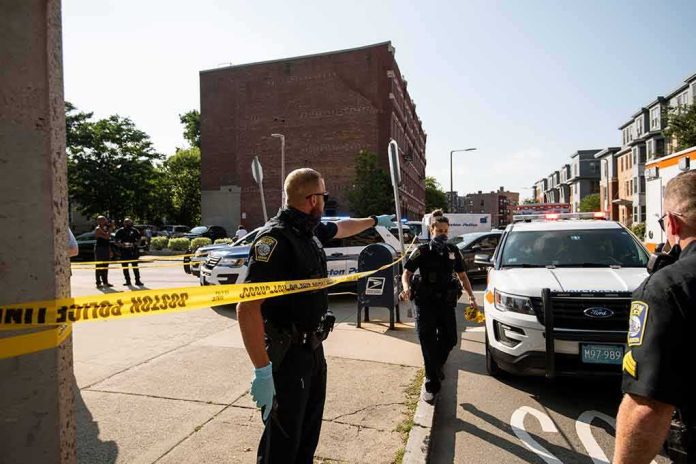
Police say five people were shot and a gunman barricaded himself near 15th and P streets NW in Washington, D.C.
Story Snapshot
- Metropolitan Police Department warned of an active shooting and told the public to avoid the area
- Authorities reported five people shot or injured during the attack
- Police said the suspect barricaded in a nearby building as tactical teams moved in
- Shelter-in-place orders and street closures locked down Logan Circle
What Police Reported And How The Scene Evolved
The Metropolitan Police Department alerted the city to an active shooting near 15th and P streets Northwest on November 12, 2026. The department said its Emergency Response Team was on scene and urged people to avoid the area. Reporters on the ground cited D.C. police for an injury count that climbed to five. The Washington Post reported at least five people injured. CBS News reported five shot, reflecting the same police sourcing.
Police then shifted into a barricade response. A department spokesperson said officers were working an active barricade. The Associated Press, carried by the Boston Herald, reported that the shooting suspect was barricaded close to where the first shots were fired, also citing D.C. police. The tactical response fit that posture: armored units, long guns, and control of entry points. That posture aims to contain the threat, protect bystanders, and force a safe surrender if possible.
Ground Conditions In Logan Circle
Officers locked down the 1500 block with a shelter-in-place order and urged residents and workers to stay inside. USA Today reported those steps along with the presence of the Emergency Response Team. Local outlets described a suspect barricaded in a residential building, possibly on an upper floor above a gym, and not yet in custody as the evening wore on. Reuters also reported that police said an active shooter was barricaded in a building. Those details match common urban containment tactics.
The injury figures moved during the rush of updates. Some outlets wrote four shot, others at least five injured, and one local station reported a death alongside other injuries. Early numbers often shift as medics triage and hospitals update status. The Washington Post and CBS News placed the tally at five injured or shot, both attributing the numbers to D.C. police at the time. That count may change after a final police report and hospital confirmations.
Why “Active Shooter” And “Barricade” Can Describe One Chain Of Events
Police use “active shooter” to signal an immediate threat and to trigger fast public warnings. The Federal Bureau of Investigation (FBI) defines an active shooter as someone using, or attempting to use, a firearm to kill or harm people. That definition can include moments with no casualties if the threat is still present. A barricade can follow when the shooter retreats into a space that officers must surround and control.
Tonight residents of Logan Circle gathered to honor the victim of today’s deadly shooting, James Stuart. The residents then left flowers and messages at a makeshift memorial outside of Vida Fitness, where Stuart was shot and killed this morning.@fox5dc pic.twitter.com/OgeTK9D95L
— Ama Arthur-Asmah (@Ama_A_Asmah) November 13, 2026
That sequence explains the shift in language across alerts and headlines. First comes the public safety blast: active shooting, avoid the area. Then comes the focused message: suspect barricaded, stay sheltered, tactical team on scene. This is not spin. It reflects the fight for time, space, and safety. It also reflects the duty to alert the public before every detail is nailed down, which is why early reports can differ at the edges while matching on core facts.
What Matters Next For Accountability And Public Trust
Police will produce a final timeline that shows the first 911 call, dispatch steps, where people were shot, and when the scene was secured. That record should settle where the gunfire started, whether the gym or sidewalk sustained the first shots, and how many victims were shot versus otherwise injured. The clearest yardstick is simple: name the locations, mark the times, and list the medical outcomes. The public deserves that clarity, and it should come straight from the department.
Leaders who value order and truth should welcome that level of detail. Clear facts back good policy, support victims, and curb rumor. When police say “active shooter,” they should also define the threat window and resolution point once the dust settles. That is common sense. It respects the public’s right to know without undercutting officer safety while the scene is hot. Do both, and confidence grows the next time a warning flashes across the city.
Sources:
redstate.com, fox2detroit.com, cbsnews.com, usatoday.com, wpde.com