
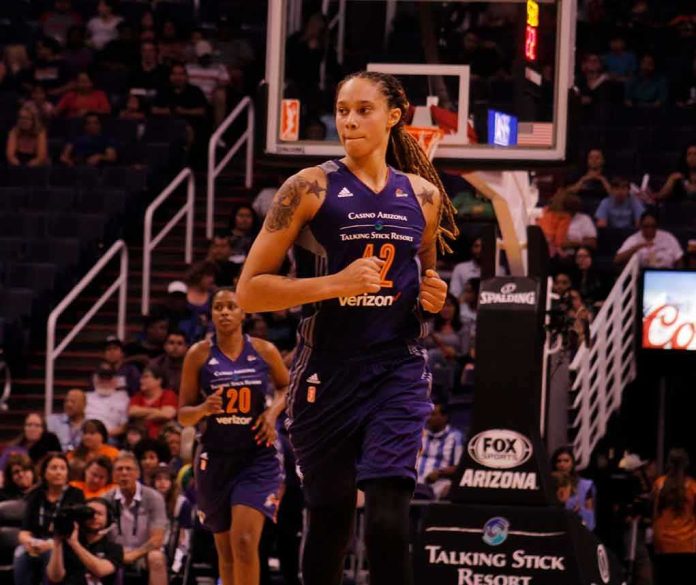
A Taser leveled at Paige Bueckers’ face froze a 4:20 a.m. nightclub chaos into a single, searing frame of authority and consequence.
Story Snapshot
- Bodycam video shows an officer aim a Taser at Paige Bueckers during teammate Arike Ogunbowale’s arrest outside E11EVEN in Miami.
- Reports cite an arrest affidavit alleging Ogunbowale punched a man, prompting a battery charge and on-scene arrest.
- Crowds pressed close as players pleaded, “We got her,” while officers ordered people to back up.
- Policy context: officers often draw, not fire, Tasers to stop escalation in tight, volatile spaces.
What The Bodycam Shows And Why It Mattered In The Moment
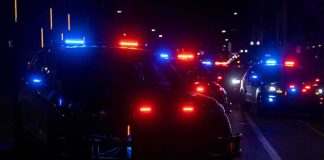
Police body camera footage captures a tense scene outside E11EVEN Miami around 4:20 a.m. on March 5. Officers move to arrest Dallas Wings guard Arike Ogunbowale. Dallas Wings star Paige Bueckers steps near the scrum, arm around her teammate, saying, “We got her,” as the officer shouts for space. The officer raises a Taser toward Bueckers, ordering her to back up. The clip is brief, clear, and volatile. It shows a crowd shrinking the safety zone fast.
Coverage describes players pleading for a release while officers insist on control and distance. The officer aims the Taser and repeats commands to move back. Bueckers retreats and is not detained or charged. The focal image—Taser up, crowd in—drives the public debate. The raw video does not decide fault by itself, but it nails down two facts: police were arresting a named suspect, and bystanders were closing in as words flew and hands reached.
Why Officers Drew The Taser Instead Of Wrestling The Crowd
Use-of-force training often places drawing a Taser below striking or baton use. Agencies teach it as a way to stop active resistance and prevent a hands-on struggle from getting worse. In a crush of bodies, one spark turns a hold into a brawl. The force continuum exists to stop that slide. Drawing—without firing—can create a pause, a lane, and compliance when commands fail in the noise.
That logic fits what the tape shows: a tight perimeter, an arrest in progress, and people within arm’s reach. The tool choice signaled urgency without blows. Critics may not like the optics, but operationally it made sense. Officers must keep suspects, bystanders, and themselves safe. That starts with space. A clear command plus a visible less-lethal threat often buys that space faster than grappling a celebrity crowd in the street.
The Charge, The Crowd, And The Boundaries Of “Help”
Reports reference a Miami-Dade arrest affidavit alleging Ogunbowale punched a man with a closed fist, leading to a misdemeanor battery charge and a quick bond. That accusation, on paper, gives officers a clean reason to arrest and to hold the line when friends step in. The duty is simple: complete the arrest and prevent escape or interference. That duty does not pause because a teammate says, “We got her”.
Police pointed a Taser in the face of Dallas Wings superstar Paige Bueckers and other WNBA players during the chaotic arrest of teammate Arike Ogunbowale in March, according to body camera footage. Ogunbowale, a Dallas guard, was arrested March 5 and charged with misdemeanor…
— GabbieisNewMedia (@gabbieNewMedia) September 22, 2026
Supporters frame Bueckers as a calming presence, not a threat. The video backs part of that take; she did not attack or refuse to move forever. She stepped in, spoke, and then stepped back. But the timing matters. During handcuffing, any encroachment risks a chain reaction. Police told the crowd to back up. The Taser came up when words alone did not work. On the facts we can see, the display matched a lower rung on the ladder to stop a crowd collapse into the arrest.
How To Judge The Tense Second Without Pretending It Was A Movie
Public debate often leans on the clean frame, not the messy second before it. This incident is classic: a short clip stands in for a long night. Policy research notes that drawing a Taser can be a substitute for riskier force that a hands-on fight invites. That does not give officers a blank check. It does mean the act of drawing, by itself, is not proof of overreach. The question is necessity in that second. The video and the affidavit point to yes.
Sources:
thegatewaypundit.com, marca.com, sports.yahoo.com, usatoday.com