

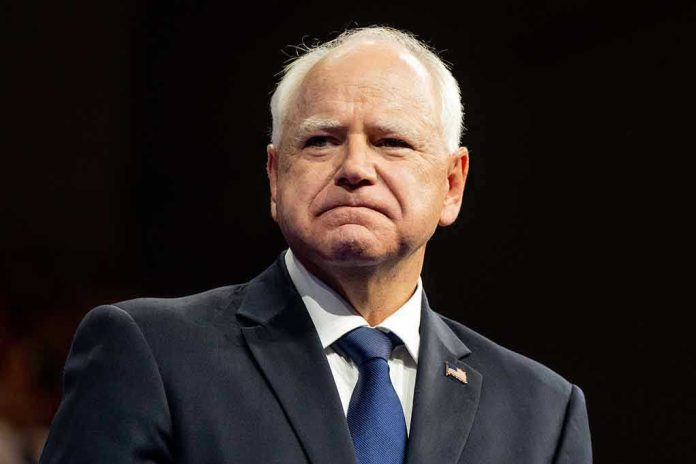
Tim Walz said the buck stops with him on fraud—and the record shows why that matters now.
Story Snapshot
- Congressional investigators say whistleblowers were punished for sounding alarms about fraud.
- Committee leaders allege Walz and the attorney general knew for years and downplayed it.
- Walz accepted responsibility in testimony and later said the state should have stopped it sooner.
- The state created a fraud unit and paused risky Medicaid payments after alarming audits.
What Oversight Investigators Say Happened
House investigators released a staff report that centers on one blunt claim: state employees say they were punished after reporting waste, fraud, and abuse in Minnesota’s benefit programs. The same materials describe a culture where raising red flags could be smeared as “racist” or “Islamophobic,” which would ice any honest cop on the beat. Committee leaders then charged that Governor Tim Walz and Attorney General Keith Ellison knew for years about widespread fraud and failed to act in time.
These are not stray anecdotes. Committee materials reference more than thirty current and former state workers who say they faced retaliation, monitoring, or sidelining after pushing fraud concerns. That pattern matters more than any one case. When the messenger pays a price, fewer messages get delivered. If that took hold inside a massive system handling billions in annual claims, fraudsters would read it as a welcome sign on the door.
Walz’s Own Words—and Why They Landed Hard
Governor Walz told Congress that fraud against taxpayers is unacceptable and that he bears responsibility as governor to stop it. He later said the state should have stopped the schemes sooner and that he accepts blame for that failure. Those statements align with a basic conservative standard: leaders own outcomes, not just intentions. The admissions also set a clear bar. If the culture punished whistleblowers and weak controls allowed fraud to spread, then leadership failed, even if the governor did not sign off on any scam.
Walz and his team argue they were already cracking down for years—referring cases, shutting down high-risk programs, hiring an outside auditor, and appointing a program integrity lead. He also warned that broad payment freezes can hurt families who rely on services, so not every pause is wise. That is a fair caution. But the public expects a governor to pair compassion with controls. The duty is to stop theft while keeping help flowing. When the theft outpaces the controls, the balance is off.
The Paper Trail of Missed Alarms and Late Corrections
State materials and outside reporting show why the alarms were blaring. Minnesota’s own public pages flagged active probes of autism-service providers tied to Medicaid billing. A local report summarized an audit that found over ninety percent of claims at early intervention centers failed to follow state rules, a shocking miss rate even if some errors were clerical. A federal review across four states estimated up to six hundred million dollars in improper autism-service payments, underscoring the scale of risk in this niche. One number like that can swing a budget.
After the scandals erupted, the state moved. Walz signed an executive order in January 2025 to build a fraud investigation unit. Officials paused payments in certain high-risk Medicaid lines and sought stronger stop-pay authority. Those steps are good governance—done earlier, they might have saved millions. That timing is the rub. Late action can look like firefighting after the neighborhood burns. The Oversight Committee frames it that way and says leadership waited while problems spread.
How to Weigh Claims and Accountability Now
The case against Walz leans on committee findings and whistleblower accounts. It does not yet show that he personally ordered any cover-up. That distinction matters. Still, the volume of named concerns, the retaliation claims, and the audit results point to a deeper management failure that let fraud flourish longer than it should have. On the facts today, the stronger ground sits with the people who tried to pull the brake and got their hands slapped for it.
Here is the common sense test. A governor’s job is to make it safe to tell the truth and costly to steal. If workers fear being branded bigots for flagging suspicious claims, fraud wins. If audits find error rates that would get a private insurer’s board fired, fraud wins. Walz’s later fixes show what should have been standard years earlier. Taxpayers deserved those locks on the door the first time someone spotted a crowbar by the jamb.
Sources:
washingtonexaminer.com, oversight.house.gov, westernjournal.com, x.com, archive.org, foxnews.com, mn.gov