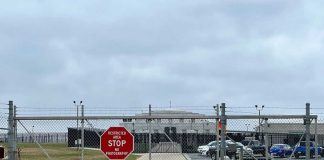

Reporters say a vacation app let strangers shadow soldiers from barracks to home, step by step.
Story Snapshot
- Investigators say Polarsteps exposed precise travel trails and photos of service members.
- Tracking reportedly reached homes, barracks, and NATO missions across several countries.
- The Dutch defense ministry blacklisted the app after questions were raised.
- Polarsteps denies a breach and says reporters scraped public trip data.
What Reporters Found And Why It Matters
Follow the Money, a Dutch outlet, reported they could identify and track dozens of soldiers through Polarsteps. The team said they followed users to homes, bases, and overseas assignments. Outlets in the Netherlands and Belgium repeated the core finding. They said the exposure crossed borders and touched United States, United Kingdom, French, Dutch, and Belgian troops. The report focused on exact locations, time-stamped trails, and media tied to those trails. That combination raises obvious risks for families and units.
Cybernews summarized the data scale behind the claim. It said anyone could pull photos, videos, and home addresses tied to trips. It also said more than a billion precise location points sat within reach through the app’s interface. That level of detail does not just hint at routines. It reveals them. A bad actor does not need passwords when habits are mapped to a front door, a gate, or a convoy form-up time. That is the security point, not a tech parlor trick.
How The Apparent Exposure Worked
Reporting in Dutch media described access through the app’s programming interface. That is the doorway apps provide for features and partners. Journalists said they pulled trip feeds at scale from that interface. One outlet said old public links still worked after users switched trips to “only followers.” If true, that design keeps doors open after users think they shut them. It shrinks the gap between “public once” and “public forever” to a single stale link.
Nos, the Dutch public broadcaster, added a policy consequence. After questions from reporters, the Dutch Ministry of Defence put Polarsteps on a blacklist. The action pulled the app from service devices. That step is not about blame. It is about reducing attack surface now and sorting out nuance later. When location meets uniform, caution wins. Ministries can debate privacy law afterwards. They cannot rewind a ruined operation or a doxed family address.
What The Company Says And What It Changed
Polarsteps rejects the word “breach.” The company says reporters accessed only public data. It says no logins were broken and no private trips were exposed. That point matters in law and headlines. It does not erase risk when “public” means “scrapable at scale.” The company also says it tightened security after the story and curbed large automated harvesting. Those changes concede the core safety issue even while the word “breach” is denied.
Other coverage captured the same two-track message. On one track, Polarsteps says the information came from users who set profiles or trips to public. On the other, it admits steps to block mass scraping and fix old-link access. Both can be true. Users can share too much, and platforms can design systems that turn “share with friends” into “share with the world forever by accident.” Security is duty of care, not a shrug at user choices.
The National Security Lens: Common Sense Rules Apply
Western forces already learned this lesson with fitness and dating apps. Location trails stack up into patterns. Patterns expose units, routines, and homes. Adversaries do not need to hack when they can harvest. Conservative common sense says close the barn door first. Ban risky apps on duty phones, teach troops simple settings, and audit app interfaces for stale-link leaks. Hope is not a plan. Clear rules and fast removals are.
Three steps would harden the space without drama. First, ministries should maintain a living list of banned geolocation apps and publish reasons in plain language. Second, app makers should kill legacy links when users change privacy, and rate-limit data pulls by default. Third, units should brief troops and families on travel-posting delay windows and home-location masking. Freedom to share ends where force protection begins. That line is bright and non-negotiable.
Sources:
military.com, telegraaf.nl, nltimes.nl, nos.nl, ground.news, polarsteps.com, welingelichtekringen.nl