
Congress heard a lifelong Democrat say she is ashamed of her party after an undocumented, California-licensed trucker killed her newlywed son and his bride—while another grieving father warned that bad licensing and sanctuary policies turned a preventable crash into a life sentence for his daughter.
Story Snapshot
- Families testified that a trucker lacking legal status got a California commercial license.
- A father said his 5-year-old suffered a fractured skull and brain injury in the crash.
- The House focused on non-domiciled commercial licenses and sanctuary policies.
- California says it paused many such licenses under a federal order and canceled thousands.
Congress Puts Tragedy And Policy On The Same Table
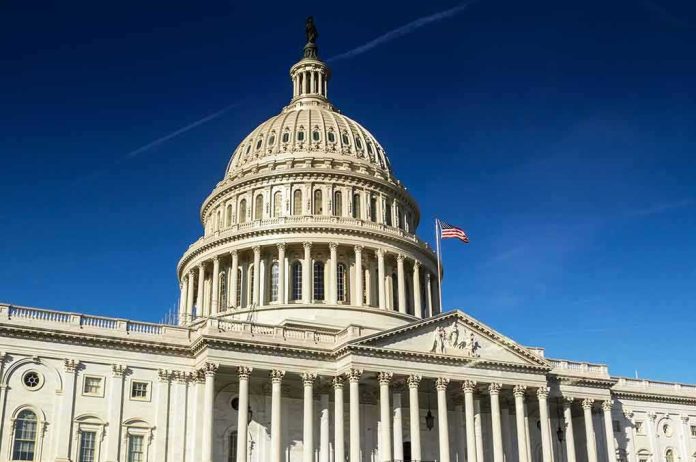
House lawmakers convened a hearing titled “Sanctuary Policies, Tragic Consequences,” and gave the microphone to parents whose lives were split into “before” and “after” by a semi-truck crash. Marcus Coleman told the panel that when a person is not eligible to drive a big rig, the system must stop them before the truck moves, not after the wreck. He tied his daughter’s catastrophic injuries to a driver he described as undocumented and licensed in California.
Coleman’s account was specific and raw. He said an alleged undocumented commercial driver rear-ended the family in a construction zone, leaving his 5-year-old with a fractured skull, a broken femur, and a traumatic brain injury. He argued this was not only about speed or road work. He said it was also about a licensing path that let the driver end up behind the wheel in the first place. He asked Congress to shut the door that let it happen.
What California Did And Did Not Do
California’s Department of Motor Vehicles says it is not currently issuing non-domiciled commercial licenses because the Federal Motor Carrier Safety Administration ordered a pause. The department also said the federal government required it to cancel about 13,000 non-domiciled commercial licenses in March 2026, and that it notified affected drivers. That does not answer how the driver in Coleman’s case was licensed, but it shows the program faced serious federal compliance issues.
The federal pushback did not arrive in a vacuum. Federal transportation authorities issued a finding of substantial noncompliance against California’s commercial licensing program, signaling gaps that Washington believed could affect safety or legal standards. The House hearing itself zeroed in on non-domiciled licensing, showing Congress views this as more than one-off human error. These are the kinds of structural levers that either stop a bad outcome early or bless it by mistake.
Two Stories, One Systemic Warning
Another grieving parent, a lifelong Democrat, told Congress she felt ashamed of her party after an undocumented trucker licensed in California killed her newlywed son and his bride. That allegation, if accurate, matches the core theme in Coleman’s warning: licensing and sanctuary policies can line up in a way that puts unqualified or unauthorized drivers in control of 80,000-pound vehicles. American conservative instincts say the first duty of government is to protect the innocent before interest groups or ideology.
‘Lifelong Democrat’ admits she is ‘ashamed’ of party after son killed in illegal immigrant crash | Fox News, New York Post
In testimony before Congress this morning, self-identified “lifelong Democrat” Elizabeth Carter admitted that she is “ashamed” of her party’s handling of… pic.twitter.com/RFTUHBENNo
— Owen Gregorian (@OwenGregorian) September 16, 2026
Drivers make errors, and not every crash is a policy failure. Still, when the state grants the keys, it owns the screening. Coleman’s critics point to data that immigrants with temporary work authorization in California were less likely to be in crashes and fatal crashes, which deserves a fair hearing. But that statistic does not clear a process that let an allegedly undocumented driver obtain a commercial credential and leave a child disabled. Safety is judged case by case at the moment of issuance.
The Fix: Verify First, Not After The Funeral
Licensing must start with rock-solid identity checks, real-time immigration status verification, and strict employer validation before a trainee ever shifts into gear. California’s own pause and mass cancellations show the stakes when standards drift. Congress should tighten the chain: require state licensing agencies to run federal checks at issuance and renewal, mandate audits, and suspend noncompliant programs. Lawmakers should also allow victims to sue jurisdictions that ignore detainers and issue credentials that federal rules would block.
Sources:
presidentialwire.com, judiciary.house.gov, redstate.com, courts.oregon.gov, foxnews.com, opb.org, dmv.ca.gov, transportation.gov, calmatters.org