
A woman is dead after a collision that early reports tie to an emergency fire response, and the fight now is over blame, policy, and what “due caution” really means when lights and sirens meet city traffic.
Story Snapshot
- Police and media reports diverge on whether emergency driving or a civilian driver’s error triggered the fatal sequence [1][6][8][9].
- Public judgment races ahead of collision reconstructions that typically take days or weeks [8][12].
- Past lawsuits and prior FDNY crashes show how fault turns on narrow rules, telemetry, and signal priority protocols [7][10].
- Conservative common sense: protect first responders’ mission while enforcing equal accountability under the law.
What happened, and why the first headlines rarely settle fault
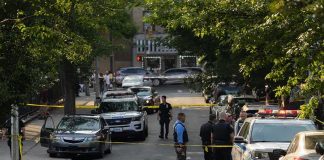
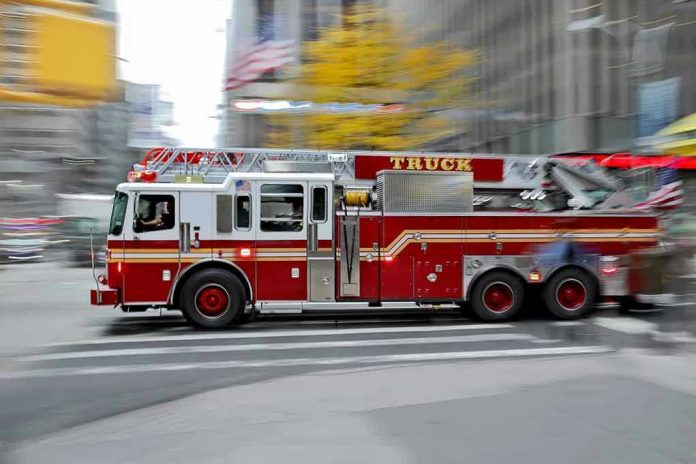
Initial coverage framed a New York City Fire Department truck rushing to an emergency in the Bronx and a woman killed in the aftermath, with injuries mounting across multiple vehicles [6][8]. Early television segments emphasized lights, sirens, and a chaotic chain reaction that left families searching for answers as police launched a reconstruction [6][12]. Parallel reporting from a separate Bronx fatal crash cited the New York Police Department Highway District’s Collision Investigation Squad assigning primary fault to a speeding civilian sedan that failed a turn and struck trucks slowing for a red light [1].
News 12 | Bronx | Woman Dies After Being Struck By Fdny Truck In Morrisania https://t.co/CyvbB1296f
— Bill Davies (@nycmaven44637) June 6, 2026
The split screen is familiar: a dramatic emergency-vehicle crash and a news cycle hungry for instant accountability before investigators download black-box data, pull traffic camera video, and interview every operator involved [8][12]. The difference between a lawful emergency response and criminal negligence hangs on tedious details: siren cadence, signal preemption, speed at intersection entry, and whether other motorists yielded as required. The story matters because those details decide prosecutions, civil damages, and any rule changes for future responses [8][10][12].
How New York’s emergency driving rules actually work
State law grants emergency vehicles specific privileges—proceeding past red lights and exceeding posted speeds—but only when using audible and visual signals and only with due regard for the safety of all road users. That standard does not promise immunity; it demands judgment. Investigators will ask whether the fire truck reduced speed before entering intersections, whether sight lines were blocked by larger vehicles, and whether a civilian driver ignored a yielding duty. These questions decide whether tragedy equals accident or actionable negligence [8][10][12].
When prior FDNY crashes landed in court, plaintiffs focused on these exact variables. A Bronx lawsuit over a fatal fire engine collision targeted the driver and supervising officer, arguing deviation from policy and lack of due care; the city’s defense highlighted mission urgency and statutory privileges during an active response [7]. In Brooklyn’s chain-reaction crash, officials confirmed the rig was responding, and coverage chronicled a lethal sequence after contact with a van and a small bus—a reminder that one hard brake or strike can multiply harm across unsuspecting riders [8][9][10][12].
The evidence that will actually settle this case
Police reconstructions depend on data, not rumor. Investigators will review traffic signal timing, dash and surveillance video, and vehicle telematics to map speed, throttle, braking, and turn angles at the collision moment [12]. Reporters in a separate Bronx case quoted investigators blaming a civilian sedan that “failed to navigate the turn” before striking trucks already slowing for a red light, a detail that, if mirrored here, would tilt fault away from the responder [1]. If the truck entered an intersection too hot or without a safe clearing scan, liability could land on the operator and the city [7][10].
🇺🇲 ACCIDENT: A woman was struck and killed by an FDNY fire truck responding to an emergency in the Bronx Friday night, officials said. The collision happened near Intervale Avenue and Chisholm Street. The victim was transported to St. Barnabas Hospital, where she was pronounced… pic.twitter.com/pyap3J12RO
— Belaaz News (@TheBelaaz) June 7, 2026
Families deserve answers faster than the bureaucracy moves, but shortcuts corrupt justice. American conservative values demand two guardrails at once: protect first responders’ lifesaving mission from political second-guessing, and enforce equal accountability when anyone—public servant or private citizen—breaks rules that safeguard the public square. The practical fix is not a headline; it is disciplined training, recorded compliance checks, and transparent release of findings once the facts are verified [8][10][12].
Where policy should go next without kneecapping emergency response
City leaders should harden three practices. First, mandate routine release of anonymized telematics after fatal crashes so the public sees speed and signal data without compromising legal rights. Second, reinforce intersection clearing protocols in refresher training, particularly in dense corridors with Access-A-Ride shuttles, delivery vans, and seniors on board, because one misjudged entry carries disproportionate risk [8][9][10]. Third, standardize after-action reviews that feed back into driver coaching, not just discipline, to reduce repeat patterns without chilling fast, decisive responses [12].
Sources:
[1] Web – Woman killed by FDNY truck that was rushing to emergency in Bronx
[6] YouTube – Bronx firehouse honors off-duty FDNY firefighter killed in hit-and-run
[7] Web – 1 dead, at least 10 injured in chain-reaction crash involving FDNY …
[8] Web – LAWSUIT IN FIRETRUCK DEATH | Firefighter Close Calls
[9] Web – Chain-reaction crash involving FDNY truck in Brooklyn leaves 1 …
[10] Web – Chain-reaction crash involving FDNY firetruck leaves 1 dead, 11 …
[12] YouTube – 1 dead, at least 10 injured in chain-reaction crash involving FDNY …