

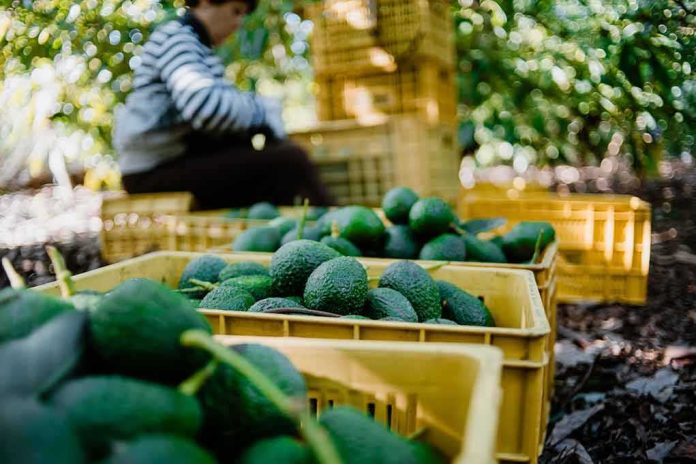
Mexico’s avocado shipments to the United States have been interrupted again after U.S. officials halted inspections in Michoacán over a security threat.
Quick Take
- The United States suspended government operations in Michoacán, including avocado inspection work needed for exports.
- Officials tied the pause to a threat against U.S. interests and to inspector safety concerns.
- Mexico sent 1,500 troops to the region to protect packing plants, routes, and inspection sites.
- The disruption hit a major U.S. food supply line, but exports later moved toward resumption after safety steps were agreed.
What Triggered the Halt
The U.S. suspension began after officials said there was a threat to U.S. interests in Michoacán, the main avocado-producing state in Mexico. That move stopped the inspection work required before avocados can be shipped into the United States. Reuters reported that the suspension stayed in place until security conditions were reviewed and safeguards were set, which shows the pause was framed as a safety measure, not a trade punishment.
AP later reported that the halt followed a threat to a U.S. inspector in Michoacán, including a threat against him and his family. NBC News also reported that Mexico’s Agriculture Department said an official in Uruapan received a threatening message on his official cellphone. At the same time, ABC News noted that Michoacán authorities said they were not aware of any direct incident involving the inspectors, which leaves the exact trigger partly unclear in the public record.
Why This Matters to U.S. Consumers
Avocados are not a side issue. They are a major import, and Michoacán supplies the largest share. CNN reported that produce that had not finished the required inspection process was not eligible for import, while the state’s avocado producers warned that the pause could disrupt harvesting and shipping. For American shoppers, that means a security problem in Mexico can quickly turn into a supply problem at the grocery store.
Reuters and AP both described the region as one where growers face extortion and cartel pressure, which helps explain why U.S. officials treated the threat seriously. The public record also shows this was not a one-time event. Reuters and ABC News both noted earlier pauses in 2022 and 2024 tied to safety concerns, including assaults on U.S. inspectors. That pattern makes the issue look less like a surprise and more like a recurring failure of law and order.
Mexico’s Security Response
Mexico responded fast. ABC News reported that the government sent 1,500 troops to Michoacán the day after the suspension. Reuters said those forces were sent to protect packing facilities, transport routes, and inspection points in the avocado hub. That deployment matters because it confirms the central issue was security, not paperwork. It also shows Mexican officials understood that without stronger protection, the export system could not function normally.
Bloomberg reported that Michoacán’s governor called the suspension a preventive measure meant to protect personnel, and AP said the U.S. Embassy later lifted the prohibition on inspections after both sides agreed to safety measures. That sequence points to a simple truth: when the rule of law weakens, even ordinary commerce becomes vulnerable. For conservative readers, the lesson is familiar. Weak borders, cartel power, and government hesitation always end up hurting working families first.
Why the Pause Happened Again
The latest interruption fits a broader pattern that has frustrated growers, exporters, and U.S. officials for years. Reuters reported that the U.S. halted inspections in 2024 after a security incident involving USDA personnel, and earlier reporting in 2022 described a similar pause after threats against inspectors. AP said the new suspension was reversed only after safety measures were put in place, which suggests Washington is now using inspection access as a clear leverage point for worker protection.
What is still missing is the full internal record behind the decision. The public reports do not include the embassy alert, the threat message, or the USDA incident file. So the public can see the result, the shutdown, and the security response, but not every detail of the chain of events. Even so, the facts already on the record show why the system keeps breaking down: inspectors cannot certify exports when their own safety is in doubt.
Sources:
youtube.com, abcnews.com, cnn.com, bluebookservices.com, apnews.com, wflanews.iheart.com, kristv.com, 850koa.com