
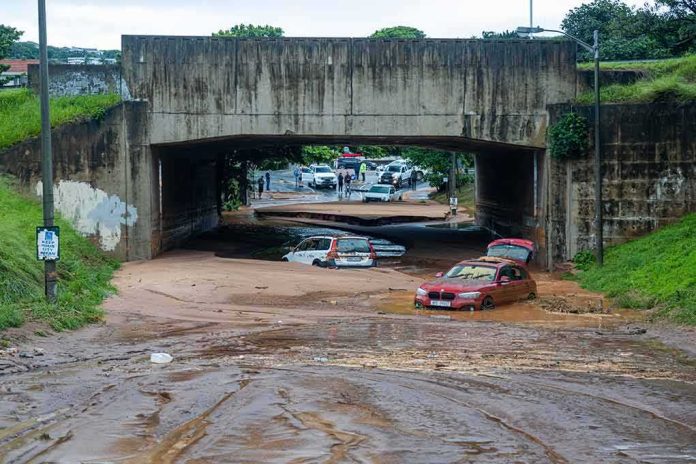
Texas officials did not mince words: the water rose fast enough to take lives, and it did.
Story Snapshot
- The National Weather Service issued a rare Flash Flood Emergency for parts of Kerr and Uvalde counties.
- State officials reported large-scale rescues and more than 1,300 responders in action.
- At least two deaths were linked to floodwaters sweeping away an RV and a vehicle.
- Forecasters and local alerts cited 10 to 20 inches of rainfall in hardest-hit areas.
Emergency Triggered By Extreme, Rapid Flooding
The National Weather Service labeled the situation a Flash Flood Emergency, its highest alert for flooding, as storms hammered south-central Texas. This label tells the public that the threat to life is not theoretical. It is happening now. Warnings covered parts of Kerr and Uvalde counties as rescue teams moved through dark, fast water to reach trapped drivers and families before dawn. Local reports referenced rainfall totals that pushed creeks and rivers out of their banks and into homes and roads.
Water rescues stretched across the Hill Country as swollen tributaries funneled into the Guadalupe and Pedernales systems. Dispatchers routed high-water vehicles and swift-water teams to low crossings and mobile home parks. Residents described roads turning into rivers in minutes, not hours. That is why a Flash Flood Emergency matters. It cuts through the noise and tells people to move now, not later. Officials urged drivers to avoid crossings and seek higher ground immediately.
Lives Lost And A Response Measured In Minutes
Governor Greg Abbott’s office said responders saved dozens while the state surged more than 1,300 personnel into the region. Those teams used boats, helicopters, and high-profile trucks to pull people from rooftops and stalled cars. Despite the push, at least two people died after floodwaters swept away an RV near Comfort and a vehicle in Uvalde, according to news reports citing state briefings. This is the hard truth of flash flooding in Texas: one bad choice or one low-water crossing can be fatal.
Cities and counties closed roads as water covered major routes. Police in Uvalde directed residents away from submerged streets while utility crews cut power to protect rescuers. Forecast discussions and alerts warned of 10 to 20 inches of rain in the worst pockets. That much water on hard, dry ground becomes runoff. It does not soak in. It races downhill and concentrates force at low spots and bridges. That physics does not care about your tires or your engine.
Why Hill Country Floods Turn Deadly So Fast
Hydrologists call this region “flashy” for a reason. Steep slopes, thin soil, and dense rock set the stage for sudden rises. When storms train over one area, creeks can jump several feet in less than an hour. That tight window challenges warning systems and puts the burden back on personal judgment. History shows many deaths happen in vehicles. Public safety campaigns repeat the same rule because it holds up every time: turn around, do not drown.
DEADLY FLOODING BATTERS TEXAS AS EMERGENCY RESPONSE EXPANDS
Severe flooding has inundated parts of Texas, leaving at least two people dead, prompting emergency declarations across dozens of counties, and triggering more than 230 water rescues as communities recover from… pic.twitter.com/hzS6qDSjoC
— Washington Eye (@washington_EY) July 17, 2026
Conservative common sense says personal responsibility and local readiness both matter. Families need a plan, a go bag, and awareness of low-water spots on daily routes. State and local leaders need clear chains of command, sirens and alerts that work, and roads designed with flood risk in mind. The state mobilization and the top-tier weather alert show the system can move fast when it must. The test after the water drops is simple: what fixed problems, and what only looked good on television.
What To Watch Next As Rivers Recede
Damage checks will begin once currents calm and roads reopen. Crews will mark buckled pavement, ruined culverts, and undercut bridge approaches. Emergency managers will review call logs to see where response lagged. If gaps appear in siren coverage or alert delivery, leaders should explain them and set deadlines to fix them. Texans respect straight talk and results. They also remember when promises about flood control fade with the headlines.
Residents should document losses, test smoke and carbon monoxide alarms after power returns, and avoid using flood-damaged vehicles until checked. Volunteers can help by giving blood, donating to local relief funds, and clearing debris only when officials say it is safe. The next storm line will come. The best time to prepare is before the radar flashes red. The second-best time is right after learning how close this one came to your front door.
Sources:
youtube.com, ialert.com, facebook.com, washingtonpost.com, abcnews.com