
A U.S. congressman says armed settlers held his group in the West Bank for about 90 minutes, and Israel’s military says the troops actually cleared the road—those two sentences now drive a high-stakes test of credibility and power.
Story Snapshot
- Ro Khanna says armed settlers blocked his van near Khirbet Zanuta on July 8.
- Khanna’s aide says they appealed to the U.S. Embassy before police freed them.
- The Israeli military denies detaining anyone and says troops quickly dispersed civilians.
- A New York Times photographer reportedly witnessed the scene.
A congressman, a blocked road, and two clashing versions
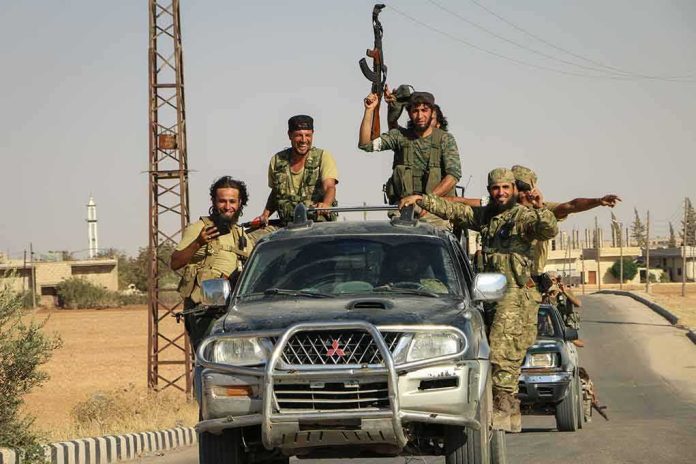
Representative Ro Khanna described settlers with American-made rifles surrounding his group’s van near the Bedouin village of Khirbet Zanuta on July 8. He said they blocked the road, detained the group, and laughed after hearing a U.S. lawmaker was present. He claimed soldiers with the Israel Defense Forces arrived and “sided with the settlers,” extending the hold. He posted a photo and short clip to support the account and placed the duration at about 90 minutes.
OHH NOKHANNA lying again.
Israeli ambassador to US accuses Ro Khanna of political stunt to distract from support for Graham Platner.
Israeli officials responded to Khanna’s detention by claiming that he had rejected their effort to shape his visit to the region by adding a… pic.twitter.com/S3urZ8oGgW— Timothy Hunter (@thunter635) July 13, 2026
Khanna’s aide Cameron Kasky said the group called the U.S. Embassy in Jerusalem and that uniformed officers, who appeared to be police, eventually intervened and freed them. The Associated Press reported that Khanna’s office said a New York Times photographer witnessed the incident. As of those reports, no arrests were announced, and the Israel Police did not release an incident report or public statement confirming the detention timeline.
The Israeli military’s denial and the missing proof
The Israel Defense Forces issued a direct rebuttal. The statement said troops were dispatched after reports that Israeli civilians unlawfully blocked foreign nationals and media. It said soldiers quickly dispersed the civilians and reopened the road. It also said the soldiers did not take part in blocking the road. The statement noted that the identity of an armed individual is under review, signaling an ongoing check, but did not match Khanna’s claim of a prolonged hold.
The gap is stark. Khanna describes a 90-minute detention with soldiers prolonging it; the military describes a quick response to clear a civilian blockade. Neither side has released body-camera footage or full operational logs to settle the timing. The New York Times photographer has not issued a public, detailed account. The U.S. Embassy has not publicly confirmed the calls, leaving a hole in the third-party chain of evidence.
What the facts support and where doubt creeps in
Several specifics bolster Khanna’s basic claim that settlers blocked his path. He gave an exact location and date. He posted visuals on social media. His aide described the release after police arrival. Major outlets reported his statement and the military’s denial. Yet one detail cuts against him: he called the rifles M-4s to Reuters, while an Instagram caption later said M14s. That mismatch gives critics a point to challenge his precision without disproving the core claim.
From Albert Aron, the truth about @RoKhanna
I received a lot of questions about the Ro Khanna incident and I want to provide an update with additional information that came out today. People also asked me for sources so I will try to be more deliberate with my sourcing for this…
— Steve (@SVH2) July 13, 2026
On the military side, the denial is clear and categorical. It sets a simple timeline: report, dispatch, disperse, reopen. But it offers no footage, no timestamps, and no police report to verify “quickly.” If soldiers did not block the road, video from their body cameras should show that. The lack of public material invites more questions than answers. Common sense says release of video would calm doubts fast.
How to close the gaps, and what conservatives should watch
Three documents could settle most of this. First, the U.S. Embassy’s internal incident log with call times and actions. Second, police and military records with dispatch and clear times, plus body-camera video. Third, a public statement and images from the New York Times photographer who was on scene. These are straightforward items. If any party claims certainty, these records should back them up in days, not months.
Conservative readers should press for proof, not spin. If settlers with rifles blocked an American lawmaker, that demands arrests under the rule of law. If soldiers merely cleared a civilian blockade, that deserves credit and closes the case. If a politician stretched details, the record will show it. Accuracy matters more than anyone’s narrative. The policy stakes are real: security coordination, aid, and the basic safety of U.S. officials on the ground.
Beyond one convoy: a repeat pattern worth testing
These clashes follow a pattern seen in prior visits to the West Bank. Delegations report blockades by settlers; security forces deny detentions and say they restored order. That pattern thrives when video stays hidden and reports remain vague. This time, both sides say they want the truth out. They should prove it. Put the footage, logs, and embassy notes on the table, and let the facts speak louder than the slogans.
Sources:
townhall.com, jpost.com, youtube.com, instagram.com, nytimes.com