
Holiday airfares jumped to decade highs, and your airport’s choke points now matter as much as your plane.
At a Glance
- Thanksgiving round trips averaged $402, up 31% year over year.
- Christmas round trips averaged $452, up 23% year over year.
- Airline-fare index rose about 22% from September 2025 to September 2026.
- Airlines cited higher fuel costs and firm demand for raising prices.
Prices Jumped, And Not Just On Your Route
Hopper’s holiday snapshot put average domestic round-trip airfare at $402 for Thanksgiving and $452 for Christmas, the highest in about a decade. Reporters traced those figures to Hopper’s 2026 Holiday Travel Index. Fortune and other outlets emphasized the year-over-year jumps of 31% and 23%. That surge aligns with a broader rise in the airline-fare index, which climbed about 22% over the same 12-month window. So the sticker shock is not only a holiday quirk.
Delta’s chief executive, Ed Bastian, signaled that the carrier would pass almost all higher fuel costs to customers during the third quarter. He also said unit revenue rose, and that most customers did not push back hard on prices. Morning Brew paraphrased his point: core customers could absorb higher fares. That combination—cost pressure and capable demand—gave airlines room to raise prices without an emptying of planes.
Why Tracking Your Airport Beats Staring At A Seat Map
Airlines price by micro-markets. They look at each route, each departure wave, and even each hour’s demand curve. Two flights can leave the same day with different prices because one airport faces longer lines, fewer gates, tighter runways, or peak-time curfews. Those limits reduce usable capacity at crunch times. That lets airlines nudge prices higher when your airport’s schedule strains. Watch your airport’s rush windows and runway constraints, not just the plane type, to time your buy.
Airports that funnel heavy connecting traffic often swing fastest. A ripple at a big hub—a runway repair, a weather band, or a banked departure push—spills into prices on spoke routes. Leisure-heavy airports also behave differently. When a few peak flights carry most holiday demand, those flights take the steepest hikes. The lesson is simple: the average may be $402, but your airport’s rush hour could run far above that if seats bunch around narrow travel windows.
The Cost Stack: Fuel, Demand, And The Index That Backs It
Fuel remains the swing cost that airlines cannot dodge for long. When jet fuel rises fast, carriers tend to pass it through to fares, especially when rivals face the same pain. Bastian’s pass-through warning fits that pattern, and it tracks with reports that revenue per available seat mile rose about 15% in the period he discussed, a sign that pricing held firm. The Consumer Price Index’s airline-fare series also showed a strong climb into fall, confirming a sector-wide lift, not a one-off blip.
The Barclays 2026 Holiday Spending and Travel Pulse survey reveals that 56% of Americans have skipped—or say they would skip—a holiday gathering because they could not afford it. In the same survey, 82% of respondents indicated that time spent with family is worth the cost. These… pic.twitter.com/n9OY1ErPrN
— THE WORLD CORRESPONDENT (@TheWorldCorresp) November 20, 2026
Demand did its share. Families time trips to a few peak days, and work calendars do not bend easily. Airlines know this. They protect yields by shifting capacity and holding back cheaper fare buckets on the busiest departures. Morning Brew reported “limited” resistance to price increases among Delta’s core buyers, which means bargain windows closed faster. That is not price gouging; that is yield management doing what it was built to do when seats are scarce and travelers are fixed to the calendar.
Action Plan: Win On Timing, Routing, And Realistic Tradeoffs
Buy earlier than you think. Set alerts six to eight weeks out for Thanksgiving and at least two months out for Christmas. Track fares from all airports within 90 minutes of home. Secondary airports often dodge the harshest peak surges. Fly on the holiday morning or late on the off-peak day before. Those flights see less family demand and more empty middle seats. Consider one-stop itineraries that route away from the busiest hubs during banked peaks to open cheaper buckets.
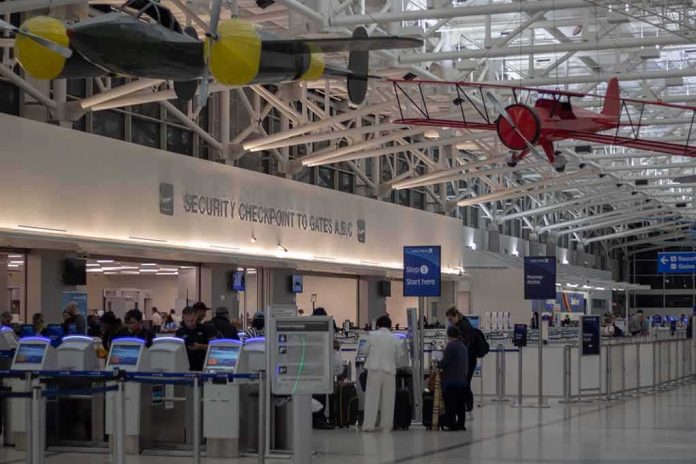
Anchor your plan to airport clocks, not headlines. Note when your airport’s first wave of departures leaves, when runway flows tighten, and when inbound banks arrive. Aim for flights that depart outside those windows. If you check bags, build in extra time where lines choke. That cushion lets you book tighter connections with confidence, which expands cheaper options. Prices are high, but they are not random. They follow pressure points that you can map and work around with simple moves.
What This Says About The Economy
Strong holiday fares signal two things. Households still spend on peak travel, and airlines still face higher input costs. Neither justifies waste or bloat. It does explain why a “deal” might only take you back to last year’s price, as Fortune noted. That is not cause for outrage; it is a reminder to shop smarter and reward real competition. When you choose flexible dates, nearby airports, and off-peak hours, you tell the market what you value—and you keep more money in your pocket.
Sources:
youtube.com, fortune.com, businessmodelanalyst.com, hanetf.com, freep.com