
A lone voice at the Tomb of the Unknown Soldier stopped a cabinet-level entourage cold—and then earned a medal the next day.
Story Snapshot
- A Tomb sentinel told Defense Secretary Pete Hegseth’s group to keep silence and respect on Veterans Day.
- The Pentagon said the soldier acted correctly and respectfully in enforcing decorum.
- Hegseth awarded the Joint Service Commendation Medal to the sentinel the following day.
- A Defense Department official said the medal recognized execution of the soldier’s duties.
A sentinel’s command and a swift, public response
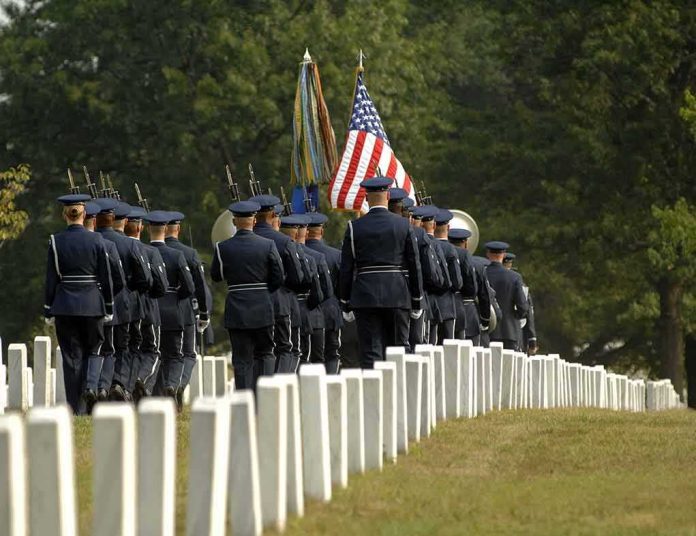
On November 11 at Arlington National Cemetery, a United States Army sentinel guarding the Tomb of the Unknown Soldier addressed Defense Secretary Pete Hegseth’s group. The soldier called for silence and respect after some in the group appeared to talk and laugh near the memorial during a photo stop. A Pentagon spokesperson later said the sentinel “correctly and respectfully reminded everyone to maintain decorum,” confirming the guard acted within duty and tradition.
The next day at the Pentagon, Hegseth awarded the Joint Service Commendation Medal to the sentinel. Military Times reported a Defense Department official said the recognition was for execution of the soldier’s assigned duties, not for defiance or show. That distinction matters. The Tomb’s guards, members of the Army’s 3rd Infantry Regiment, known as The Old Guard, carry a clear mission: protect the site and enforce standards for visitors in real time.
Why the Tomb demands silence and respect
The Tomb’s culture did not appear overnight. The United States Army’s history records that in 1925 a civilian guard was posted because of rising disrespect by visitors. Soldiers took over the next year. By 1937, the watch became continuous, day and night, in all weather. The sentinel’s duty today flows from that lineage: keep order, guard the unknown dead, and correct behavior that breaks the solemn tone the place requires.
Some reports point out that federal rules speak of decorum and ban disorderly conduct, not an absolute “silence” rule in legal code. Yet the on-the-ground standard at the Tomb expects quiet. Sentinels enforce that practice each day so the memorial remains a place of reflection, not chatter. The soldier’s short, clear warning fit that operational norm and echoed what visitors hear from guards when crowds grow loud.
The medal, the criteria, and the message
The Joint Service Commendation Medal recognizes merit that stands above a person’s peers, though below the standard for the Defense Meritorious Service Medal, according to Joint Chiefs guidance. Awarding it the day after the event sent a fast signal. The Pentagon endorsed the correction. The Secretary honored a soldier for doing a hard thing in a hard moment, in public view, with steady bearing.
Some will ask if a single correction should earn such a medal. The Defense Department’s statement that it marked performance of duty answers the key part. The soldier enforced the rules without fear or favor. That aligns with conservative values: standards apply to everyone, especially leaders. It also reinforces a core military principle. Rank yields to the mission at the Tomb. The guard’s charge is the Tomb, not the visitor’s title.
What the episode teaches about duty and example
Veterans Day is crowded with speeches. This one needed only nine words: “All visitors will maintain an atmosphere of silence and respect.” The message cut through because the setting commands it, and the messenger lived it. The next day’s medal framed the moment as a lesson, not a feud. It told service members and citizens that respect is not a pose for cameras; it is a standard you enforce, even when it feels awkward.
A soldier guarding the Tomb of the Unknown Soldier issued a verbal reprimand to a group of advisers and staffers with Defense Secretary Pete Hegseth following a Veterans Day ceremony at Arlington National Cemetery. https://t.co/TbYTMaYAVF
— Chicago Tribune (@chicagotribune) November 12, 2026
Leaders earn trust when they back the rules that bind everyone else. Hegseth could have bristled. He chose to underline the standard instead. The sentinel did his job at the Tomb. The Secretary did his job at the Pentagon. That sequence showed how institutions teach: correct in the moment, then reward what right looks like. The Unknowns remain unknown. The duty to honor them is not.
Sources:
hawaiitribune-herald.com, newsweek.com, bbc.com, washingtontimes.com, alternet.org, bostonglobe.com, army.mil