
An 86-year-old in a brown convertible clips a parked car in Napa, drives off, and suddenly America’s fight over age, privilege, and justice is back in the spotlight.
Story Snapshot
- Paul Pelosi is under investigation for a possible misdemeanor hit-and-run after striking a parked car in Yountville’s wine country.
- A witness says the driver stopped briefly, then left; Pelosi later admitted he “hit something” but claims he did not know what it was.
- Alcohol was ruled out, but major damage to the parked car and Pelosi’s prior drunk driving case sharpen public anger.
- The Napa County District Attorney will decide whether to file charges, raising questions about equal treatment for powerful, elderly drivers.
What Investigators Say Actually Happened On That Napa Street
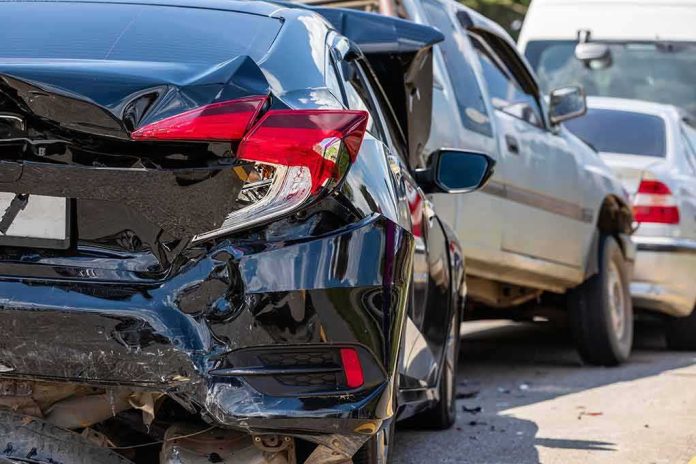
Napa County deputies say a brown convertible, identified as Paul Pelosi’s car, slammed into the back of a parked vehicle on a quiet stretch of Yount Street in Yountville. A witness reported the convertible stopped for a moment after the collision, then drove away instead of staying put. When investigators later spoke with Pelosi, he admitted he hit something but claimed he did not know what, so he kept driving. Deputies found the parked vehicle with serious rear-end damage, leaving no doubt a strong impact occurred. A breath test cleared alcohol as a factor, and deputies forwarded the case to the Napa County District Attorney for possible misdemeanor hit-and-run charges, not a felony.
Prosecutors now face a narrow but important legal question: was this a true “hit-and-run,” or an elderly driver’s confused mistake? California law usually requires that a driver know, or reasonably should know, they were in a collision and then choose not to stop. Pelosi’s statement that he did not know what he hit gives defense lawyers an opening. The witness account, however, cuts the other way: if the driver stopped and then left, many jurors would see that as awareness, not confusion.
How Age, Past Behavior, And Power Shape Public Judgment
This is not Paul Pelosi’s first trouble behind the wheel. In 2022 he pleaded guilty to driving under the influence of alcohol causing injury after crashing his Porsche in Napa County, with a blood alcohol level of 0.082 percent. He served jail time, received probation, and paid restitution, but that history now colors how many Americans view this new case. For conservative readers who value personal responsibility and equal justice, a second serious incident looks like a pattern, not a fluke.
Age adds another layer. Older drivers have the second-highest accident rates after teens, and motor vehicle deaths involving people 65 and older have risen in recent years. Common issues for elderly drivers include slower reaction time, worse judgment, and weaker vision. Those facts make an “I did not realize what I hit” claim more believable than if it came from a healthy 30-year-old. At the same time, they raise a hard question: why is someone in their mid-eighties, with a prior drunk driving conviction, still driving high-end cars through small-town streets without stricter oversight?
Hit-And-Run Or Panic And Confusion? The Psychology Behind Leaving The Scene
Most hit-and-run drivers do not leave the scene after careful planning. They flee in a rush of fear, trying to dodge legal damage and social shame. Many later say they thought the crash was “not that bad” or believed the other person would get help, as a way to ease their conscience. That kind of thinking fits younger, often impaired drivers more than sober men in their eighties, but panic is not limited to the young. An elderly driver who hears a loud bang, feels a jolt, and sees no obvious injury might easily tell himself he brushed a curb or debris and carry on.
Paul Pelosi faces a potential hit-and-run charge in Napa County after hitting a parked car in Yountville, though authorities confirm alcohol was not involved. https://t.co/tWn9bvT6U3
— FOX 5 Atlanta (@FOX5Atlanta) July 5, 2026
For a jury that cares about common sense, several facts will matter. First, the parked car had major damage, which suggests a forceful hit, not a gentle tap. Second, a witness says the driver did stop briefly, which suggests some awareness the car made contact. Third, Pelosi did not seek out the owner right away; he apologized and agreed to pay after deputies contacted him, not on his own. Those points support the argument that, whatever he claims now, he had enough reason to know something serious happened and still failed to stay put.
Is Justice Blind When The Driver Is Rich, Connected, And Old?
One reason this case caught fire online is that deputies did not arrest Pelosi at the scene. Officials say that is common for this kind of alleged misdemeanor. Many Americans on social media are not buying it. They see a powerful political family, a prior drunk driving conviction, and now a possible hit-and-run, and they fear the justice system bends for the well-connected while staying rigid for regular citizens. Research shows law enforcement decisions, including traffic enforcement, can shift around local political cycles and incentives. That does not prove special treatment here, but it explains why people are primed to suspect it.
For conservatives who prize equal treatment under the law, the proper test is simple: would an unknown 86-year-old in the same situation face the same process, the same chance to explain confusion, and the same non-arrest at the scene? If the answer is yes, then this case is about age and driving safety more than privilege. If the answer is no, then the real story is bigger than one brown convertible in Napa. It is about whether America still expects its elites to follow the same rules as everyone else.
Sources:
pjmedia.com, latimes.com, facebook.com, nbcnews.com, foxnews.com, napacounty.gov, thehill.com, instagram.com, reuters.com, thebulwark.com, finesandfeesjusticecenter.org, sites.lsa.umich.edu