

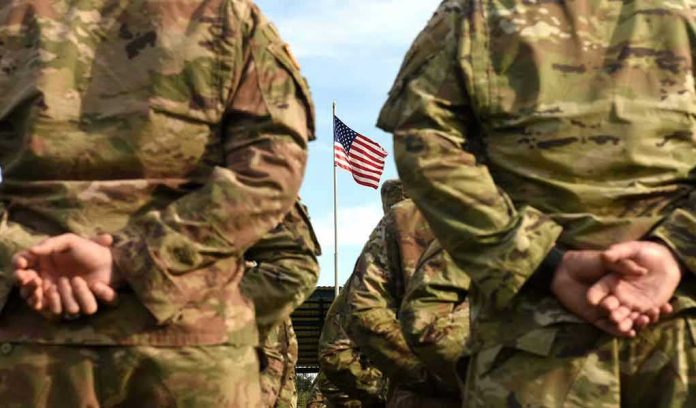
The Army is not reviving executions so much as waking up a machine that has been idle since 1961.
Quick Take
- The Army has an internal plan, “Operation Resolute Justice,” for four military death-row inmates.
- Army officials say the plan is routine contingency work, not a live execution order.
- No presidential approval has been given, and that approval is required under military law.
- The last military execution happened in 1961, which makes this plan feel historic, even before any order exists.
The Plan Behind the Headlines
ABC News reported that the Army has drafted an internal plan titled “Operation Resolute Justice.” It calls for coordination with the Federal Bureau of Prisons, transfer plans from Fort Leavenworth to Terre Haute, and execution-ready logistics if the president approves death sentences[16]. The plan also sets a 150-day window after approval, which shows how far the Army has gone in preparation without yet crossing the final line.
That line matters. Army spokesperson Cynthia Smith said the service has run these exercises for about 20 years and treats them as standard planning for possible orders from the White House[16]. She also said the Army has not received a formal order from the president[16]. That is the entire tension in one sentence: the Army can prepare, but it cannot execute until the president signs off.
Why This Story Reaches Back to 1961
The last military execution took place in 1961, when Army Private John A. Bennett was put to death after a court-martial conviction[4][7]. That long gap explains why this story lands with such force. The system still exists on paper, but modern practice has not tested it in generations. A rule can stay alive in a regulation book and still feel frozen in history.
The legal framework is not vague. The Army’s execution regulation, Army Regulation 190-55, lays out procedures for military executions approved by the president[8]. The Uniform Code of Military Justice also allows capital punishment for certain offenses, and military death-row cases remain part of the system[5][14]. So the argument is not about whether the authority exists. It is about whether anyone will use it now.
What Is Known About the Inmates
Reporting says four military inmates are on death row and could be covered by the plan[16]. The commonly named cases in recent reporting include Nidal Hasan, Ronald Gray, Hasan Akbar, and Timothy Hennis[2]. Gray’s case is the most familiar to the public because it involved multiple murders and rapes, while the others are tied to major violent crimes as well[2][14].
Still, the public record around the current plan is incomplete in important ways. The Army has not released the full internal document for public review, and there is no public record here of a presidential order, a new legal opinion, or a fresh congressional briefing[16]. That leaves critics with room to argue caution and supporters with room to argue that the Army is only keeping its own house in order.
Why the Debate Is Bigger Than One Execution Plan
This story pulls on a larger American habit: keeping old powers alive long after they stop being used. Supporters see order, discipline, and continuity. They say the law is the law, and if military courts can impose death, the system should be ready to carry it out. That view fits a plain common-sense reading of rules that still sit on the books[8][14].
Opponents see something different. They point to the 63-year gap, the lack of a formal order, and the silence around legal review as signs that the plan may be more symbolism than readiness[4][7][16]. Those objections do not erase the law, but they do expose the discomfort of turning dormant authority back into action. That discomfort is exactly why this story has spread so fast.
What makes “Operation Resolute Justice” so gripping is not just the possibility of execution. It is the collision between memory and procedure. A system built for punishment is still standing, but it has waited so long that every move now feels like a test of the nation’s nerve.
Sources:
[2] Web – US Army prepares for first military executions in over 50 years
[4] Web – Army lays groundwork for death row executions if Trump gives approval
[5] Web – ABC: US Army prepares contingency plan for possible military …
[7] Web – List of people executed by the United States military – Wikipedia
[8] Web – No Military Executions Since 1961
[14] Web – Military Executions
[16] Web – Military Death Sentences – State Killings in the Steel City