

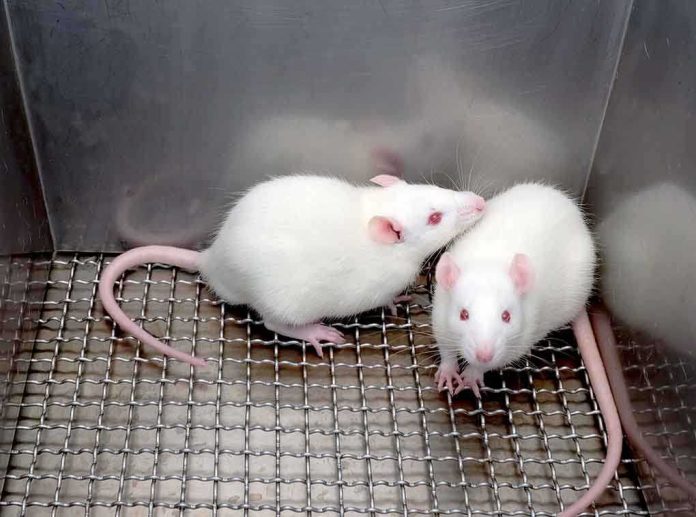
Scientists may be watching a quiet arms race unfold in city basements, and the mouse is winning in places that count.
Quick Take
- Rutgers researchers found that **84 percent** of sampled house mice from Northeast cities carried at least one Vkorc1 mutation linked to rodenticide resistance.[3]
- About **70 percent** of those mice carried mutations already known to help them survive common rodenticides, which makes the finding more worrying than a simple DNA curiosity.[3]
- About **35 percent** of sampled Norway rats also carried Vkorc1 mutations, but researchers said they do not yet know what most of those changes do.[3]
- The strongest lesson is practical: poison alone is no longer a clean fix, so pest control has to lean harder on sanitation, sealing gaps, and traps.[2]
The Numbers Behind the Alarm
The Rutgers team studied 147 house mice and 143 Norway rats from New York, New Jersey, Pennsylvania, and Washington, D.C.[3] Their main target was the Vkorc1 gene, which helps control how rodents process vitamin K. That matters because anticoagulant rodenticides work by breaking that system. When the gene changes, the poison can lose its edge. This is not a rumor from the internet. It is a published DNA study with real samples and real geography.[1][3]
The headline figure gets attention for a reason. A house mouse with one resistance-linked mutation is already a problem. A city population where most mice carry at least one such change is a different order of concern. The Rutgers press release says the team also found several genetic variants never before reported in house mice or Norway rats, but it is just as clear about the limit: scientists do not yet know whether those new variants actually cause resistance.[1][3]
What the Study Does and Does Not Prove
This is where the story gets sharper. The study shows genetic signals tied to resistance. It does not prove that every mutant rodent will survive every poison in the wild. That distinction matters. Rutgers noted that some findings still need functional testing, and earlier work on VKORC1 mutations also showed that lab assays do not always settle the question for every variant.[1][3] In plain English, the genetics look bad for poison-based control, but the final proof for each mutation is still incomplete.
The same caution applies to the rats. Rutgers found mutations in about 35 percent of the Norway rats, but the functional meaning of most of those changes remains uncertain.[3] That is not a reason to ignore the result. It is a reason to avoid cheap slogans. “Mutant super rat” may sell clicks, but it overshoots the evidence. The smarter reading is more serious and more useful: some urban rodents are gaining a real survival advantage, and that can make old control methods less reliable.[1][3]
Why This Matters for Cities and Homeowners
City rat and mouse problems already cost time, money, and patience. When poison weakens, the burden shifts back to building owners, tenants, and pest managers. That means fewer easy wins from bait alone and more pressure to fix the conditions that feed infestations in the first place. The Rutgers researchers pushed integrated pest management, which means cleaning up food sources, closing entry points, changing habitat, and using traps instead of relying only on chemicals.[2]
Breaking News
Mutant sewer rats spreading through major US cities as scientists discover disturbing DNA changesScientists have uncovered a disturbing change in both mice and rats infesting America's biggest cities, making the rodents harder to kill than ever before.… pic.twitter.com/0g7LLDgTaZ
— News News News (@NewsNew97351204) June 24, 2026
That advice sounds old-school because it is. It also works because it attacks the rodent, not just the symptom. A mouse that cannot find crumbs has less reason to stay. A rat that cannot reach a wall gap has fewer routes inside. Poison still has a place, but only as one tool among several. The bigger message here is not panic. It is discipline. The cities that treat rodents like a sanitation and building problem, not just a chemical one, will stay ahead longer.[2][3]
Why the Debate Is Not Settled
There is also a wider scientific point buried in the headlines. Other surveillance studies have found no evidence of Vkorc1 resistance in some places, including Richmond, Virginia, and Helsinki, Finland.[3] That does not cancel the Rutgers findings. It shows that resistance is uneven, local, and shaped by pressure. In conservative terms, this is a warning against one-size-fits-all thinking. The evidence says the problem is real in some places, but not universal everywhere. Good policy follows the data, not the chant.
That is why this story should be read as an early warning, not a victory lap. The strongest evidence says Northeast urban mice are changing fast, and some rats are changing too.[1][3] The open question is how far that trend spreads and how much it changes real-world control. Until more field testing answers that, the safest bet is simple: stop pretending poison alone will save failing programs. The rodents are already adapting to the old playbook.
Sources:
[1] Web – Scientists Find Poison-Resistant Mutant Rats Spreading Across …
[2] Web – Novel mutations in the VKORC1 gene of wild rats and mice – PMC
[3] Web – Urban Rodents May Be Evolving Against Common Poisons