

A man who once worked security for a sitting member of Congress died in a SWAT standoff after police say he was running an elaborate “fake cop” operation—raising fresh questions about how Washington vets the people allowed near elected officials.
Quick Take
- Dallas police released dashcam footage of a fatal SWAT standoff at Children’s Medical Center Dallas involving 39-year-old Diamon-Mazairre Robinson.
- Police said Robinson was wanted for impersonating a law enforcement officer and was tied to a replica police vehicle, stolen government plates, fake uniforms, and a fraudulent security business.
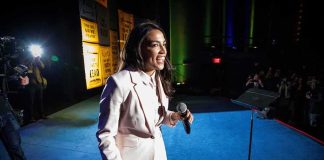
- Robinson previously worked as a security guard for Rep. Jasmine Crockett (D-Texas), who said his vendor arrangement followed House protocols.
- Dallas police reported recovering 11 firearms, including a stolen handgun Robinson allegedly held as he exited the vehicle and pointed it at officers.
Dashcam footage shows standoff end outside a children’s hospital
Dallas Police Department released dashcam video on Monday showing the final moments of a SWAT standoff at the Children’s Medical Center Dallas parking garage. Police said Robinson had barricaded himself inside a vehicle while officers sought to serve an active warrant tied to impersonating a police officer and related allegations. The situation escalated after tear gas was deployed and Robinson exited the vehicle with a gun pointed at SWAT officers, refusing commands.
Police said officers shot and killed Robinson during the encounter and that he did not fire his weapon. No officers were reported injured. The setting added urgency because the standoff unfolded at a hospital location associated with children and families, where officials typically prioritize rapid containment. The release of dashcam footage was presented as a transparency step, allowing the public to see the sequence of events that led to lethal force.
Investigators say the suspect built a “police impersonation” enterprise
According to police descriptions reported publicly, Robinson was suspected of a wide-ranging impersonation scheme that went beyond a single costume or a one-off traffic stop. Authorities said he drove a replica undercover-style vehicle and used stolen U.S. government license plates. Police also described fake uniforms and a persona as a federal agent, paired with a business model that allegedly recruited off-duty officers using fraudulent credentials.
Dallas police said 11 firearms were recovered in connection with the case, including a stolen handgun the suspect allegedly had when he exited the vehicle during the standoff. Those details matter because impersonating law enforcement while armed creates risks not just for officers, but for the public—especially if a suspect can convince others he has lawful authority. The available reporting does not provide independent, third-party verification of each allegation beyond police statements.
Connection to Rep. Jasmine Crockett spotlights vendor-vetting gaps
The story gained national attention because Robinson previously worked as a security guard for Rep. Jasmine Crockett, a Texas Democrat. Crockett defended the arrangement in a statement after the shooting, saying her office’s vendor relationship complied with House protocols and that the vendor served other entities as well. She also said a review of local records did not show violent offenses in his background, even as she acknowledged “concerning revelations.”
That tension—between “protocol-compliant” contracting and a suspect later tied to serious allegations—puts the spotlight on how congressional offices source security help. Crockett pointed to “loopholes” in the vetting process and urged improvements involving Capitol Police oversight, arguing the environment of threats against lawmakers drives demand for protection. The reporting available does not spell out the specific vendor approval steps, leaving the public with limited clarity on where screening succeeded or failed.
What the case means for public trust, law enforcement, and accountability
Dallas police framed the shooting as a response to an immediate threat: a suspect exiting a barricaded vehicle and pointing a gun at officers after refusing commands. From a constitutional, public-safety perspective, impersonating law enforcement is a direct attack on trust in legitimate authority and can endanger citizens who can’t easily tell real from fake. Video releases can help accountability, but they also intensify scrutiny of split-second decisions.
Beyond one standoff, the broader policy question is how government institutions and private vendors control access to sensitive spaces and public officials. The sources available cite no independent experts weighing in on security contracting standards, and they provide few specifics about formal House or Capitol Police vetting procedures. With limited outside analysis, the clearest takeaway is that even “approved” pathways can produce serious vulnerabilities if identity, credentials, and prior conduct are not verified rigorously.