

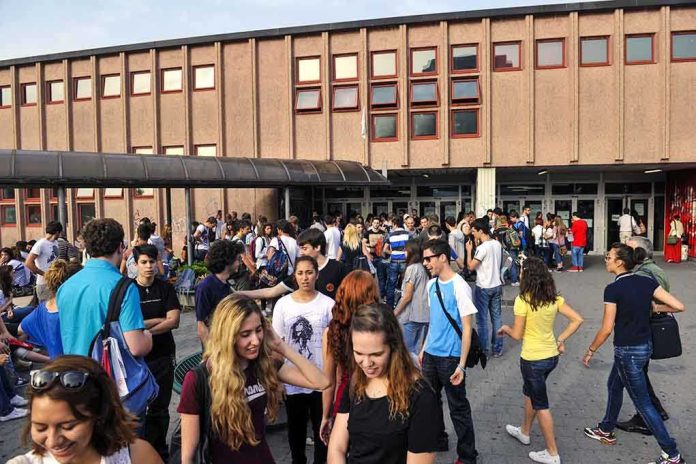
Four hundred French schools shut their doors as a student-led revolt over classrooms, teachers, and safety spilled into nationwide street clashes.
Story Snapshot
- Students cite teacher shortages, crumbling buildings, and long days as core grievances.
- Roughly 400 schools closed or disrupted across France as protests spread nationwide.
- The education minister first called the anger legitimate, then warned of “urban violence”.
- Blockades at school gates mixed with fires, projectiles, and police tear gas in several cities.
What Sparked It And How It Grew So Fast
Students gathered first in the Paris region to push for basic school fixes: more teachers, safer buildings, fewer kids per class, and a lighter load. They blocked gates and rallied with signs. The spark jumped city to city by midweek. Reuters, Al Jazeera, and other outlets counted hundreds of schools shuttered or disrupted as the wave spread across France, confirming the shift from local noise to national movement. Students framed their case around everyday conditions in class.
Education Minister Édouard Geffray nodded to those concerns. He said the movement was legitimate at the start. Then he warned the protests had changed, with officials describing a turn toward “urban violence.” That pivot line now shapes the debate. It pushes the public to judge both claims at once: whether the school system needs urgent repair and whether the street tactics crossed a bright red line on safety and order.
Closures, Blockades, And The Line Between Protest And Disorder
Authorities reported near 400 closures or disruptions among France’s roughly 3,700 high schools. Some schools shut to protect students and staff. Others could not open because gates were blocked. The picture varied by city and even by block. Fires, thrown objects, and clashes led police to use tear gas in several locations. The result was a feedback loop: fear drove more closures, and closed doors drew bigger crowds outside.
These tactics signal planning and purpose. Coordinated blockades at entrances aim to send a message: fix classrooms first. But the method matters. Americans know that the right to protest stops short of endangering others. When projectiles fly or property burns, the cause loses support. That is not a judgment on the grievances; it is a common-sense standard for any movement that claims the moral high ground.
The Competing Frames: Dignity In Schools Vs. “Urban Violence”
Student chants point to simple needs: enough teachers, safe facilities, and relief from crowded, overheated rooms. Those are concrete, measurable goals that any parent can understand. Government leaders counter that the situation shifted and now includes acts that threaten people and destroy property. Both claims can be true at once: real problems inside schools and real danger outside their doors. The hard task is separating peaceful dissenters from violent actors in real time.
France's day-two escalation of school protests into violent unrest, citing ~400 high schools closed, 2,000-3,000 arrests of mostly teens, nearly 400 officers injured, fires at Paris school entrances, and epicenter in Seine-Saint-Denis.
Major outlets including NYT, Reuters, BBC,… https://t.co/M75rd26JN3— TX Tuttle (@CharlieTuttle4) October 2, 2026
Media coverage adds another filter. Wire stories carry arrest counts and images of flames because they grab attention. That coverage can drown out the core demands even when they are valid. Responsible leadership would hold two lines at once: enforce the law against violence and vandalism, and fix the school system failures that helped fuel the anger. Order and accountability do not conflict with better classrooms; they depend on each other.
What Accountability Looks Like Tomorrow Morning
France now faces a practical test. Officials need to publish a school-by-school plan: repair timelines, teacher hiring targets, and emergency safety upgrades. Students need lawful channels to press their case, from public forums to clear complaint paths that get real answers fast. Police need precise, proportionate action that protects kids and staff. The fastest way to empty the streets is to show progress in the halls. Fix the buildings, fill the jobs, and reopen the doors.
Sources:
lifesitenews.com, usnews.com, x.com, internazionale.it, amp.dw.com, lemonde.fr