

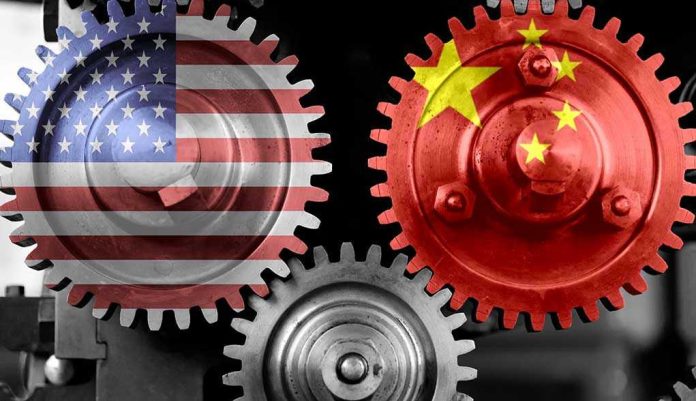
A quiet phrase in Washington—“the Clancy Doctrine”—now signals a hard‑edged plan to crush Mexican cartels and their Chinese enablers before they can poison another American town.
Story Snapshot
- The so‑called Clancy Doctrine is an emerging strategic mindset, not an official policy, tying cartel crackdowns directly to deterring Communist China.
- Chinese chemical firms and money‑laundering networks supply and protect Mexican cartels driving America’s fentanyl catastrophe.
- Conservatives see aggressive counter‑cartel campaigns as defending borders, sovereignty, and families from a “Silk Road of crime.”
- Trump’s second term border and cartel actions fit squarely into this harder line after years of failed globalist appeasement.
How Cartels Became a Front Line in the China Challenge
Over the last decade, Mexican cartels like Sinaloa and Jalisco New Generation quietly transformed from regional drug gangs into global poly‑crime syndicates plugged into Chinese chemical suppliers and underground bankers. These cartels now rely on synthetic drugs such as fentanyl and meth, which do not require fields or harvests, only steady precursor shipments and cheap pill presses. Chinese firms and brokers help provide both, creating a lethal assembly line that ends in devastated American communities and overwhelmed local sheriffs.
U.S. law‑enforcement cases and congressional hearings have steadily documented how Chinese money brokers launder tens of millions in cartel profits and move value globally outside normal banks. As direct fentanyl shipments from China to the U.S. came under pressure, Chinese companies simply pivoted to exporting precursor chemicals to Mexico. There, cartel labs convert these ingredients into finished product, then smuggle it across our insecure border, undercutting the rule of law and fueling the overdose crisis hollowing out working‑class America.
The “Silk Road of Crime” and a New Deterrence Logic
Senators and national‑security officials now describe a “Silk Road of crime” in which Chinese brokers, Latin American cartels, and other criminal groups merge their operations into one global pipeline. This web mirrors Beijing’s Belt and Road in licit trade, but in the shadows: chemicals, weapons, smuggling routes, illicit finance, and corruption moving in parallel with legal commerce. That reality has pushed Washington to view cartel‑China ties not just as a crime problem, but as a serious theater in long‑term competition with the Chinese Communist Party.
Out of that shift comes the journalistic shorthand some analysts call the Clancy Doctrine. The idea borrows from Tom Clancy‑style fiction—forward‑leaning, covert, and kinetic operations that take the fight to the enemy’s networks. Applied here, it means relentlessly hunting cartels, their labs, their money brokers, and the Chinese entities that fuel them. The goal is not only to reduce poison on U.S. streets, but to raise the strategic cost for Beijing if it tolerates or quietly benefits from these criminal supply chains targeting Americans.
Trump’s Second Term and a Harder Line on Cartels
Under President Trump’s return to office, Washington’s rhetoric about cartels has moved closer to this deterrence‑driven approach. The administration has already designated multiple Latin American cartels as terrorist organizations, expanding the legal tools available to seize assets, restrict travel, and coordinate intelligence. Officials openly frame synthetic‑drug networks, money‑laundering hubs, and cross‑border tunnels as national‑security threats, not merely law‑enforcement issues. For conservatives frustrated by years of half‑measures, this reflects long‑overdue seriousness about defending the homeland.
At the same time, Trump’s team has cracked down on illegal immigration and closed large sections of the border, recognizing that open corridors fuel both human smuggling and cartel logistics. By tying benefit programs to citizenship and pressuring Mexico and regional partners, the White House links border control, cartel disruption, and great‑power competition with China into a single strategic picture. For families watching fentanyl deaths climb while Washington argued over pronouns and DEI, this integrated focus feels like government finally acting in their defense.
Limits, Risks, and What Comes Next for Conservatives
Despite the catchy label, there is still no formal Clancy Doctrine written into Pentagon manuals or congressional statute. The phrase remains a way for analysts to describe an emerging pattern: treating cartel networks, Chinese chemical suppliers, and underground banks as interconnected targets in a broader effort to deter Beijing’s gray‑zone behavior. That means much of the planning is likely classified, spread across sanctions, intelligence operations, law‑enforcement task forces, and diplomatic pressure rather than a single doctrine document.
For conservatives, the stakes could not be higher. A strategy that aggressively dismantles cartels and their Chinese partners protects border communities, reasserts American sovereignty, and signals that our government will no longer tolerate foreign powers weaponizing crime against our citizens. Yet success also depends on avoiding mission creep and resisting any push to use this new security framing as an excuse for domestic surveillance or expanded federal power that would erode constitutional liberties and the rights of law‑abiding gun owners.
Sources:
US senators warn China-cartel links forming global ‘Silk Road of crime’
Recent Developments in Competition Law in the Americas
THE DANGER CHINA POSES TO AMERICAN AGRICULTURE
Population-Centric Counterinsurgency: A False Idol?