
Five Iranian women’s soccer players now face a choice between freedom and family, trapped by a regime that brands silent protest as treason worthy of death.
Story Snapshot
- Five Iranian women’s soccer players fled to Australian police protection after refusing to sing their national anthem during the Women’s Asian Cup, prompting Iranian state media to label them “wartime traitors”
- President Trump publicly pressured Australian Prime Minister Anthony Albanese to grant asylum, offering to take the players in the United States if Australia refuses, stating they “will most likely be killed” if returned to Iran
- The defection occurred amid escalating US-Israel-Iran conflict following airstrikes that killed Iran’s Supreme Leader Ali Khamenei on February 28, 2026
- Players face an agonizing dilemma as some hesitate to seek asylum due to credible threats against their families still in Iran
- The crisis echoes broader women’s rights protests in Iran while testing diplomatic relations between Australia, the United States, and Tehran
Silent Protest Triggers International Crisis
The Women’s Asian Cup in Australia became an unexpected flashpoint when Iran’s national women’s soccer team refused to sing their national anthem before facing South Korea. Iranian state television immediately declared this silence the “pinnacle of dishonor,” a judgment that carries deadly weight in a regime already rattled by war and internal dissent. The players’ act of defiance wasn’t merely symbolic. It echoed the 2022 Mahsa Amini uprising, where Iranian women risked everything to challenge hijab laws and authoritarian control. This time, the stakes escalated dramatically as wartime tensions magnified every gesture of dissent into perceived treason.
Trump Applies Presidential Pressure
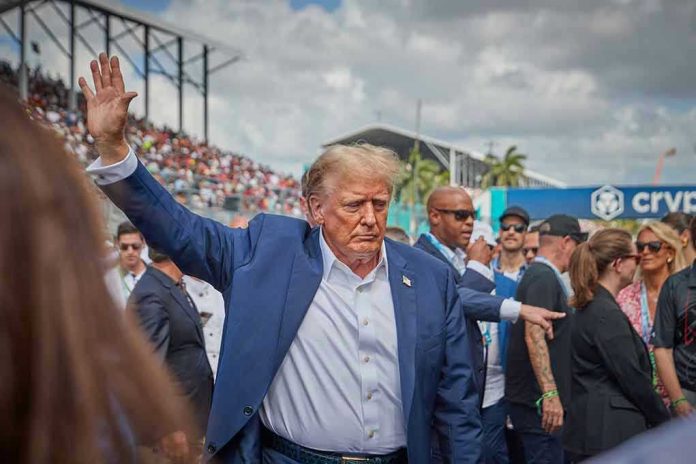
President Trump took to Truth Social with characteristic bluntness, accusing Australia of making a “terrible humanitarian mistake” by potentially allowing these women to return to Iran. His offer was clear and public: grant them asylum or America will. Trump’s intervention followed reports that five players had already fled their Brisbane hotel and entered Australian Federal Police protection. The president later claimed a phone call with Prime Minister Albanese confirmed that five players were “taken care of” with others potentially following, though Australian officials remained notably tight-lipped about details, citing privacy concerns and the sensitivity of ongoing assessments.
The Wartime Context Changes Everything
These players left Iran in late February 2026, just days before US-Israel airstrikes killed Supreme Leader Ali Khamenei. The timing wasn’t coincidental but catastrophic for their situation. Iranian authorities, already on edge from military losses, showed zero tolerance for perceived disloyalty. After the team’s elimination following a loss to the Philippines on March 8, the window for safe return evaporated completely. State media’s “wartime traitors” designation wasn’t rhetorical flourish but a death sentence wrapped in propaganda. The players understood this perfectly, which explains why they sang the anthem during their second match against Australia, likely under intense pressure from government minders who traveled with the team.
Coalition of Unlikely Allies Forms
Reza Pahlavi, son of the deposed Shah and current opposition leader, publicly embraced the players as members of his “Lion and Sun Revolution,” naming them specifically and urging Australian protection. FIFPRO, the global soccer players’ union, expressed “serious concerns” and formally requested FIFA and the Asian Football Confederation intervene for player welfare. Australian Foreign Minister Penny Wong stated Australia “stands in solidarity” with Iranian women, while Home Affairs Minister Tony Burke personally met with the defectors. Even author J.K. Rowling weighed in, adding celebrity pressure to what became a remarkably unified international response demanding protection for these athletes.
The Family Hostage Dilemma
Trump revealed a cruel reality that complicates every asylum decision: some players hesitate to accept protection because Iran holds leverage through their families. The regime’s standard practice involves threatening relatives of defectors, creating impossible choices between personal freedom and family safety. This tactic has proven devastatingly effective in deterring previous Iranian athletes from seeking asylum despite clear danger. Human rights activists confirmed the players remain in secure locations, but the psychological warfare continues from Tehran. Australia’s cautious approach, balancing humanitarian obligations against diplomatic complications, reflects the genuine complexity of protecting people whose loved ones remain within a vengeful regime’s reach.
Precedent and Political Calculations
Australia faces pressure from multiple directions. The Afghan women’s soccer team’s successful 2021 evacuation from Taliban rule set a recent precedent, yet that situation lacked the current geopolitical powder keg of active US-Iran warfare. Granting asylum could strain already tense Australia-Iran relations while sending a message that encourages future defections. Refusing asylum under American presidential pressure risks damaging the US-Australia alliance and inviting domestic backlash from Australians who’ve shown public support, including fans who swapped jerseys with Iranian players in solidarity. Trump’s involvement transforms this from a routine refugee matter into a test of alliance priorities and humanitarian principles during wartime. The decision will establish protocols for how democracies handle athlete asylum requests when sports, war, and women’s rights collide.
Sources:
Trump calls on Australia to give asylum to Iranian women’s soccer team members—Times of Israel
President Donald Trump urges Australia to grant asylum to Iranian women’s soccer team—ABC
Iran women’s soccer team dubbed ‘traitors’ after refusing to sing national anthem—CBS News