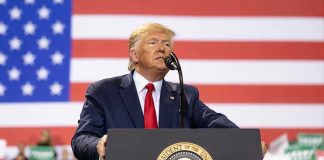

As everyday Americans battle stubborn prices at the pump and the grocery store, President Trump’s sharpened focus on affordability is nudging his approval numbers up among Republicans even as national elites keep insisting he’s still “underwater.”
Story Highlights
- Recent polls show a small but real approval uptick driven by Republicans responding to Trump’s affordability message.
- National polling averages still rate his job approval as net negative, despite improvement from a late‑November low.
- Trump is zeroing in on inflation, gas, groceries, and energy policy after years of Biden-era price shocks.
- Democrats and mainstream analysts downplay the shift, but GOP strategists see a roadmap for 2026 and beyond.
Polling uptick emerges after affordability push
Late November polling marked the low point of President Trump’s second-term approval, after months of media attacks and lingering frustration over high prices. In the days that followed, national surveys began to show a modest improvement, especially among Republicans and right-leaning voters, as Trump ramped up his messaging on cost-of-living issues. A pair of polls from firms that typically lean more Republican showed net approval in the single digits negative, lifting his overall average a point or two off the bottom.
Across major polling aggregators, his numbers in early December still sit in familiar territory: low 40s approval and low-to-mid 50s disapproval, depending on methodology. That keeps his net rating negative, but no longer at the second-term low seen around November 23. For frustrated conservatives who endured years of Biden-era inflation, that small uptick is less about popularity contests and more about whether Washington is finally talking seriously about affordability instead of virtue signaling and woke pet projects.
Republican voters reward focus on prices and paychecks
Inside the Republican base, Trump’s renewed focus on affordability resonates for a simple reason: families see the damage from years of overspending, energy strangulation, and globalist trade deals every time they buy groceries. GOP strategists and conservative commentators are highlighting that his approval bump is coming from voters who feel ignored by establishment economists but know their budgets are squeezed. When Trump talks gas prices, rent, and wages, he is speaking directly to middle‑class concerns that coastal elites and legacy media brushed aside for years.
That base reaction fits a longer pattern. During his first term, Trump’s strongest stretches of approval often came when economic results were front and center: record-low unemployment, rising blue‑collar wages, and relief from suffocating regulations. His second presidency has again tied his political fortunes to whether working Americans feel tangible relief. The current data show no dramatic surge, but they do suggest that when Trump foregrounds affordability rather than Beltway drama, Republican voters rally, and some independents at least pause before swallowing another round of media doom‑and‑gloom headlines.
Affordability contrast with Biden-era policies
The contrast with the prior administration could not be clearer for many conservative readers. Biden and his allies spent years insisting inflation was “transitory” while pouring trillions into ideological wish lists, climate mandates, and DEI bureaucracies. Those decisions helped drive up energy and food costs and punished savers and retirees on fixed incomes. Trump’s affordability push leans on a very different playbook: unleash American energy, slash red tape, secure the border, and put American workers ahead of global institutions that never seem to share the pain they cause.
Polling that shows Trump still net negative nationally does not erase the fact that cost of living remains a top concern for voters of all stripes. For conservatives, that concern is inseparable from questions about government size, spending, and control. When Washington grows, families get squeezed. When bureaucrats dictate energy and agricultural rules from on high, utility bills and grocery tabs climb. By centering affordability, Trump is effectively turning every price spike into an indictment of the big-government, globalist model that dominated under Biden and much of the pre‑Trump Republican establishment.
Limits of the bump and the road ahead for 2026
Even sympathetic analysts caution that a one-to-two‑point improvement from a low baseline does not yet signal a broad realignment. Some of the friendlier polls come from survey houses with known Republican “house effects,” meaning they traditionally score GOP figures a bit higher than the average. Aggregated trackers still show Trump clearly underwater overall, which Democrats eagerly cite as proof that the public remains skeptical. The reality is that America is deeply polarized, and small week‑to‑week shifts rarely transform that structural divide overnight.
Trump Approval Rating up as Republicans Applaud Focus on Affordabilityhttps://t.co/ATab9w0fcp
— Tie Swindell (@mirtropolis) December 9, 2025
For conservatives, the more important question is strategic, not sentimental. If modest gains are tied to affordability messaging, Republicans have a blueprint for 2026: talk relentlessly about prices, paychecks, and energy, and expose how Democratic policies and permanent-bureaucracy rulemaking punish ordinary families. At the same time, constitutional conservatives will watch closely to ensure that any affordability agenda stays anchored in limited government, free enterprise, secure borders, and respect for the rights and responsibilities of American families—not new programs that simply reshuffle who controls the levers in Washington.
Sources:
November 2025 National Poll – Emerson College Polling
Trump Approval Ratings – Nate Silver Bulletin
Opinion polling on the second Trump presidency – Wikipedia