

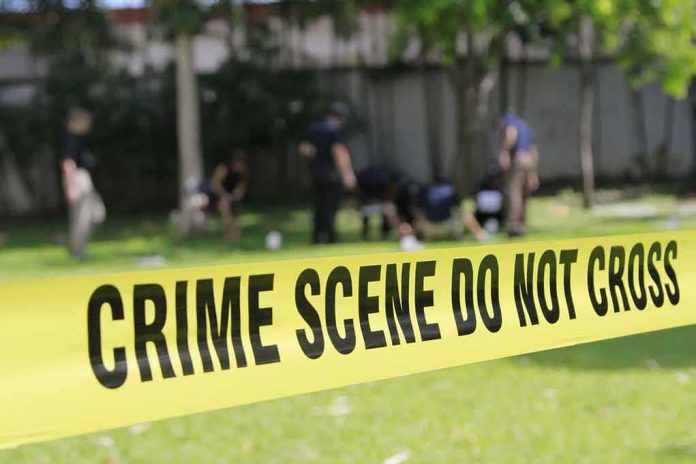
A high school track run in Manhasset ended with a discovery that may close a year-long search for a missing grandmother.
Story Snapshot
- Teen runners found skeletal remains in Plandome Pond Park on Oct. 1 around 5:44 p.m.
- Police said the remains are female and the case does not appear criminal.
- Investigators suspect a link to 79-year-old Shi Hua Xu, missing since December 2025.
- Family awaits medical examiner confirmation; clothing at the scene drew attention.
Runners’ Routine Route Turns Into a Crime Scene Perimeter
Nassau County police said members of the Manhasset High School track team spotted what looked like human bones while training in Plandome Pond Park on Thursday, Oct. 1, at about 5:44 p.m. Officers secured the wooded area near the pond and adjacent train tracks, and the Homicide Squad took over the scene. The department described the incident as an undetermined death investigation, standard when cause and identity are not yet final. Local outlets published police statements soon after.
Police Commissioner Patrick Ryder briefed media that the remains are female and that investigators aimed to establish identity quickly. Detectives found indicators that point to a specific missing person case from last winter. Officials stressed there was no sign of foul play at the scene, which steered the working theory away from homicide. That early framing matters. It calms public fear, protects the park’s routine use, and focuses resources on identification over manhunt.
Why Investigators Zeroed In On One Missing Person
Reporters noted the likely match to 79-year-old Shi Hua Xu, who lived in Great Neck and had dementia. She left home in December 2025 and did not return. The park where the remains were found sits about four miles from where Xu was last seen, a distance consistent with a vulnerable adult on foot. Police signaled that connection in on-record comments, while keeping the case open until scientific confirmation. Family members told People they were waiting on the medical examiner.
Chinese-language reporting added a telling detail. Relatives recognized a piece of clothing recovered at the site as something Xu owned, though DNA testing still needs to confirm identity. Clothing matches are strong leads, not proofs. In practice, investigators stack these clues with dental records, possible fingerprints, and DNA, then close the loop with the medical examiner’s formal identification. That step makes the conclusion legal, not just likely, and guides how the death is certified.
How A “Probable” Identification Becomes Official
Medical examiners use a layered process to name skeletal remains. They compare what families and doctors already know about the missing person, like dental films or prior scans, with what they can recover from the remains. When bone and teeth are available, DNA and dental comparison often carry the case across the finish line. That science-first approach underpins the signature on the death record and protects families and courts from error.
Police and press often speak in probabilities before that last step. The public hears “likely,” then assumes “settled.” The better path is patience with process. The International Committee of the Red Cross and United States forensic guidance describe identification as a scientific match, not a hunch. Once the medical examiner reports, police update the file and notify next of kin. Only then does a missing-person case become a named decedent with an official manner of death.
Community Stakes: Safety, Dignity, and Lessons Learned
Local parents now weigh two concerns: safety on public trails and care for elders who wander. Police said there is no sign of criminality, which supports keeping parks open and calm. The hard lesson sits at home. Families caring for someone with dementia should review door alarms, wearable trackers, and quick-notify plans with neighbors. Personal liberty matters, but so does protection of the vulnerable. Common sense says we do both, and we do it before the first cold night of winter.
The track team’s fast reporting shows how civic habits save time and, sometimes, bring closure. See something unusual, call it in, step back, and let professionals secure the scene. That respect protects evidence, spares families from rumor, and speeds the science. If the medical examiner confirms the suspected identity, the community can grieve with clarity. If not, investigators still advanced the case with care and kept the door open to the right answer.
Sources:
nypost.com, greaterlongisland.com, longisland.news12.com, newsday.com, icrc.org