
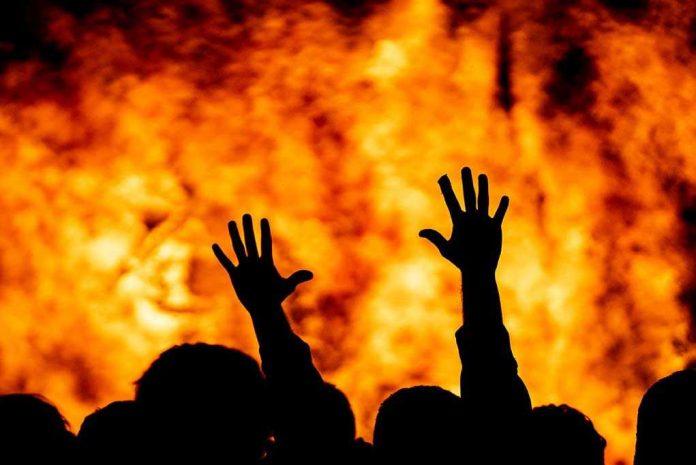
The Palisades Fire left a trail of destruction and dissatisfaction, painting a grim picture of systemic failure and abandonment.
Story Snapshot
- The fire resulted in 32 fatalities and widespread devastation in Southern California.
- Residents experienced chaos due to infrastructure failures and delayed aid.
- There are ongoing lawsuits and scrutiny over the allocation of relief funds.
- The fire highlighted vulnerabilities in wealthy coastal areas amid extreme weather conditions.
The Unfolding Catastrophe
The Palisades Fire erupted on January 7, 2025, but its roots trace back to a smoldering ember of alleged human negligence on New Year’s Day. Jonathan Rinderknecht, accused of starting the fire with a discarded cigarette, set off a chain of events that would devastate Pacific Palisades, Topanga, and Malibu. As Santa Ana winds reaching 100 mph fanned the flames, the fire expanded rapidly, consuming everything in its path.
The fire’s rapid spread overwhelmed local resources, forcing over 100,000 residents to flee. The chaos was exacerbated by hydrant failures and neglected firebreaks, leaving communities vulnerable to the blaze. Despite efforts by CAL FIRE and local emergency services, the fire’s containment came too late for many residents who felt abandoned during the crisis.
Systemic Failures and Political Accountability
The Palisades Fire exposed significant shortcomings in emergency response and infrastructure management. Residents expressed outrage at town halls, criticizing government agencies for their perceived negligence. Governor Gavin Newsom and LA Mayor Karen Bass faced mounting political pressure as the public demanded accountability for delayed aid and inadequate disaster preparedness.
The systemic failures were not limited to the fire’s containment. The aftermath revealed further issues, such as toxic soil contamination and insurance battles that left many homeowners without support. Lawsuits against the Los Angeles Department of Water and Power and other agencies highlighted the residents’ frustration with the systemic neglect they experienced.
The Role of Human Error and Natural Forces
While human error played a role in the fire’s ignition, natural forces significantly contributed to its devastation. The Santa Monica Mountains, already drought-stricken, provided the perfect fuel for the fire’s rapid expansion. Santa Ana winds, a notorious fire accelerant, turned the blaze into an unstoppable force, crossing major highways and complicating evacuation efforts.
The fire’s path of destruction echoed previous wildfires, such as the 2018 Woolsey Fire, underscoring the ongoing risks of the wildland-urban interface in Southern California. The simultaneous occurrence of 12 regional fires killing 32 people highlighted the broader challenges faced by the state in managing natural disasters exacerbated by climate change.
Recovery Efforts and Lingering Challenges
In the year following the fire, recovery efforts have been slow and fraught with challenges. While the fire was declared 100% contained by the end of January 2025, the road to recovery has been long and arduous. The US Army Corps of Engineers worked tirelessly to clear debris, yet environmental regulations and difficult terrain have delayed progress.
Meanwhile, the allocation of relief funds has come under scrutiny. The FireAid concert, which raised $100 million, faced criticism for directing funds to nonprofits rather than directly assisting victims. The lack of transparency and efficiency in aid distribution has fueled distrust among affected communities, who continue to grapple with the long-term impacts of the disaster.
Sources:
America First Policy Institute