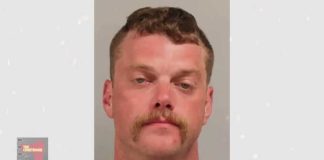

A 20-year-old running through downtown Memphis with a handgun crossed paths with armed National Guard soldiers, and in seconds, an entire city was forced to ask who gets to kill in the name of “public safety.”
Story Snapshot
- National Guard soldiers on a Memphis “Safe Task Force” killed 20-year-old Tyrin Johnson during a foot chase.
- Officials say Johnson was armed and had fired shots; his family says he carried a gun out of fear and wants video proof.
- No body camera footage from the Guard exists, leaving the crucial moment of the shooting backed only by official testimony.
- The case spotlights a bigger question: should military troops do street policing with authority to use deadly force?
How a holiday pursuit turned deadly in downtown Memphis
The Tennessee Bureau of Investigation says Memphis police were already pursuing 20-year-old Tyrin Johnson through downtown streets when two Tennessee National Guard soldiers joined the chase as part of the city’s Memphis Safe Task Force. Authorities state that Johnson had fired shots in the area before the pursuit began, and that he was armed with a handgun as he ran. Memphis Police say that during the foot chase, Johnson turned toward the Guardsmen while holding the gun, and they opened fire. Johnson was pronounced dead at the scene.
National Guard soldiers kill 20-year-old Tyrin Johnson in Memphis, Tennessee https://t.co/juOU7T2ERY
— Socialist Equality Party (Sheffield) (@SEP_Sheffield) July 7, 2026
No National Guard soldier or police officer was hurt in the exchange. On paper, that sounds like a clean officer-involved shooting in which armed personnel responded to a perceived threat and walked away unharmed. But the most important moment – whether Johnson truly turned and pointed the weapon – is only described in official statements, not shown. National Guard soldiers did not wear body cameras, and officials have not released dashcam video that might capture the key seconds. That gap is exactly where public trust now lives or dies.
The family’s challenge to the official story
Johnson’s family does not pretend he was unarmed. They say he carried a gun, but for protection after being “jumped” in Nashville and worried about a social media feud. His grandfather, Evaniel Johnson, told reporters he is waiting to see if any video supports the claim that Tyrin turned toward Guard members with a gun while running from them. The family says the Tennessee Bureau of Investigation told them he was shot twice in the chest. That detail raises basic questions about whether he was turning, facing, or perhaps still trying to run away when bullets struck.
From an evidence standpoint, the family’s case has limits. They offer motive and questions, not hard proof that contradicts the Bureau’s version. There is no released forensic report on the handgun showing whether it was fired, and no public witness statements proving he never turned toward the soldiers. At the same time, American conservative values stress that government power must be checked, and that lethal force against citizens deserves more than “trust us.” Asking for video, ballistics, and independent witness accounts is not anti-cop; it is basic accountability.
Why the missing video matters far beyond this one case
The Tennessee Bureau of Investigation describes itself as a fact-finding agency in officer-involved shootings. Agents document scenes, collect evidence, and interview witnesses, then pass the file to local district attorneys, who decide if charges are warranted. That process assumes investigators can gather objective facts. In modern America, “objective” usually means video. When police shootings are captured on body cameras, the public may still argue about interpretation, but they do not have to guess what physically happened.
National Guard soldiers kill 20-year-old Tyrin Johnson in Memphis, Tennessee https://t.co/AbFSNxSRqm
— Angelos Papadopoulos (@angelohrg) July 7, 2026
Here, the National Guard soldiers had lethal authority but no cameras. That is not a small oversight. Research shows fatal police shootings of armed civilians are more common in high-gun states, even after adjusting for crime and poverty. Urban shootings also fall more heavily on Black residents and neighborhoods. Memphis is both urban and heavily policed, and Johnson was a young Black man. When armed government personnel shoot a citizen in that context without video, many people will assume the narrative serves the shooters first and the truth second. That is human nature, shaped by history.
National Guard on city streets and the line between soldier and cop
This shooting did not happen in a war zone. It happened in downtown Memphis, after a Fourth of July holiday crowd had gone home. Yet two National Guard soldiers were patrolling city streets with police, as part of a “Safe Task Force” meant to make residents feel more secure. Local officials had already sued to block this deployment, arguing it violated state limits on military use inside Tennessee, but an appeals court allowed the plan to go forward. That means the Guard is now doing work many Americans assume belongs only to sworn officers.
Research on armed guards in schools offers a warning. One major study found that incidents with an armed guard present had almost three times the rate of deaths compared with those without. The presence of armed officers did not clearly deter violence; it correlated with more bodies on the ground. When government puts soldiers or guards with guns into civilian spaces, it may increase the chance that a tense encounter ends in gunfire instead of arrest. That is not an argument against law and order. It is a reminder that force is not the same thing as safety.
What accountability should look like going forward
Gun violence in America kills tens of thousands of people a year, and Black Americans are far more likely than Whites to die by gun homicide. Police shootings and now Guard shootings sit inside that larger grim story. Citizens have the right to demand that when government agents kill someone, the investigation be transparent and the evidence strong enough to stand on its own, not just on sworn testimony. Common sense says three things should happen after Johnson’s death.
First, Memphis police and the Tennessee Bureau of Investigation should release any dashcam footage, audio, and ballistic reports that clarify whether Johnson fired his weapon and what he was doing when shots were fired. Second, Tennessee leaders should decide whether National Guard soldiers on city patrol must wear body cameras, just like many officers now do. Third, lawmakers should revisit when, and how, military personnel are used for local policing, so that “public safety” does not slowly turn into “martial light” without voters ever agreeing to it.
Sources:
military.com, npr.org, youtube.com, facebook.com, newsfromthestates.com, abcnews.com, rockinst.org, jamanetwork.com, everytownresearch.org, pmc.ncbi.nlm.nih.gov, casbs.stanford.edu, bjs.ojp.gov