
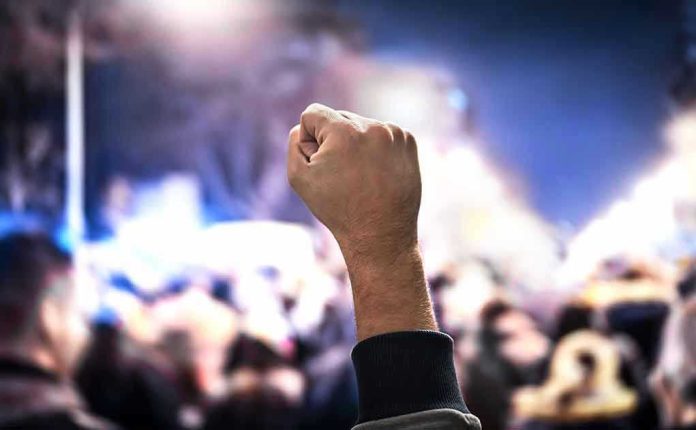
Anti-ICE protests in Minneapolis morph into a chaotic battleground, forcing a national reckoning on immigration enforcement and civil liberties.
Story Snapshot
- Renee Nicole Good’s fatal shooting by an ICE officer triggers massive protests.
- Federal self-defense claims are disputed, sparking public outrage.
- Minneapolis becomes the epicenter of a nationwide anti-ICE movement.
- Calls for accountability and an independent investigation grow louder.
The Flashpoint: Renee Nicole Good’s Death
On January 7, 2026, Renee Nicole Good, a 37-year-old woman, was killed by ICE officer Jonathan Ross during an immigration operation in south Minneapolis. Federal officials claim it was self-defense, alleging Good attempted to run over agents. However, local officials and the public dispute this narrative, prompting widespread protests. The incident occurred less than a mile from where George Floyd was killed, adding a symbolic layer to the unrest.
Protests rapidly escalated, with thousands gathering in downtown Minneapolis. Demonstrators clashed with police outside the Canopy by Hilton hotel, leading to declarations of unlawful assembly and mass detentions. The protests, organized as part of the “ICE Out For Good” weekend, have become a national movement, with over 1,000 events planned across the country.
A Nation on Edge
The shooting of Renee Good occurred amid the largest immigration enforcement operation in ICE history, with more than 2,100 officers deployed to Minnesota. The state’s large Somali diaspora and history of sanctuary-style policies have made it a focal point for federal immigration crackdowns. The surge of federal officers into the area has heightened tensions between local communities and federal authorities.
The protests have drawn national attention, with cities like Philadelphia and Portland organizing solidarity marches. The events underscore a broader resistance to the Trump administration’s aggressive immigration policies and the perceived overreach of federal agencies like ICE.
Federal vs. Local Tensions
The conflict between federal and local authorities has been a key feature of the protests. The denial of access to Minnesota Congressional delegation members attempting an oversight visit to an ICE facility highlights the friction. The exclusion of state investigators from the shooting investigation further exacerbates tensions, leading to calls for external oversight.
Homeland Security Secretary Kristi Noem’s characterization of Good’s actions as “a domestic act of terrorism” has fueled public anger and debate over the use of force by federal agents. Critics argue that the federal response reflects a broader pattern of militarized enforcement and lack of accountability.
Protest Rights and Civil Liberties
The protests have raised significant questions about civil liberties and the right to protest. Reports of chemical agents used against demonstrators and the declaration of unlawful assemblies have prompted concerns about the militarized tactics of law enforcement. The ACLU and other advocacy groups have criticized the federal narrative and emphasized the need for peaceful, community-led actions.
The events in Minneapolis have catalyzed a national conversation about the role of ICE in local communities and the broader implications of federal immigration enforcement. As protests continue, the demand for transparency and accountability remains at the forefront of the movement.