

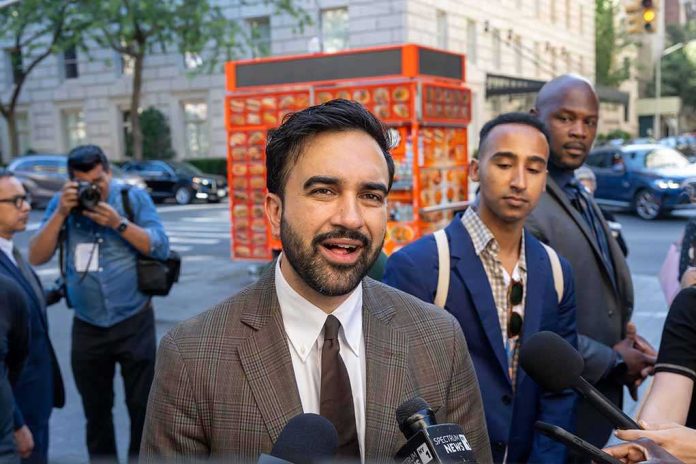
Mayor Zohran Mamdani marked the third anniversary of October 7 with a statement that mourned Israeli victims, then pivoted to accusing Israel of “ongoing genocide,” and the backlash arrived within hours.
Quick Take
- Mamdani’s October 7 statement opened by calling the Hamas attack “horrific war crimes” before shifting to condemn Israel’s conduct in Gaza.
- The Israeli Foreign Ministry fired back hard, calling Mamdani a “mouthpiece for Hamas propaganda” who “normalizes antisemitism”.
- Jewish outlets and New York papers said he gave victims “three sentences” before using their grief to attack Israel.
- Mamdani’s team says the statement criticizes Israeli government policy, not Jewish people, continuing a pattern from his 2023 remarks.
What The Mayor’s Statement Actually Said
New York City’s mayor’s office published the full statement on October 7, 2026. It began by naming the horror plainly. “Hamas killed more than 1,100 Israelis and abducted 251 others,” the statement read, adding that the city grieves “alongside our many friends and neighbors who still carry that unthinkable loss”. That opening is not in dispute. What came next is what set off the firestorm.
Within a few sentences, Mamdani wrote that the suffering “did not begin nor end” on October 7. He said it “continued through the Israeli government’s devastating, ongoing genocide in Gaza” and called for an end to “occupation and apartheid”. Critics argue that pairing a mass murder of civilians with the word “genocide” aimed at the victims’ own government, on their day of mourning, crosses a clear line most other leaders avoided.
Why Jewish Groups And Israel Pushed Back So Hard
The Yeshiva World News editorial board didn’t mince words. It said Mamdani gave “Jewish New Yorkers three sentences” of condolence before using “their grief to demonize Israel”. The New York Post called the post “tone-deaf” and said it used the anniversary to attack Israel over Gaza policy. Israel’s Foreign Ministry went further still, accusing Mamdani of excusing terror and standing with Jews “only when they are dead”.
Context matters here. Other world leaders marking the same anniversary chose a very different tone. The British government’s statement condemned Hamas and flatly pledged to fight rising antisemitism, without pivoting to criticize Israel’s military campaign. France’s leadership expressed grief for Israel and vowed to fight “antisemitism and terrorism, everywhere and always”. Mamdani’s decision to foreground Gaza policy put him well outside that commemorative norm, which is exactly why the contrast drew so much attention.
A Pattern Critics Say They’ve Seen Before
This wasn’t an isolated slip. Reporting shows Mamdani’s October 2023 statement, issued just a day after the attack, used nearly identical language, saying peace could only begin by “ending the occupation and dismantling apartheid”. His 2025 anniversary statement again mourned victims while sharply criticizing the Israeli and U.S. governments. Critics see a consistent choice, not a one-time wording problem, and that consistency is what fuels the deeper trust issue.
Mamdani’s defenders push back on the antisemitism label itself. They note the statement never attacks Jewish people directly, never denies the Hamas killings, and explicitly calls for hostages to come home. Mamdani has also said publicly that phrases like “globalize the intifada” aren’t language he personally uses, while declining to police how others speak. Supporters frame this as holding a foreign government accountable, not targeting a faith or ethnicity.
The Real Problem Is Timing And Judgment
Here’s where common sense should weigh in. Nobody serious disputes that Americans can criticize Israeli government policy. That’s fair game in any democracy. But October 7 is a day set aside globally to mourn murdered civilians and kidnapped families, not a news cycle to relitigate Gaza war strategy. Choosing that specific day, that specific anniversary, to pivot into “genocide” and “apartheid” language reads less like principled policy critique and more like picking a fight on a grave.
Most New Yorkers, regardless of party, understand the difference between grieving with people and lecturing them while they grieve. A mayor leading the largest Jewish population outside Israel has a responsibility to get that distinction right, especially three years running. The statement’s defenders have a point about free criticism of foreign policy. But the backlash isn’t really about whether Israel can be criticized. It’s about whether a mourning day was the right moment to do it.
𝐌𝐀𝐌𝐃𝐀𝐍𝐈 𝐒𝐏𝐄𝐍𝐃𝐒 𝐌𝐎𝐒𝐓 𝐎𝐅 𝐇𝐈𝐒 𝐎𝐂𝐓𝐎𝐁𝐄𝐑 𝟕 𝐒𝐓𝐀𝐓𝐄𝐌𝐄𝐍𝐓 𝐀𝐓𝐓𝐀𝐂𝐊𝐈𝐍𝐆 𝐈𝐒𝐑𝐀𝐄𝐋, 𝐍𝐎𝐓 𝐌𝐎𝐔𝐑𝐍𝐈𝐍𝐆 𝐇∗𝐌𝐀𝐒’ 𝐕𝐈𝐂𝐓𝐈𝐌𝐒
Three years to the day since H∗mas stormed the border and m∗rdered more than 1,100 Israelis, New York City… pic.twitter.com/gXvBraFPLr
— M.A. Rothman (@MichaelARothman) October 7, 2026
Expect this fight to resurface every October 7 that Mamdani holds office, since the pattern now spans three straight anniversaries. Whether he adjusts his approach, or digs in further, will tell New Yorkers a lot about how he intends to govern a city still raw from this wound.
Sources:
thegatewaypundit.com, fox5ny.com, timesofisrael.com, theyeshivaworld.com, reddit.com, jta.org, politico.com, cnn.com