

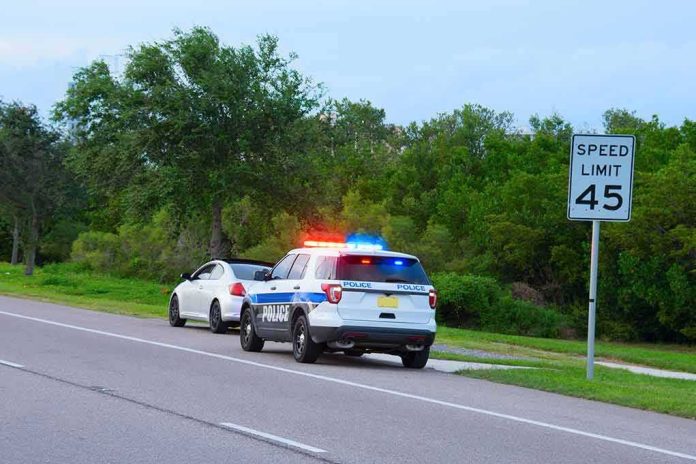
A Florida bride’s race to the altar turned into a roadside spectacle when police bodycam footage revealed her Tesla hurtling down the highway at 105 mph, transforming what should have been her special day into a viral traffic stop.
Story Snapshot
- Bride caught traveling at 105 mph in Tesla while rushing to her own wedding ceremony in Port St. Lucie, Florida
- Police bodycam footage released by department goes viral, showing bride in full wedding gown during traffic stop
- Wedding guest driving the vehicle wore formal attire, both claimed they were running 20 minutes late
- Incident highlights growing trend of law enforcement transparency through social media sharing of bodycam footage
High-Speed Wedding Rush Caught on Camera
Port St. Lucie Police Department officers pulled over a gray Tesla on the Crosstown Parkway after clocking the vehicle at 105 mph on a Friday afternoon. The unmarked police car captured what would become an unusual traffic stop featuring a bride in full white wedding gown seated in the passenger seat. The driver, dressed in a white collared shirt and black vest befitting a wedding guest, had been tasked with getting the bride to her ceremony on time. Both occupants immediately explained their emergency to officers, claiming they were running approximately 20 minutes behind schedule for the wedding.
When Excuses Become Entertainment
The Port St. Lucie Police Department made the strategic decision to release the bodycam footage on social media, where it quickly gained traction among viewers fascinated by the contrast between formal wedding attire and a serious traffic violation. This incident stands apart from a 2019 case involving a woman who falsely claimed to be heading to her wedding when arrested for DUI. That earlier case gained notoriety specifically because investigators discovered no wedding existed, exposing the claim as a fabrication to excuse impaired driving. The Florida bride’s situation appears legitimate by comparison, though traveling at more than 40 mph over typical highway speed limits raises questions about judgment and public safety.
Law Enforcement Transparency Meets Viral Culture
Police departments nationwide have increasingly embraced social media as a platform for sharing bodycam footage, creating a new dynamic between law enforcement transparency and public entertainment. The Port St. Lucie incident demonstrates how agencies now curate content for viral potential, selecting footage that humanizes officers while documenting unusual encounters. This strategy serves dual purposes: building community trust through transparency while generating positive public relations. However, critics might question whether the pursuit of social media engagement encourages selective sharing that highlights lighthearted moments while potentially obscuring more serious accountability issues within departments.
Unanswered Questions About Consequences
The available information leaves significant gaps regarding the outcome of this traffic stop. Whether officers issued citations, allowed the bride to proceed to her ceremony, or imposed other consequences remains undisclosed. The department’s decision to share entertaining footage without providing resolution details reflects a broader pattern in viral law enforcement content, where narrative completion takes a backseat to initial shock value. For citizens concerned about equal application of traffic laws, the lack of follow-up raises legitimate questions about whether special circumstances, sympathetic situations, or viral potential influence enforcement decisions. Such selective transparency, while generating positive attention for departments, ultimately leaves the public wondering whether accountability applies equally across all traffic violations regardless of circumstance.