
For nearly two days after a rare nationwide ground stop, the president said little while millions wanted answers.
Story Snapshot
- Air travel halted nationwide for hours on November 13; delays rippled all weekend.
- President Trump did not directly address the outage until November 15, then urged funding.
- Officials said aging systems and unstable data triggered a safety stop, not a cyberattack.
- Cabinet officials said Trump was fully engaged behind the scenes during the crisis.
A rare shutdown met a rare silence
The Federal Aviation Administration ordered a nationwide ground stop late Friday afternoon. Takeoffs paused for more than four hours as controllers worked planes down and airports filled with stranded travelers. Airlines then fought through cascading delays and cancellations into Sunday. Nationwide halts like this are almost unheard of. Many people expected the president to speak quickly to explain what happened and to calm nerves. That speech did not come until Sunday, after the worst of the logjam had passed.
Newsrooms tracked the president’s public statements during the pause. Reports described posts about other topics while families camped at gates and crews waited for clear signals to fly. That mix fueled online questions that boiled down to one blunt ask: Where is the president? The better question was twofold. First, what failed and why? Second, how should a president talk to the country when the system that moves the country suddenly stops?
What officials say caused the stop
Transportation Secretary Sean Duffy said radar and communications feeds turned unstable across facilities. Controllers saw inconsistent data on screens. With thousands of planes in the air, officials followed safety playbooks and ordered a ground stop while they stabilized the network. The White House said the root stemmed from overloaded 1980s-era equipment, not a hostile attack. The message was simple: protect lives first, then fix the machinery and restart the flow.
By Sunday, airlines were mostly back on schedule. The Federal Aviation Administration said traffic was returning to normal and urged patience as crews, equipment, and planes reset. That operational part worked as designed. Planes landed safely. No loss of life. The tradeoff was time, money, and trust, paid by passengers who missed weddings, funerals, and paychecks while the system rebooted and airports dug out from the backlog.
When the president finally spoke
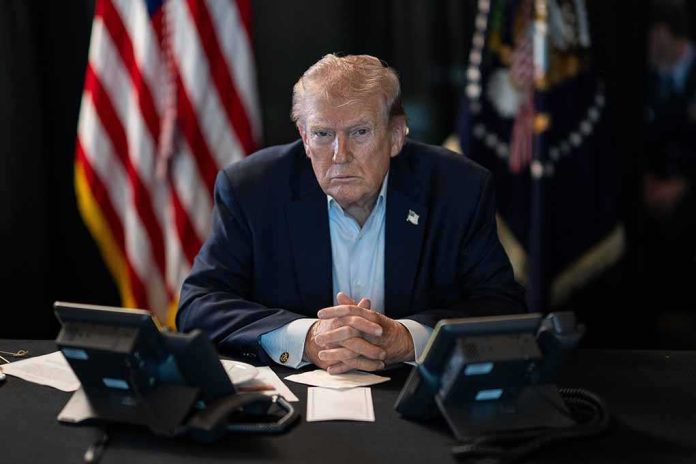
President Trump broke his public silence on Sunday. He blamed the prior administration for letting the Federal Aviation Administration age into failure. He urged Congress to send modernization money fast and praised agency teams for the recovery work. That message set a clear frame: this failure was the bill for decades of delay. The tone fit a conservative instinct about competence. Fix the old gear. Fund what works. Hold someone accountable. Do it now.
Critics wanted more on Friday. They argue a president should speak within hours during an event this large, even if the cause is unclear. They see reassurance as part of the job. On the public record, that criticism holds water on the communications front. The first statement came late, and it leaned on blame and budget before a plain account of failure modes. On balance, a short early address that said what officials knew and did not know would have helped common sense expectations.
Private engagement versus public visibility
Cabinet officials said the president was privately active from the start. Homeland Security Secretary Markwayne Mullin said Trump pulled people into his office and tracked updates while agencies executed their plans. CNN reported that senior staff briefed Trump during an economic meeting and relayed his directions on a multi-team call; he later met with Duffy and Mullin. Those claims address leadership substance, but they do not erase the public gap. Americans stuck in terminals cannot see Situation Room calls.
Margaret Brennan: Friday's nationwide ground stop lasted just over four hours, but the effects are still being felt this morning with more than 1,900 flights already canceled and disruptions expected to continue. After nearly two days of silence on the crisis, President Trump is… pic.twitter.com/6dmiKxytuT
— corgo (@wordsdematthew) November 15, 2026
Two truths can stand together. First, the safety call to halt takeoffs was correct based on unstable data. That choice lines up with the duty to protect life. Second, a president can and should communicate early during a once-in-decades shutdown. A brief statement within hours—acknowledging uncertainty, promising facts, and setting the next update—costs nothing and buys trust. The next crisis will test both muscles again: steady hands on the system and a clear voice on camera.
Sources:
people.com, usatoday.com, apnews.com, detroitnews.com, afp.com, whitehouse.gov, us.cnn.com, dhs.gov, cbsnews.com