
New York City Mayor Zohran Mamdani followed through on a clear promise: he moved to disband the NYPD’s Strategic Response Group and split protest policing from counterterrorism.
Story Snapshot
- Mamdani repeatedly vowed to disband the Strategic Response Group and pressed the case in 2026 forums.
- The administration’s core claim: protest response and counterterrorism should be separate missions.
- City Comptroller reports urged ending militarized protest policing and reforming practices.
- The plan centers on protecting protest rights while reshaping how the NYPD handles crowds.
Mamdani’s pledge became policy direction
Mayor Zohran Mamdani did not spring this on the city. He broadcast it for months. In April 2026, he said he was committed to disbanding the Strategic Response Group and decoupling the city’s protest response from counterterrorism. He called the decision a matter of when, not if, and framed it as a reset in how New York handles demonstrations and serious threats. These were direct statements from the Mayor’s Office transcripts, not off-the-cuff lines.
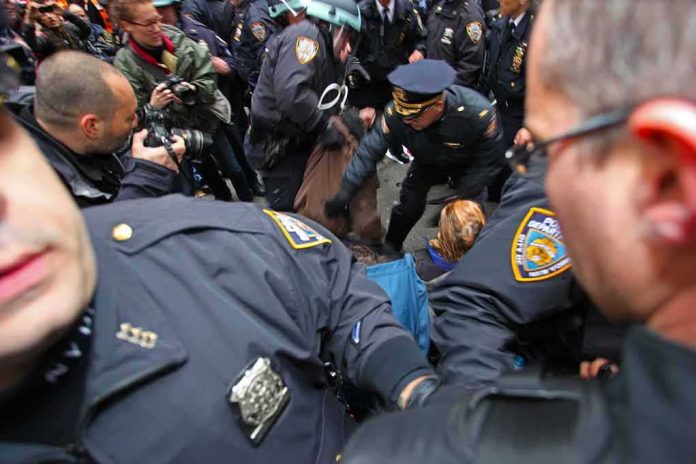
The strategic point is plain. The administration argues that linking protest control to counterterrorism blurs lines and encourages a heavy posture at events that are often peaceful. That claim stakes out a bright boundary between crowd facilitation and threat interdiction. The goal is to reduce escalations at protests while keeping fast, focused capacity for true emergencies. The message also sets expectations: fewer helmets and shields at marches, more targeted response for actual danger.
What the city’s watchdogs have pushed for
New York City’s Comptroller framed the same split as a needed guardrail. A public-safety report urged disbanding the Strategic Response Group’s Disorder Control Unit so militarized officers would not police protests, marches, or parades. The Comptroller’s office tied this to First Amendment protection, better police practices, and stronger accountability inside the department. The recommendation drew a clean connection between mission creep and chilled speech, and it offered a map for reform.
The history helps explain the pivot. The Strategic Response Group began in 2015 with about 350 officers focused on counterterrorism and disorder response. It later expanded to roughly 800 officers and took on broader crime reduction and protest control duties, according to the Comptroller’s report. That growth mirrored a wider trend: tools built for rare threats migrating into everyday policing. The expansion produced lawsuits, complaints, and a lasting debate over how to police protests without stifling them.
How the split aims to work in practice
The Mamdani approach separates roles to change outcomes. Protest events would be handled with a lighter, dialogue-first posture. Counterterrorism stays sharp and specialized, without the optics or tactics of mass protest control folded in. The administration links this to the city’s post-2020 protest reforms, which already pushed de-escalation and clearer command models. The design asks a simple question that resonates with common sense: why treat a march like a terror threat when it is not?
New York City Mayor Zohran Mamdani on Monday followed through on his campaign promise to disband the New York City Police Department’s Strategic Response Group (SRG): a police unit responsible for handling both protests and counterterrorism.
“Those are not the same, and they… pic.twitter.com/EeqCGDuFWn
— Mosheh Oinounou (@Mosheh) November 16, 2026
Supporters argue this is not softer on crime; it is smarter on mission. They point to the Comptroller’s framework that ties rights protection to public trust and safety. When people see police manage crowds with communication, not batons, tensions ease and property stays safer. That fits a conservative principle: define the job, match the tool, and keep government power narrow and accountable. A focused counterterror unit is stronger when it is not stretched into routine protest patrols.
What to watch next
The next milestones are operational, not rhetorical. The city will need to show where personnel and equipment go, how training shifts, and how commanders call up resources for large events. Benchmarks should include response times, injuries, arrests, complaints, and de-escalations. Those measures will tell the real story. Mamdani said the separation was the point; the data will show whether the city can protect speech, deter violence, and move fast when danger is real.