
A two-time Jeopardy! champion now faces ten felony counts that prosecutors say involve sexually explicit images of children.
Story Snapshot
- An arrest warrant lists ten counts of second-degree sexual exploitation of a minor.
- The alleged offenses are tied to November 19, 2025, in Wake County, North Carolina.
- A judge denied bond after the October 23, 2026 arrest and initial hearing.
<liThe warrant describes images and videos of children estimated ages 7 to 15.
What the arrest warrant and court records say
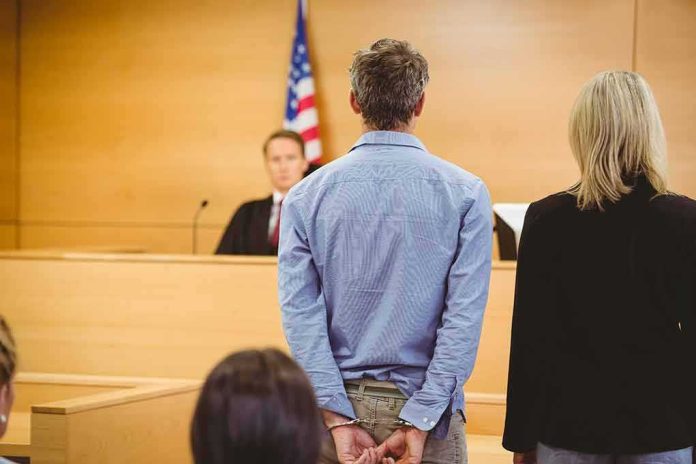
Wake County authorities arrested Joey DeSena on October 23, 2026, and booked him into the county jail. A judge denied bond at a first appearance the following week. Reporting that cites court records states the warrant charges ten counts of second-degree sexual exploitation of a minor. The document ties the alleged conduct to November 19, 2025. The case record identifies Wake County, North Carolina, as the venue for both the arrest and the charges.
Outlets that reviewed the warrant say it alleges possession and duplication of sexually explicit images and videos that depict children. Those reports describe the children as estimated to be between ages 7 and 15. The ten counts are framed as separate offenses under state law. The descriptions attribute these details to the warrant language and court filings, not to anonymous sources or rumor. A trial has not been held at this stage.
The link to a prior felony case and probation status
Court records show DeSena pleaded guilty months earlier to two felony secret-peeping counts. The judge imposed a 60-month probation term. Reporters who attended or reviewed the subsequent hearing say the judge noted the new allegations arise from conduct that allegedly occurred during that probation. That timeline sets up a possible probation violation alongside the new criminal case, which is common in supervision matters when new charges are filed.
The prior case came from a Currituck County warrant that said cameras were placed in a bedroom and bathroom. DeSena pleaded guilty and received probation under that case. The new Wake County charges do not merge with that earlier offense, but the probation layer matters for custody and bond decisions. Judges often take alleged on-probation conduct as a strong red flag for risk and compliance.
How this fits common prosecution patterns
Child sexual exploitation possession cases often turn on digital forensics. Prosecutors must show knowing control or duplication of files and connect that control to a person. Early reports rarely include file hashes, device lists, or detailed logs, and this case is no different in public view so far. The initial filings usually establish probable cause, while deeper forensic proof is presented later in discovery and at hearings or trial. That stepped process is standard across jurisdictions.
NEW: A two-time Jeopardy champion in North Carolina has been arrested again less than three months after a judge spared him prison time and put him on probation.
Now a judge has denied his bond and locked him in the Wake County Jail.
According to an arrest warrant obtained by… pic.twitter.com/zpqKVziw1T
— i SeeRacists 🐐 | Breaking News (@SeeRacists) October 27, 2026
Probation adds a second track. When a person under supervision is charged with new crimes, officers may file a violation report. Judges can then hold the person without bond while the revocation process runs. Research on supervision shows that new criminal allegations, not just technical slip-ups, often drive revocations. The system treats new alleged crimes during probation as a major breach, which helps explain the quick detention outcome here.
Media attention and the game-show factor
Coverage has emphasized that DeSena once won more than $44,000 on Jeopardy!. That label guarantees national attention and faster headlines. The effect is predictable: readers focus on the television tie while the court process grinds through routine steps. The spotlight can also speed up public judgment. Responsible reporting should stick to the public filings and keep the line clear between allegations and proof. The facts here come from warrants and court records that newsrooms reviewed.
What to watch next in court
The next key steps are formal discovery, any indictments that refine the counts, and hearings on detention and probation status. The state will need to show where files were found, who controlled the devices, and how investigators tied dates and duplication to the defendant. Defense counsel may test attribution, knowledge, and the handling of digital evidence. The court will also decide whether the alleged on-probation conduct triggers revocation or stricter conditions before any trial.
Sources:
facebook.com, people.com, wjla.com, wmbfnews.com, fox10tv.com, ew.com, nature.com