

Homeland Security just closed a door that spies, smugglers, and birth-tourism brokers were testing on America’s Pacific front porch.
Story Snapshot
- DHS suspended visa-free CNMI travel for Chinese nationals over security and birth-tourism risks.
- The notice ties risks to espionage targeting nearby U.S. defense sites and Guam.
- The halt covers new applications and already approved authorizations going forward.
- CNMI leaders warn of tourism pain and dispute parts of the threat picture.
What DHS Actually Did And Why It Matters
The Department of Homeland Security stopped a program that let some Chinese nationals enter the Commonwealth of the Northern Mariana Islands without a U.S. visa for short stays. The agency said the program could be used to collect intelligence on U.S. military assets in the region and to support birth tourism networks. Officials framed the move as a risk cut, not a talking point. They said the volume of visa-free entries created unacceptable law enforcement and security risks that normal visa screening would help reduce.
The Mariana Islands sit beside one of America’s most important military hubs: Guam. That geography turns a tourism shortcut into a potential security seam. Reports tied the DHS move to earlier smuggling cases from the Northern Mariana Islands to Guam and to later encounters near sensitive facilities. Those case summaries were thin in public detail but gave DHS a concrete pathway of concern. When lanes sit open near strategic bases, the burden of proof should sit on the shortcut, not on security.
How The Suspension Works On Day One
The suspension reaches both new travelers and people already holding approvals. Chinese nationals now need to seek a standard nonimmigrant visa to visit, with the usual in-person checks and document review. People already in the Northern Mariana Islands may finish their current stay, but future trips will require visas. DHS framed this as a reset while it reviews risk, not as a permanent ban. The effect is immediate friction for travel, but also immediate lift on vetting standards.
The policy also names birth tourism as a vector. DHS said lighter prescreening under the program lowered barriers for travel to give birth on U.S. soil, then link that event to longer-term influence or intelligence activity. That logic tracks known patterns in the mainland United States, even if the exact Northern Mariana Islands totals are not public. Congress has heard estimates ranging from thousands to tens of thousands of U.S. births tied to temporary visitors each year, though numbers vary by source and method.
What Supporters And Critics Are Arguing
Supporters focus on prevention. They point to the program’s reduced vetting, the nearby military footprint, and documented smuggling as enough to justify a pause. That case aligns with a simple rule: if a shortcut might expose a base, remove the shortcut first and argue market impacts later. The administrative finding that Chinese nationals were almost certainly exploiting the program signals more than a hunch, even if the public record lacks case counts or named espionage defendants so far.
Critics in the Northern Mariana Islands warn of economic damage. The territory’s delegate, Kimberlyn King-Hinds, said the government should address specific concerns and restart the program quickly. She also disputed that some cited incidents involved this program at all and said tourist births fell year over year after the program began. Her office called the move a suspension, not an end, and asked federal partners for a path forward that protects both jobs and security.
Security First, But Demand A Tighter Record
Americans should back DHS when it closes a door that risks defense secrets. That is common sense. Still, agencies should also show their work whenever they can. The public record does not quantify how often spies, smugglers, or birth-tourism organizers used this exact lane. It also lists mixed start dates for the suspension. Releasing the full Federal Register text and the nonclassified basis would clean up dates, scope, and evidence, and it would build trust for a serious step.
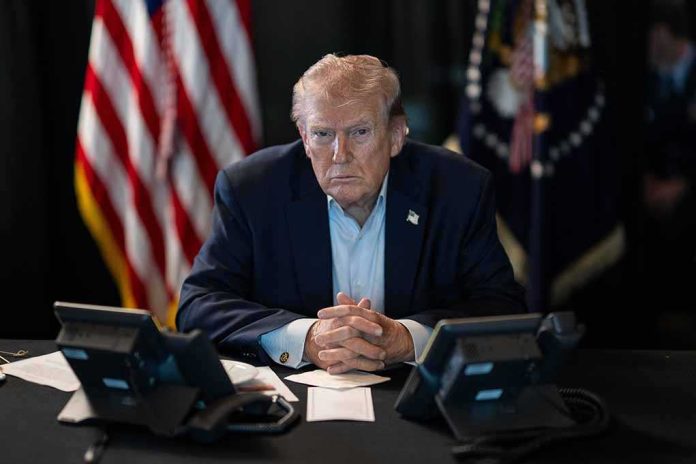
President Trump’s DHS is suspending a visa-free travel program for Chinese nationals over birth tourism and security risks.
More than 3,000 Chinese nationals used the Northern Mariana Islands program in fiscal year 2025, and the suspension takes effect at 2 p.m. EDT on Oct. 30.…
— Billy_Sitches (@Billy_Sitches) October 27, 2026
A narrower fix might exist in theory: shorter stays, added biometrics, tighter manifests, or targeted revocations. DHS may have tested those options and found them wanting. If so, say so. If not, Congress and the territory should press for that analysis. The right outcome blends firm borders with fair commerce. Until then, asking travelers to get a visa is not a ban. It is a return to the normal screen we apply everywhere else when stakes are high and the map is tight.
Sources:
nypost.com, us.headtopics.com, islapublic.org, ground.news, oversight.house.gov