
Stella Parton says a Tennessee touchscreen kept switching her vote to Sen. Marsha Blackburn until she fixed it three times, and officials say the system worked as designed.
Story Snapshot
- Stella Parton reported repeated wrong on-screen selections at Nashville’s Hermitage Library.
- State officials say such issues usually come from stray touches, not “flipped votes”.
- Voters get multiple chances to spot and correct errors before casting a ballot.
- Only one such complaint surfaced among about 400,000 early ballots, officials said.
What Stella Parton Reported At The Polls
Stella Parton, a singer and author, described a specific problem during early voting in Nashville. She said the machine displayed a vote for Republican Senator Marsha Blackburn when she tried to pick another candidate. She said she corrected the on-screen choice three times before printing and casting her ballot. She warned others to check the review screen before they submit. Her post drew wide attention and sparked fresh worry among some voters.
Local coverage echoed her account and tied it to other early voter complaints about unexpected on-screen picks. Reports said these complaints appeared in Davidson and nearby counties. These are not new issues in the touchscreen era. Such claims usually involve what the screen showed before the ballot was cast. The key question is whether the printed ballot or recorded vote also mismatched the voter’s intent. That line often gets blurred in public debate.
What Tennessee Officials Say About Touchscreens
Mark Goins, Tennessee’s coordinator of elections, pushed back on talk of “vote flipping.” He said these cases are usually caused by unintended touches that voters may not notice. He urged voters to slow down and use the review screen. He also noted that bipartisan technicians inspect any reported device to rule out a hardware problem. His bottom line was clear: the system includes checks to catch and correct errors before a ballot is counted.
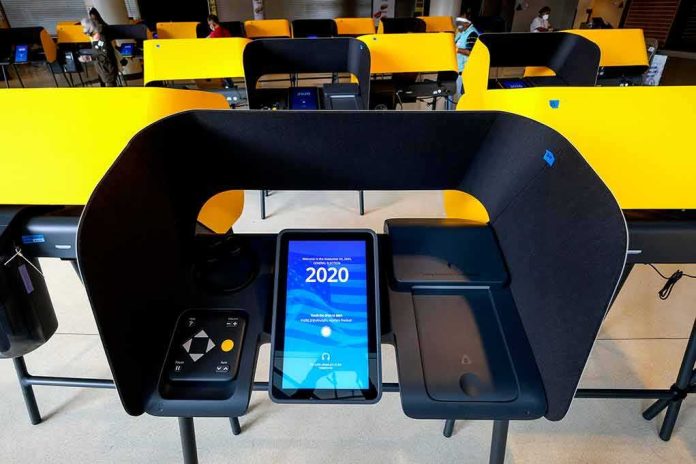
State and county officials outlined those checks in plain terms. First, voters tap their picks on the selection screens. Second, a review screen lists every choice. Third, a printed ballot or paper record gives a final look before scanning. If anything is off, voters can back up, reselect, or ask a poll worker for help. If a printed ballot is wrong, officials can spoil it and issue a new one. These steps exist to protect voter intent.
How Often This Happens, And Why It Matters
The Secretary of State’s office said it received one complaint like this out of about 400,000 early ballots. That stat does not prove perfection. But it sets a base rate that helps separate buzz from breakdown. Low complaint counts suggest isolated issues, not a pattern of rigging. Officials also stress that accidental touches near the edge of candidate boxes, screen sensitivity, or finger placement can nudge the wrong on-screen choice. The review stage is the safety net.
National reporting over several cycles documents the same pattern. Voters sometimes see the wrong name selected on a touchscreen before casting a ballot. Election officials usually trace it to touch alignment or user input, not a hidden plot. The important test is the final record that gets counted. When voters use the review screen and printed ballot, they can stop an error before it becomes a vote in the tally. That is the common-sense safeguard conservatives expect from any system.
What To Make Of The Hermitage Library Case
Officials have not confirmed a cause for Stella Parton’s experience. They have not labeled it user error or a device fault. The facts show she noticed the mismatch, corrected it, and cast a ballot that reflected her intent. That outcome matches the design goal: the checks worked. Claims that the machine “stole” a vote do not fit what is known. Concern is fair, but the evidence supports careful verification over panic or blanket claims of rigging.
More Tennessee voters report voting machine showing wrong name selected #Tennesseehttps://t.co/MXDULOSdd0
— @ChrissyF2 (@ChrissyF22) October 23, 2026
Here is the straight, practical playbook. Slow down on each screen. Tap in the center of the candidate box. Read the review screen top to bottom. Check the printed ballot before scanning. If anything is off, raise your hand and ask a poll worker to spoil and reissue the ballot. Demand that bipartisan techs inspect any device that draws recurring complaints. Trust, but verify, is not a slogan in voting. It is the process working for every citizen, every time.
Sources:
mediaite.com, wonderwall.com, wsbtv.com, wsmv.com, themirror.com, yahoo.com