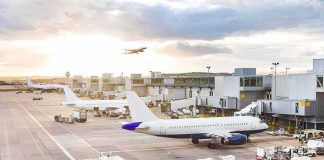

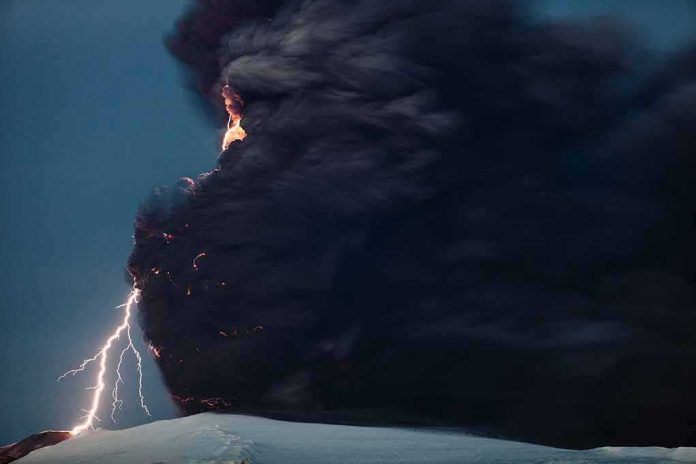
Jakarta’s main airport went silent before sunrise because a volcano 90 miles away coughed glass into the sky.
Story Snapshot
- Soekarno-Hatta International Airport halted all flights due to volcanic ash from Anak Krakatau.
- The transport ministry reported ash detected at the airport and warned of health risks.
- Flight suspensions extended through the morning as operators sized up the plume.
- Aviation rules treat ash as a hard stop because it can cripple jet engines.
Jakarta’s air hub shut down as ash drifted overhead
Soekarno-Hatta International Airport, Indonesia’s busiest, suspended operations overnight into Sunday after ash from Mount Anak Krakatau reached the capital’s airspace. The airport announced the halt on its official channels and extended the stop to at least 9:30 a.m. local time as conditions held poor. The Transportation Ministry said the volcano had been active since late Friday and that ash was detected at the airport early Sunday, prompting health advisories and operational pauses.
Airlines began canceling and delaying departures while crews assessed aircraft exposure and cleaning needs. Ground staff slowed ramp work to limit ash inhalation and protect equipment. Operators coordinated with air traffic control, meteorological units, and the national volcanology agency to map the ash cloud and plan safe corridors. The immediate choice favored caution: hold planes, keep people indoors where needed, and wait for the plume to thin and the runways to clear.
Why volcanic ash stops planes, even in thin layers
Volcanic ash is not soft dust; it is tiny shards of glass and rock. Jet engines run hot enough to melt those shards, which can then coat turbine blades and choke airflow. Windshields and sensors can abrade and cloud. That is why international guidance leans to zero tolerance near ash: avoid it, do not gamble the margins. The National Oceanic and Atmospheric Administration describes the threat as severe to aircraft even far from the vent if the cloud is dense enough.
Global aviation learned this lesson the hard way in past eruptions across several regions. Clear rules now keep crews out of ash, and airports downwind take quick action. Even a light dusting can foul runways, taxiways, and lights, and it can enter terminals through air systems. Cleaning takes time and care. The trade is simple: shut down for hours now or risk lives aloft. Most travelers would rather rebook than test an engine at altitude.
The playbook: monitor, reroute, reopen in stages
Authorities in Indonesia have used the same risk tools many times. Air traffic managers can reroute around the plume when winds and density allow, and they ground flights when the cloud sits over critical paths. Past Anak Krakatau activity led to airspace changes and reroutes when alert levels rose. The core aim stays the same each time: keep metal out of ash and people out of harm’s way until the sky is clean and the field is safe to use again.
Volcanic ash from Anak Krakatoa has disrupted air travel near Jakarta, prompting authorities to monitor conditions and issue aviation warnings. The activity highlights ongoing concerns for flights operating around Indonesia’s active volcanic zones.#Indonesia #AnakKrakatoa…
— The Khaleej Telegraph (@TheKhaleej) September 6, 2026
Sunday’s response fit that model. Airport leaders issued time-bound suspensions, then extended as needed while cross-checking satellite tracks, pilot reports, and ground sensors. Health notices told the public to limit outdoor time in affected areas and to use masks if ash fall occurred. Crews focused on inspection and cleanup so reopening could run in steps: emergency services first, then limited arrivals and departures, then full schedules as confidence returned.
What this means for travelers and operators
Travelers should expect rolling delays for a day or more as airlines reposition planes and crews. Aircraft require inspections for ash ingestion before return to service. Crews may swap routes to avoid residual contamination in cabin filters and engines. Insurers, maintenance planners, and schedulers will feel the ripple this week. This is the cost of safety done right. The expense is real, but the alternative is far worse when a hazard can break an engine in minutes.
Airport and airline leaders will review the episode once traffic normalizes. They will ask if the suspension windows were the right length, if alerts reached crews and passengers fast enough, and if cleanup moved quickly. That is good governance. Conservative decisions line up with common sense and basic duty of care: protect life first, restore service second. When a volcano throws glass into the sky, the smart move is to wait it out and reopen clean.
Sources:
mirror.co.uk, bbc.com, arabnews.com, aviation-professionals.co.za, cambridge.org