

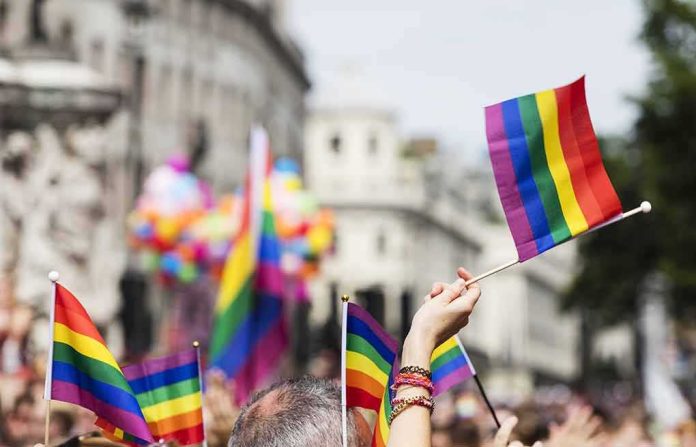
Police say a killer carried a list of LGBTQ-friendly venues, then opened fire outside a Tucson gay bar.
Story Snapshot
- Two men were shot and killed outside the Venture-N gay bar in Tucson.
- Police say a note listed LGBTQ-associated businesses and pointed to hate as the motive.
- Detectives say the suspect confronted the victims, then shot himself and died.
- The United States Department of Justice Civil Rights Division gathered information on the case.
A targeted attack outside a known LGBTQ venue
Tucson police identified the scene as the parking lot of Venture-N, a long-standing gay bar. Detectives said evidence shows the suspect, Ousman Ceesay, confronted two men there before shooting them. He did not try to enter the bar. Police announced they were investigating the case as a possible hate crime in early reports, as details were still developing. Officials later said the shooting was a targeted attack driven by hate toward the LGBTQ community, based on evidence recovered by investigators.
Police said Ceesay acted alone. They reported he had recently moved to Tucson and did not know the victims. Officers found a note that, according to police summaries, included a list of LGBTQ-associated businesses. They said the note pointed to an anti-LGBTQ motive. After the attack, police said Ceesay shot himself with a handgun in the parking lot and died at the scene. Investigators recovered a 9-millimeter pistol and processed the area for evidence.
What investigators say they found and why motive matters
Hate-crime cases turn on motive. Investigators look for clear indicators, such as written statements, target selection, slurs, or a pattern of planning. Police said the list of LGBTQ-associated businesses, the choice of a gay bar, and the lack of any known relationship to the victims supported a hate motive. The Associated Press reported early that the case was being treated as a possible hate crime, signaling that the motive review began at once and then hardened as detectives gathered evidence.
The Seattle Times reported police concluded the attack was motivated by hate and that the suspect never tried to go inside the bar. That detail matters. It suggests the victims were targeted in the open, not during a bar entry or dispute. Police accounts also said the confrontation happened in the lot, which supports the theory that the venue identity, not a bar conflict, guided the attack. These direct findings define how prosecutors and the public understand the crime.
How the case fits a wider pattern of anti-LGBTQ violence
The Department of Justice explains that a hate crime is a crime with a bias motive, in whole or in part, against protected traits such as sexual orientation or gender identity. The label is about why the crime happened, not only what happened. Police and federal authorities use indicators like notes, venue choice, and behavior to judge bias intent. That framework matches how Tucson police described their reasoning after reviewing the suspect’s note and the scene evidence.
National research shows the stakes. The Williams Institute found lesbian, gay, bisexual, and transgender people are about nine times more likely to face violent hate crimes than non-LGBT people. Local and national hate-crime trackers report that anti-LGBT incidents recur year after year. This Tucson case, as police described it, aligns with that broader risk profile. That does not prove any single case by itself, but it explains why the venue, the list, and the lack of other ties carried so much weight for detectives.
Why you likely saw little follow-up coverage
Major outlets reported the Tucson shooting in the first wave, including the Associated Press, NBC News, ABC News, and local stations. Coverage volume after that often depends on the wider news cycle, and local crimes can fade fast when national stories break. Early reports used “possible hate crime” language, which is standard before a formal charge. Police later used firmer terms after reviewing the note and other evidence, but by then attention had moved on.
That lag can shape public memory. People recall broad headlines, not iterative updates. When police later state a hate motive, many readers never see the follow-up. That reality is not a conspiracy; it is how crowded news agendas work. Still, the record here is plain. Police say the suspect carried a list of LGBTQ-friendly venues, confronted two men outside a gay bar, killed them, and then killed himself. Authorities called it a targeted anti-LGBTQ attack. The core facts are not in dispute.
Sources:
reddit.com, fox10phoenix.com, abcnews.com, youtube.com, seattletimes.com, nbcnews.com, tucsonspotlight.org, facebook.com