

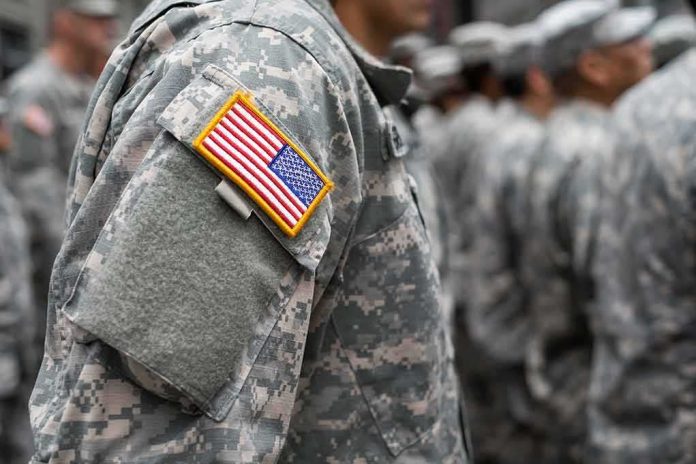
Iran’s top army general publicly put a $30,000 price on an American uniform.
Story Snapshot
- Iran’s army chief Amir Hatami announced a $30,000 reward for killing or capturing a U.S. service member, citing state media.
- Reports say the payout comes from “the Iranian people,” not a clear state budget line.
- Several outlets quote the same figure and setting, a Journalists’ Day event in Tehran.
- Some coverage says the bounty applies to “aggressor” troops attacking Iranian territory.
An Army Chief Says The Quiet Part Out Loud
General Amir Hatami did not float this from the shadows. Reports attribute his line to Iran’s official news agency and place him on a public stage in Tehran on August 16. The number landed with a thud: five billion tomans, about $30,000, for killing or capturing an American soldier. The framing used the word “aggressor,” which paints the target as an invader rather than a bystander. That language aims to turn a bounty into “defense.” It also attempts to sanitize violence with a cash ledger.
Multiple outlets repeated the same core claim and setting, which suggests deliberate messaging, not a careless aside. A state-aligned channel said citizens, not the treasury, would fund the prize, a move that shifts legal blame while stoking national fervor. Another report said the reward doubles if a woman carries out the act, a detail built to grab headlines and rally pride as much as to change battlefield math. This is theater with teeth. It is propaganda wired to a payout.
What Counts As A Target, And Why That Matters
Scope is the hinge. Some reports say any U.S. soldier. Others stress only a service member “attacking Iranian territory”. That difference is not wordplay; it is the line between global vigilantism and a narrower war claim. Without a published order or budget, this looks less like a codified program and more like a signal. It says, “If U.S. troops step on our soil, citizens can cash in.” The ambiguity is the point. It deters, inflames, and denies, all at once.
Timing sharpened the edge. Weeks earlier, President Trump vowed Iran would “pay” after U.S. troop deaths, raising the stakes in a fast-moving cycle. Hatami’s offer tries to flip the script: you threaten costs; we put a literal price tag on your forces. Some commentators call it domestic rallying, not a plan for mass bounties. That read fits the setting and the sourcing, which rides through state media quotes rather than a posted decree. Still, words like these have a way of becoming cues for proxies.
How This Plays Against American Interests
American conservatives see two truths here. First, paying for American blood—by state, crowd fund, or wink—is statecraft by thuggery. Second, moral clarity beats word games. Whether the cash comes from a ministry or a collection basket, the effect is to incentivize attacks on Americans. That crosses a bright line. It invites a firm, public cost for any actor who tries to collect. It also warrants clear rules of engagement for U.S. forces in the region and sober warnings to Tehran’s enablers.
The leader of the Islamic Republic of Iran’s Army offers a $30,000 bounty to kill or capture a US soldier or #USNavy sailor.
It's unclear if this is a call to attack Americans anywhere in the world, as there are no US troops stationed inside of Iran.
🔗 https://t.co/A8DYQBDZXh pic.twitter.com/WUxwh5RR0n
— Globe Composite Solutions (@globe_composite) August 17, 2026
Policy should track the mechanism, not only the mouthpiece. If Iran’s military or allied networks set up real payment channels, that is material support for targeted killing. If this remains bluster, then call it out and box it in: sanction any fundraiser that even whispers about paying for a scalp, expose the facilitators, and tighten force protection where risk spikes. Sunlight plus enforcement deters better than outrage alone. Either way, U.S. troops deserve clarity, not slogans, in response.
Sources:
nypost.com, presstv.co.uk, kvia.com, hamerintel.com, youtube.com