
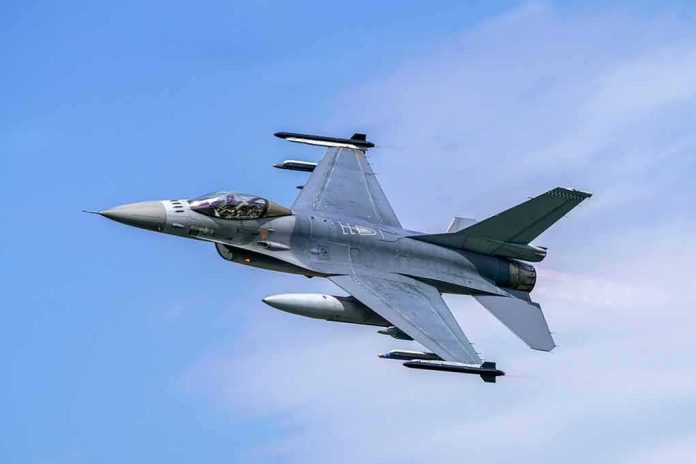
Body-camera video shows a bloody but walking Marine pilot greeting deputies minutes after his jet smashed into a Washington hillside.
Story Snapshot
- The Marine Corps called it a non-fatal aviation mishap during routine training near Rimrock Lake.
- The pilot ejected, survived with minor injuries, and met local officers after landing.
- Calls hit Yakima County dispatch around midday on June 13, 2026.
- The crash sparked a wildfire but caused no reported civilian injuries.
A midday crash, a safe ejection, and a walk to help
Yakima County dispatchers began getting calls shortly after noon on June 13, 2026. A Marine F/A-18 series Hornet went down near Rimrock Lake, a mountain area west of Yakima. The Marine Corps later said the flight was routine training and labeled the event a non-fatal mishap. The pilot ejected, survived, and was taken for treatment of minor injuries. Local officers and responders reached him after he landed under canopy and moved away from the wreckage.
Footage released later shows the moment deputies contacted the aviator. The pilot stood, blood on his face, but alert and speaking. He told them he had crashed and needed help. That picture lines up with early reports that the pilot ejected and was recovered by local authorities. The scene confirms what Marine officials first shared: the mission was training, the mishap was non-fatal, and an investigation began immediately to secure facts and preserve the site.
Where it happened and who launched the jet
Reports place the crash near Rimrock Lake in Yakima County around 12:00 to 12:15 p.m. Pacific time. The jet belonged to units under the 3rd Marine Aircraft Wing at Marine Corps Air Station Miramar. Coverage at the time identified Marine Aircraft Group 11 as the parent group tied to the aircraft. Later aviation reporting named the specific squadron and airframe, while noting those details did not appear in the earliest official statements.
Specialist aviation outlets linked the flight path to a known low-level route used for training runs through the Cascades. That detail, while not in the initial Marine Corps language, matches the terrain and the time frame many residents reported that day. Analysts noted that low-level profiles leave little margin for error, which is why ejection remains the life-saving off-ramp when something goes wrong at speed close to the ground.
Fire on the ridge, but no civilians hurt
The impact sparked a wildfire in steep country above the lake. Fire crews moved in quickly. Agencies reported no civilian injuries linked to the blaze. The burn drew campers’ attention and led to closures as crews worked the line and aviation assets dropped water and retardant. Later updates described varying acreage figures and containment progress, but every account agreed on the key point: the pilot survived, and people on the ground were safe.
This is the June 13, 2026 crash of a U.S. Marine Corps F/A-18D Hornet near Rimrock Lake in Washington, The remarkable part of the story is actually that the pilot survived an ejection over rugged mountainous terrain, while the aircraft was destroyed and started a forest fire.
— Democracy Unmasked (@DemocracyUnmask) August 15, 2026
The Marine Corps kept the site secure for the safety board and investigators. That process is standard across services after a major mishap. Initial releases confirm life safety facts and the mission category, then hold deeper details until the technical team finishes its work. The guidance after this crash followed that pattern: acknowledge survival, protect the scene, and gather data for a formal cause finding to brief commanders and the public when complete.
What the video proves, and what discipline demands
The body-camera video validates the heart of the story. The pilot punched out, landed alive, and walked to help. Local officers rendered aid and moved him to medical care. The Marine Corps and regional outlets reported the same outcome within days. Later aviation coverage added the likely route and squadron lineage. That layering is normal. In military aviation, official facts land first, and the finer lines of unit, tail number, and profile tend to fill in later.
The conservative read on this event is simple and strong. Training is necessary, risk is real, and gear plus grit saved a Marine’s life. The ejection seat did what taxpayers fund it to do: turn a fatal crash into a survivable day. Local law enforcement did what communities expect: find the downed pilot fast and get him care. The wildfire response showed the same ethic: protect life and property first, then clean up the mess with discipline and calm.
Why survivable ejections matter for readiness
Ejection systems exist to give crews a last chance when the airframe is lost. Modern seats have saved most aviators who use them within their design limits, especially at adequate altitude and speed. Low-level training adds pressure because seconds and feet vanish fast, which makes decision speed everything. The Rimrock Lake pilot made the hard call in time. That choice, plus quick local response, kept a tough day from becoming a tragedy.
One caveat deserves a brief line: the Marine Corps said the cause remains under investigation. That is not hedging; it is how safe aviation stays safe. The video will help time-stamp the recovery. Radar, maintenance records, and debris analysis will fill in the chain. For now, the facts that matter most are settled. A Marine jet crashed in the hills. A Marine survived. The system around him—training, technology, and first responders—worked as designed.
Sources:
migflug.com, katu.com, abcnews.com, duboisaviation.com, theaviationist.com