
A soldier’s quest for justice against a military contractor could shatter decades of legal immunity, forcing the Supreme Court to confront whether negligence in war zones demands accountability.
Story Snapshot
- Sgt. Christopher Hencely sues Fluor Corporation after a 2016 truck explosion at Bagram Air Base injured him amid chaos that killed five.
- Supreme Court justices grilled both sides on November 3, 2025, questioning if contract breaches pierce federal contractor shields.
- Lower courts dismissed the case citing Boyle precedent, but certiorari signals potential shift in wartime liability rules.
- DoD backs immunity to avoid operational chaos, while Hencely argues Congress never barred soldier claims.
- No ruling yet, leaving veterans’ recourse and contractor risks hanging in balance.
The Explosive Incident at Bagram Air Base
A Fluor Corporation truck exploded at Bagram Air Base in Afghanistan on October 2016, killing five people and injuring 17 others, including U.S. Army Sgt. 1st Class Christopher Hencely. The driver, a Fluor employee, allegedly violated military safety protocols by speeding through a restricted zone during a suicide bombing threat. Hencely suffered severe injuries from shrapnel and blast force. Military secured the base perimeter, but contractors handled internal logistics transport. This breach of contract forms the suit’s core allegation.
Hencely filed his negligence and breach of contract claims in South Carolina federal court in 2019 under state tort law. He seeks damages for lifelong medical needs and lost wages. Fluor employees operated fuel trucks under strict Army rules, including speed limits and convoy procedures. Hencely’s lawyers argue deviation from these created foreseeable risks, distinguishing the case from equipment defect precedents.
Legal Precedents Shielding Contractors
Boyle v. United Technologies in 1988 established federal preemption for military contractors when products match government specifications, conform to standards, and include warnings. The ruling protects against state tort claims in combat due to uniquely federal interests. Feres doctrine from 1950 bars service members from suing the U.S. government for on-duty injuries. Federal Tort Claims Act excludes combatant activities and discretionary functions. No statute explicitly immunizes private contractors.
Prior cases like Iraq burn pit exposures and electrocutions failed under political question doctrine or Boyle. Retired lieutenant generals filed amicus briefs warning litigation creates finger-pointing and legal uncertainty in war zones. Hencely’s team counters Boyle applies narrowly to designs, not service breaches in ultra-hazardous areas. Justices during arguments probed these boundaries.
Supreme Court Oral Arguments Unfold
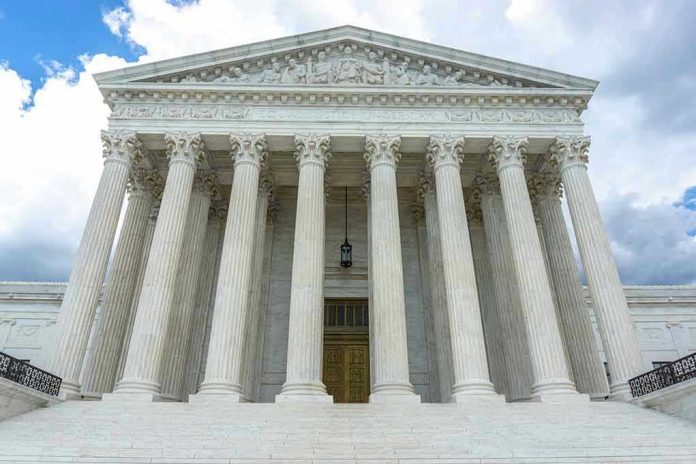
On November 3, 2025, the Supreme Court heard Hencely v. Fluor after granting certiorari on June 2. Lower courts dismissed: district court invoked combatant activities exception, Fourth Circuit affirmed. Plaintiff’s attorney Frank Chang asserted Congress permits state tort claims absent explicit prohibition. Fluor counsel Daniel Ebner warned tort liability makes the system unworkable in hazardous zones. Justice Ketanji Brown Jackson questioned DoD regulations implying contractor accountability.
Justices expressed skepticism over extending immunity to clear contract violations. DoD intervened supporting Fluor, emphasizing contractors’ integral role in logistics where military focuses on security. Arguments revealed tension: federal interest versus state law defaults. No decision emerged from the session, with coverage noting justices’ struggle defining combat boundaries.
Stakeholders Clash Over Accountability
Hencely, represented by Chang, pushes for veterans’ recourse against negligence. Fluor prioritizes immunity to sustain bids in dangerous theaters. DoD fears litigation disrupts operations; contractors rely on federal contracts but dread cost hikes from suits. Congress remains silent, neither shielding nor encouraging claims. Retired officers back Fluor, citing war zone realities. Power tilts toward military leverage, but plaintiffs wield state law presumptions.
Common sense aligns with contractor caution in combat, yet facts show Fluor deviated from Army orders, breaching safety basics any American expects. Conservative values demand accountability for negligence harming our troops, without Congress explicitly protecting profiteers. Military amicus briefs, while expert, overlook how breaches invite preventable harm, eroding trust in support chains.
Potential Ripple Effects on Defense Contracting
A ruling favoring Hencely reopens burn pit and exposure suits, granting veterans new paths. Contractors face higher insurance and bid hesitancy, potentially straining logistics. DoD contracting pressures mount, possibly spurring congressional immunity laws. Defense firms like Fluor rethink war zone participation. Short-term, litigation surges; long-term, it redefines liability, balancing troop safety against operational speed.
Sources:
Supreme Court struggles with constitutionality in soldier’s case suing government contractor
Supreme Court weighs if contractor can be sued for wartime negligence
Military Contractors Defend Against Tort Suits
Injured soldier argues for broader liability of government contractors in war zones